Essay: Examination of Tsugumi Ohba’s Portrayal of Women in Bakuman

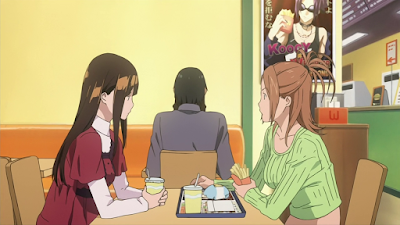
Bakuman is often criticized for its misogynist undertones and from the first episode it was clear that the show’s portrayal of women was odd. But what is the source of Tsugumi Ohba’s low opinion of women? I believed that the Misogynist vibe in Bakuman is rooted in the Japanese work ethic and comes from the intense pressure to succeed. The success of Mashiro and Miho’s relationship in Bakuman is dependent on their individual career success. In essence, Bakuman is removing the emotional element from relationships and basing them on status alone. While that is true at the core of the problem it seems that the blame may rest directly on the author.
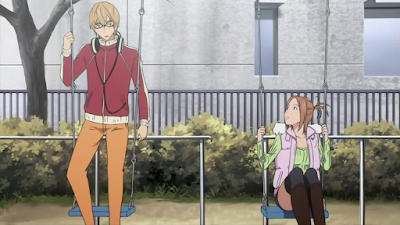
Women are portrayed as obstacles in the path of men who are trying to reach their goals. In the most direct sense, Moritaka’s mother refused to allow him access to his Uncle’s studio and refused to accept his dream of becoming a Mangaka. It was his Father and Grandfather who stepped in and insisted that he be allowed to pursue his dream, telling the mother that some things “men have to do that woman can’t understand”. This applies also to romantic relationships and why Miho is set up as the ideal woman. Miho also has a goal she is trying to accomplish, and no other woman in the series seems to share her values. She wants to put off their relationship knowing that it would get in the way of her dream of becoming a voice actress. The “normal” girl is shown during a scene when a young girl chases her boyfriend to the roof chastising him the entire way for changing his High School of choice. She is upset because they won’t be together. This is what Ohba sees as the normal girl, chasing after a boy and having no goals of her own. The action of the young man is what the author acknowledges as the correct choice, personal progress over romance.

What becomes the enemy in Bakuman are laziness, sloth, and complacency. Relationships are portrayed as wastes of time and energy. Moritaka doesn’t have time to go see a movie because he uses every bit of his free time perfecting his skill as a mangaka. Akito’s relationship with Miyoshi becomes the model for what relationships can do to one’s time, energy, and goals. At the start of their relationship she constantly tries to take Akito away from his work in order to go to spend time with her. Most of the time Akito refuses and Miyoshi is left upset, but slowly she begins to understand what Akito and Moritaka are trying to do. Unfortunately, this leads to the most condescending portion of the series.
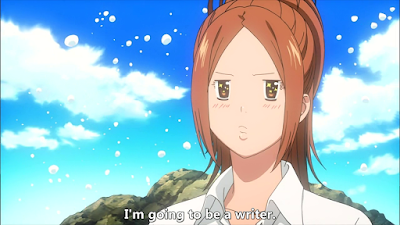
Miyoshi becomes jealous of all her friend having goals except for her, so she decides one day she is going to be a writer. Her decision comes from the desire to fit in; the group has Mangaka and a voice actress but no prose writer; not from the desire to actually become a successful writer. She decides to write Miho and Moritaka’s story instead of coming up with an original idea and not knowing where to begin she enlists Akito for help. Instead of Akito working on his own story, he ends up helping Miyoshi with her romance novel and, in fact, writes the whole thing. She becomes excited for herself when the first part of the novel becomes a success and takes all the credit. Miyoshi displays no personal motivation; she enjoys the end result of hard work. She is the antithesis of Miho, Moritaka, and Akito. The dream ends when Akito refuses to write the next part of ‘her’ successful cellphone novel. She tries but quickly gives up writing it herself, changing her dream to be the same as Akito’s dream. Her ‘goal’ in life becomes that Akito and Moritaka become famous Mangaka, showing she has no aspirations of her own and has to live in the shadow of her boyfriend. After Miyoshi realizes she almost broke up her boyfriend’s team she goes from being bitter that Akito doesn’t have time to spend with her and jealous of Moritaka and Miho’s dream, she gives up and becomes a cheerleader for them. She is content to be in the background getting tea and making meals for the hard-working Mangaka. She is happy to fall into a domestic role after Akito promises to marry her, which reveals her only true aspiration to be marriage, everything else being a method of getting Akito to notice her.
Miyoshi’s role in the story says a lot about Ohba’s view towards women. It is comparable to his Death Note character Misa. Misa initially begins her own Death Note fueled rampage in order to get Kira’s attention, but once Kira pretends to be in a relationship with her she becomes completely obedient to him. Akito’s mother also follows this pattern, while she is a successful school teacher her husband losing her job breaks her, almost cripples her emotionally. She decides to channel the disappointment in her husband into her children, pushing them hard so they don’t fail. Instead of picking herself up and focusing on her career, she relied on her husband to create a stable household. It seems that Ohba’s view on women is that they only show initiative to attract men. The obvious way this is portrayed in both Death Note and Bakuman suggests this might be a conscious bit of social criticism; however it is more likely that he just can’t write female characters in any other way. Nothing is known about the Mangaka’s personal life, if he is married or in a relationship, the most the public knows is that he collects teacups and “develops manga plots while holding his knees on a chair.” Whether his opinions on women come from bitterness or ignorance may never be answered definitively but the blankly negative female character he has written makes the answer a bit obvious. There is, of course, one exception to his negative female characters. The heroine of Bakuman, Miho, is written as the ideal woman.

I’ve already stated some reasons why Miho is the ideal woman in the series. I will restate some of that and build on top of it here, because Miho is the antithesis of every other woman in Bakuman, for positive and negative reasons. Unlike the other women in Bakuman Miho actually has a personal goal, she wants to become a voice actress and even though she is meek and shy she is pushing forward with that dream no matter what it takes. In that respect she is equal to Moritaka and superior to any other woman in the show. She is the ideal girlfriend in that she stays out of the way, she doesn’t ask to be taken out, and she doesn’t get involved with Moritaka’s business. She remains on the sidelines as a silent cheerleader. She only contacts Moritaka when she actually has something to say, mostly congratulate him, and she never brags about her own accomplishments. She is also extremely loyal and in love with Moritaka without any real reason to be loyal or in love with him. She is his fantasy girl and all he has to do is become a Mangaka, which was his childhood fantasy, and she will marry him.
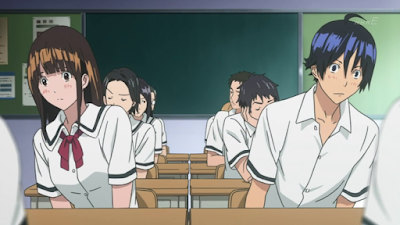
Bakuman is about a Mangaka, and in order to be happy the Mangaka has to create a successful manga. It is clear that Miho is the ideal woman for Ohba and that every other woman in the series represents Ohba’s narrow view of woman and that he, as a successful mangaka, should have found true love. While it is unusual to make assumptions on the author’s personality from a piece of fiction I think Bakuman is an exception. It is, after all, a story written about Ohba’s profession that combined with the consistency of his female characters. Bakuman is the result of an author constructing a fantasy in which he can be the hero and get the girl as an author. If we take the experiences of Akito and Moritaka as true reflections of Ohba’s life; working to become Mangaka to the exclusion of all else; Ohba might be the teacup collecting lonely writer that his only existing bio makes him out to be. To the end Bakuman is the fantasy of a man who has dedicated himself, with the vigor of a Japanese businessman, to his art and never had time to find someone to love.
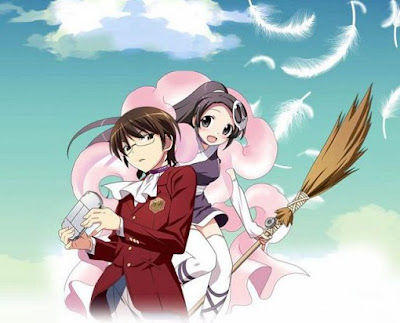
Review: The World God Only Knows


Summary: Keima Katsuragi is an avid galge gamer known at his school as “Otamega” (a derogatory term combining the words Otaku and Megane) and on the internet a “The Capturing God.” One day he receives an e-mail offering him a contract to “capture” girls. He accepts thinking it’s a challenge and a demon from Hell named Elsie appears. She asks for his help in capturing runaway spirits that are hiding in “real” girls. He refuses stating he only likes the girls from the game. She tells him that if he refuses then both of their heads will be cut off.

Review:  The World God Only Knows is a meta-anime that, like so many modern anime, dedicates most of its time poking fun at Otakudom. The meta-anime genre has been flooded since the popularity of The Melancholy of Haruhi Suzumiya and The World God Only Knows follows the same patterns of a lot of those wannabes, such as Seitokai no Ichizon, where an Otaku protagonist plays out an Otaku fantasy. Keima, an anti-social dating sim addict, does have an interesting problem laid on top of his character by being forced to interact with real life girls; which adds some charm to what would otherwise be a rehash of elements we’ve seen before. Even with the interesting set up, exploiting the stereotypes is the point of the show and stereotypes are what The World God Only Knows delivers. Keima knows how to handle the woman he encounters because they fit into dating sim molds. These interactions are humorous and work to endear characters to the audience, even the thickheaded protagonist, but the charm begins to wear off as the ironic use of stereotypes work against the show’s overall theme.

Each girl requires a different strategy, all learned from dealing with fictional women in dating Sims. For example, in order to capture the heart of the famous singer Kanon Nakagawa to open up to him he pretended not to be interested in her music at all. While these tactics work in a game where the path to “winning” a girl’s heart needs to be mapped in a specific direction, applying these rules to the real world give the anime a bit of a shallow tone. When boiled down the strategy seems logical, once the personality of the “target” is learned there are ways to counter it in order to get her interested in him, but the concept is also cold and deeply misogynistic. Individuals will have varied responses to the show, those who accept it as a satire will take it as it is and those who do not may be deeply offended by the portrayal of women. In one respect the structure and themes of the show get a bit disgusting but early on it does establish that the narrative is a vehicle for poking fun at Dating Sims, which inherently contains dry stock female characters who fall in love with the player throughout the game. The scenes of Keima winning over his “targets” are overall harmless and even sweet, taking that meta-element as it was and accepting the rules of the world. A viewer coming to the show with no knowledge of Dating Sims or the tropes associated with the games are going to have a hard time finding any humor in the series and may be lost by the questionable way Keima thinks about women.

The stories of each individual girl had well-structured arcs and all of the girls were well developed for the genre. However, TWGOK doesn’t break any new ground, by its very nature the plots are nothing more than common themes recycled and dropped into the world of TWGOK. The format does breathe new life into them because Keima is such an uncommon romantic interest and approaches each girl in a shy yet cold, logical style. Keima’s role in this odd sadistic deal is made all the more tragic by the fact that the woman forget their relationship with him after the evil spirit is set free, making him unable to pursue the only relationships he has ever formed in real life. Unfortunately, this aspect of the character isn’t explored in depth, he has just been able to shrug off most of the encounters but there is a sad look in his eyes as he retakes his cold, hard demeanor. Keima seems to be a character that wants to grow beyond the game loving Otaku he is, he just doesn’t know how to live his life any other way.

The one character that really sours “The World God Only Knows” is Elsie, the demon who recruits Keima. She starts off as a vehicle for poking fun of stereotypes in games, namely the little sister stereotype, but what is played for light humor gets run into the ground quickly as Elsie’s worship of Keima becomes more severe and her ineptitude turns all her efforts to impress Keima into depressing failures. Her motivation should be to get the souls and return to hell as quickly as possible but she clings to Keima as if he had some real merit or ability. The worst offense is the one filler episode dedicated to Elise where she spends the entire time attempting to bake a cake for Keima but failing because of an ineptitude that the audience is supposed to find “cute.” The piece shoved everything wrong with Elise’s character and Otaku pandering anime, down the audience’s throat and left me not only annoyed but seething with rage that the episode got passed script editing.

What drags The World God Only Knows down are the one off episodes. In a 13 episodes series there are three painful filler episode and one none-arc episode that passes only because it helps establish characters. The author knows how to play with this world and the characters in the format he created for Keima’s targets, but stepping outside of that the characters lose their appeal. The jokes around Keima being a hardcore gamer work in the regular episodes because they are mixed with the rest of the narrative, but when we get two episodes dedicated to him playing games the joke is stomped to death in the first few minutes and the episode simply become a rehash of those two or three jokes repeated for twenty minutes. These episodes also allow the disgusting misogynistic nature of the series to come out, lacking the charm and quality of the official arcs.

The key to enjoying the series comes down to your own relationship to Otaku fandom. If you are a part of or familiar with Dating Sims and the culture around them you’ll probably love the in-jokes and the way the show plays with the tropes of the genre. But it brings into question the validity of a show like The World God Only Knows. Taken out of context it contains some of the most misogynistic and shallow content I’ve ever seen in an anime. It expands on the underlying problem with meta-anime in a way as to exponentially damage the medium if this show were to fall into the wrong hands. The key to the problem is how to judge the narrative of The World God Only Knows. I’ve been an anime fan for over ten years so I clearly recognize how the show is poking fun at them and in its own way the show is doing some intellectual criticism of Otaku culture. However, if I tried to show this to the average American they would either take the sweet cliché romances at face value or be offended by Keima’s attitude towards women. No one is going to wait around for someone to explain that the reason the clichés are paper thin but they are being used to poke fun at paper thin clichés. I can only end my personal indecision on The World God Only Knows by saying that it was effective at what it set out to do, use Keima and the clichés to create interesting and sweet romantic stories. If a person comes to the show not knowing that the show was parodying the tropes it used, then it would probably be unwatchable for them.

Verdict: The World God Only Knows is, at its core, a humorous meta-anime designed to poke fun at the tropes of dating Sims. By its nature it suffers from a misogynistic overtone that may turn off viewers, but it should be remembered that these elements arise because TWGOKs is criticizing their place in modern Dating Sims and the relationship the modern Otaku has with woman. Elise and the one off gag-episodes drag the quality of the series down but the main episodes offers a good mix of touching romance and humor to make The World God Only Knows an enjoyable watch for most anime fans, but incomprehensible to people unfamiliar with Otaku culture.


Good

  • – Stereotypical characters and plots revitalized when placed into this unique format.
  • – Some intelligent criticism of modern Otaku culture.

Bad

  • – One-off episodes drag overall quality of the series down
  • – Character of Elise crosses the line between satire and flat misogynist stereotype.
  • –  Protagonist goes through no significant growth during the series, although there is hope he will in the second season.
  • – Series lacks value for anyone not familiar with Dating Sim or overused Anime tropes.

(Summary from Animenewsnetwork.com)

Review: Squid Girl

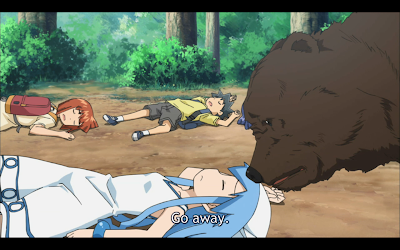
Summary: Squid Girl has come to the land from the depths of the sea to conquer humanity for its pollution of the ocean. Unfortunately she ruins the first house she uses as an invasion base and has to work to pay for repairs. Of course, she can’t overcome the Aizawa sisters who manage the house, so who knows whether she can subjugate humankind.

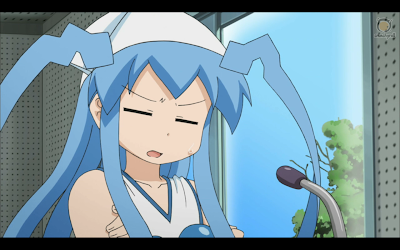
Review: Nothing is more subjective than humor and humor is difficult to describe in a review, especially humor that so heavily relays on visual gags. So, while it is difficult to explain the humor and charm of Squid Girl, the show is a unique change of pace from many modern anime comedies that I have to try. The humor of Squid Girl mostly comes from exploring how a Squid’s natural abilities would manifest themselves in a human form; Spit ink; tentacles; bioluminescence; wherever those flappy things are on her head;  the concept is so bizarre and that alone creates a compelling character to follow as she attempts to fit in on the surface world. Squid Girl also has to learn all about human society from celebrating birthday parties to how to make friends. Her exploration of the human world with a general inability to conceive of and adapt to even the most basic of concepts allow the jokes to flow naturally. The concept of a Squid taking human form to come to the surface never feels contrived because it is treated straight by the characters.

The supporting cast plays a large role in the humor of the series, but really they exist to place Squid Girl into situations where she has to react and confront a problem in a “squidly” manner. There is Sanae who develops an obsessive crush on Squid Girl, Cindy Campbell a US researcher who believes Squid Girl to be an alien, Chizuru who is a seemingly sweet girl until made angry, and Nagisa who is employed by the cafe and becomes terrified by the invader from the sea; a fact which Squid Girl couldn’t be happier with. Each character represents a single gag and when they appear a variant of that joke immediately happens, the writing is clever and each encounter is varied enough to hide repetition. While the characters are funny on their own the real joy is when they interact with Squid Girl. Squid Girl is unable to adapt to simple concepts so when she is faced with an absolutely mad group of people she doesn’t quite know how to process it, and the show continuously tosses wild elements at each other and just how they react. The result most is bizarre confrontations that are played as charming and humorous.
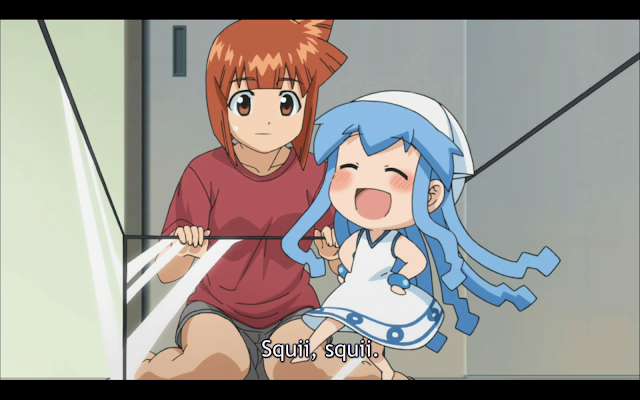
The balance for Squid Girl comes from the owner of the cafe, Eiko Aizawa, who plays the straight man of the series. For the most part, she is completely unimpressed by the majority of Squid Girl’s powers and starts their relationship off by lecturing Squid Girl for putting a hole in her wall. From there Eiko introduces and explains concepts of the surface world to Squid Girl and helps her to adjust to her new environment. At best she shows mild annoyance at Squid Girl’s continued attempts to conquer the world and the insane cast of characters who come to disrupt business at the cafe in order to see Squid Girl. Eiko’s role as straight man supplies a solid anchor from which the bizarre characters can be compared to, which becomes a launching point for best humor of the series. Eiko and Squid Girl create a fantastic team.

There are moments when Squid Girl breaks out from its normal mold and creates some creative pieces of work. One short features an alternate world where Eiko finds a mini Squid Girl and keeps her as a pet. The episode contains some adorable sequences of mini-Squid Girl chasing around Eiko’s fingers and Mini-Squid Girl rolling up a tiny snowball. Mini-Squid Girl becomes a lifelong companion to Eiko in a surprisingly touching sequence that shows Squid Girl remaining the same while Eiko ages and ultimately dies, leaving behind her friend to morn her death. The short comes as a total shock and is a brief example of the potential such a loose form comedy series has. There are a few more of these off structure episodes sprinkled throughout the series and it helped to break up the format to keep things fresh, to keep the audience guessing at what the show was going to throw at them next.

The art is standard modern animation of high quality. It’s fairly generic with Squid Girl herself being a cute Moe girl and some of the lesser characters falling on cliché styles, such as the blond haired bikini wearing design for American born Cindy Campbel, but there are little bits of details that add some unique traits to the characters. Squid Girl herself has a fantastic design for a squid turned Moe girl with the tentacle hair and squid hat. Even more subtle is the slightly tanned appearance of Eiko and her sister, logical since they work on the beach all day, but Eiko’s legs have a muscular look to them which is rare to see in a medium that favors smooth limbs on idealized females and again, this is a logical trait to include in someone working on their feet all day cooking and serving customers. So while the art is attempting to appeal to the standard Otaku it isn’t without a subtle stroke of character depth.

The final episode of the series attempted to cap it off with an emotional ending as Squid Girl loses her powers and leaves the tea house. It feels artificial and contrived, even as a person who has become a huge fan of the show and fallen absolutely in love with Squid Girl I wasn’t at all emotionally moved by Squid Girl leaving because it was obvious she was going to come back. I understand the need to have a neat ending to close the series but by dedicating two thirds of an episode to such an obvious plot line the only thing they accomplished was admitting they couldn’t write an effective ending to the show. They should have stayed the course and produced two high quality shorts, as we have come to expect, instead of such an obvious ploy for closure.

Verdict: While the initial premise seemed like a set up for a silly Moe show, Squid Girl turned into an intelligent. The cast of characters, especially the excellent straight man of Eiko, kept the humor strong, if a bit repetitive, throughout the series. While the ending was a bit contrived that really doesn’t matter considering Squid Girl is just a loose collection of shorts anyway. It is hard not to like Squid Girl, the cute characters and bizarre nature of the show creates something truly unique.

http://rcm.amazon.com/e/cm?t=otainrev-20&o=1&p=8&l=as1&asins=0316119334&fc1=000000&IS2=1&lt1=_blank&m=amazon&lc1=0000FF&bc1=000000&bg1=FFFFFF&f=ifr

Good

– Humor is superb, the jokes utilize the characters; especially Squid Girl; exceptionally well.

– Bizarre and cute combine to create a unique experience and feel.

– Some innovative gems are hidden among the standard episodes.

Bad

– Jokes can become repetitive

– Ending is contrived only to put an end cap on the series.

(Summary from AnimeNewsNetwork.com)

Review: Soredemo Machi wa Mawatteiru

Summary: Arashiyama is a mystery obsessed clumsy girl who works for an old woman’s less than stellar maid cafe. The only regulars to the cafe are the other entrepreneurs from the surrounding shopping district and Sanada, one of Arashiyama’s classmates who has a crush on her. When Tatsuno, Arashiyama’s friend, is invited to the cafe and sees the poor state the cafe is in she decides to work alongside her friend and fix things up.

Review: The style of Soredemo Machi wa Mawatteiru, SoreMachi for short, is what stands out immediately. Animated by Shaft and directed by Akiyuki Shinbou (Bakemonogatari, Arakawa Under the Bridge) the look and feel of the show doesn’t seem to lend itself well to a Slice of Life comedy, but SoreMachi is not your standard Slice of life, while there are some shorts that focus on Arashiyama and her daily life the more interesting bits come from focus on the odd characters in the town where she lives. There is no set formula to a single episode of the show which allows the narrative to use whatever time and techniques are required to tell the story. Too make the genre even vaguer, interspersed between the normal slice of life scenes are also stories containing time travelers, aliens, and the afterlife.

The content, however, is mostly standard Slice of Life fair presented in a way that makes it appear fresh and innovative. Having no constant structure, the arts style, the masterful direction and the science fiction elements sprinkled about make the shows content seem far more aspiring than it really is. I don’t want to disparage the show in anyway, as I am a huge fan of slice of life comedies and the writing and wit of SoreMachi is unique among them but when boiled down to its core SoreMachi is a hyper-stylized, well written way of telling a story about a group of girls working at a maid cafe or a group of girls becoming obsessed with an odd vending machine. The animation style and the direction of Akiyuki Shinbou is what stand out. The direction gives ordinary scenes, such as Arashiyama sitting in class receiving extra lessons, an epic feel. The art is a bit odd, lifted entirely from Masakazu Ishiguro’s manga, and gives the characters a distinct personality the instant you look at them.

The comedy writing is the heart and soul of the series. The humor plays off character personalities and antics as they interact with their surrounding town and its insane inhabitants. Long scenes of dialogue are fast flying and exciting due to the underlying theme of mystery, small conversations become over-complicated and fun by adding in an element that needs to be deduced. Even the jokes are tiny puzzles which are funnier if the viewer unravels them before the punch line is revealed. One such joke sees Arashiyama rushing to class fearing that she is late. She bursts into the classroom and is relieved because no one else is there. A keen observer can figure out the joke before the teacher reveals it because there is only one desk set out in front of him and she is, indeed, late. The science fiction elements of the series work because they are played completely straight, as these scenes are not separate from the slice of life aspects. After the few supernatural scenes the audience is left with no choice other than to believe that these supernatural elements really exist in the world of SoreMachi.

The soul of the show lies in how well the individual stories are able to come together. The stories go between the absolutely mundane to the completely insane with a few that explore some deep concepts while maintaining the series general light tone. One short feature’s Arashiyama’s younger brother being unable to sleep, so they take a walk together through the town. The piece explores how nighttime causes landscapes, environments, and even people to change. Going by the normally quiet maid cafe Arashiyama sees the characters from the shopping district up late drinking and partying with the old woman leading the festivities. The exploration of the darkened town is aided by Shaft’s excellent animation which helps turn something that is seemingly mundane into a meaningful and deep experience. The day ends with Brother and Sister sharing a bath together and growing a little closer now that he has been introduced to a completely new world.

Like many anime these days SoreMachi features a ton of Meta-humor. Instead of playing it to placate the Otaku crowd the tone is vicious. The concept itself sees the characters at a mock maid cafe; the set up itself is taking a common trope and exploiting it for humor. The world of SoreMachi is filled with familiar elements slightly twisted to make a subtle satire. For example, Arashiyama and friends even form their own girl band but instead of the standard rock set the band features a bass guitar, drums, a violin, and an accordion. SoreMachi is the generic gag anime slightly twisted in order to make fun of gag anime.

SoreMachi isn’t a perfect series; the strange format, animation style, and direction is going to turn off people looking for a light gag anime because it makes the series look far more intimidating than it really is and while I consider that a bonus I can easily see why that would cause others to panic and turn away. The long scenes of dialogue, which still work when translated on some levels, are obviously filled with puns and other elements of the Japanese language that cannot be translated to English. Reading footnotes while a joke is going on doesn’t make the joke funny, it makes the process tedious.

Verdict: SoreMachi is a visually innovative and witty slice of life anime. The animation and direction propel what would be an average comedy series into a uniquely powerful piece that appears insightful beyond its content. At the core it is a well written comedy that has a well exploited mystery theme running through most of the jokes, plus its ability to portray Science Fiction elements in a deadpan slice of life tone brings an odd twist to this extremely enjoyable show.
 

Good

Direction and Animation are above and beyond expectations

Writing is intelligent, witty, and offers some new twists to the slice of life genre

Science Fiction elements spice up the traditional slice of life formula

Bad

Some jokes do not translate into English well.

Review: Otome Yokai Zakuro


In an alternate history Japan wherte humans and Spirits coexist the ancient spirits aren’t happy about the movement to westernize Japanese society. In order to bring peace the Japanese military recruits a group of half spirits and forms the Ministry of Spirit Affairs in which each half-spirit is teamed up with a military officer. Zakuro, a half-spirit of enormous power and a hatred of westernization, is teamed up with Agemaki an aristocrat’s son who has a fear of spirits.

Otome Yokai Zakuro looks and feels like a generic romance with a little bit of action. The characters and relationships of the show are written honestly and believably. The supernatural element has a uniquely Japanese feel, being steeped in Japanese mythology and imagery. The spirits and half-spirit protagonists become representations of the classical Japanese way of life dressed in Yukata in contrast to their soldier partners modern military uniforms, the half-spirits weapons are even branches from a Sakura which transform into awesome knifes during combat. The meeting of the groups becomes a visual representation of the core theme of the narrative; the ancient way of life is starting to clash with the introduction of westernization.

The action of the show is hit or miss. The early fight scenes are exciting, visually interesting, and unique in the way the half-spirit’s attack. The twins, Bonbori and Hozuki, sing a sweet melody that acts as a spell against the enemy spirits while Zakuro attacks ruthlessly with a knife. The first few battle scenes are entertaining but as the series goes on they become repetitive and dull, although the Twin’s soothing melody was always a joy to hear and perhaps made up for some otherwise full fight scenes. Even more disappointing was when the human soldiers jumped into the action. Their entire contributions consist of blocking attacking spirits with a sword thrust or a dull sword battle that lacks any creative choreography.

However Otome Yokai Zakuro isn’t an action show, it is a romance and as I stated above the characters and relationships are well written and believable. At times it feels like the show may be about to relay on some cliché but the show avoids it by developing the female characters with rich back story. Unfortunately the male characters, except for Zakuro’s love interest Agemaki, are horribly underdeveloped. Riken and Ganryu fall into stereotype mode by being stoic large, dependable guy and young prodigy respectively. Where those characters come up short the rest get detailed back stories, interesting episodes dedicated to their development, and situations that test the strength of their character. My favorite example comes from the first episode; the soldiers arrive and woe the young woman including the doubtful Zakuro. Zakuro is completely taken with Agemaki because she is a young woman who had been cooped up in a monastery her entire life and he is a young aristocrat soldier. Any naive young girl would fall for the dashing soldier, but once Zakuro gets to know him a little the initial interest fades as she learns his fear of spirits and general ineptitude. Zakuro’s distrustful nature overrides her initial emotional response.

Zakuro is the focus of the main narrative, being the title character; and the entire story arch revolves around the circumstances of her birth. Her thread guides most of the action of the series, including the large plot twist of the series which puts the reason the Ministry of Spirit Affairs even exists into question. The twist isn’t as effective as it might have been because of lack of time given to some important pieces of information, which isn’t uncommon for a thirteen episode series. Many of the elements fail because of time constraints, serious holes open up as the series comes to a close I in an attempt to end the show neatly, for example some of the main villains changes sides with little explanation and the protagonists seem far too trusting of people who were planning to murder them minutes before.. All the threads opened throughout the series to be closed satisfactory with the one off episodes and plots that seem to exist only to develop characters all coming together in one overarching storyline. The last four episodes are one unbroken story and the elements that make the series interesting; the character relationships, the mystery surrounding Zakuro’s background, and the struggle between old and new worlds all climax in a fantastic end. The issues of time play a factor but Otome Yokai Zakuro strength lies in the main cast, and Zakuro herself, more than the storyline. The show gives plenty of time to develop at least Zakuro’s character as it brings the narrative to a close, so much so that I can forgive some of the rushed elements. So much of the narrative is geared towards wrapping up the main thread that some of the larger thematic and conceptual elements of the series also get left in the dark.

What Otome Yokai Zakuro didn’t do that I had hoped it would is really explore the aforementioned struggle between old and new. The theme goes from being in the forefront of the early episodes to be simply an undertone for the entire series without having it profoundly addressed. The message ends up being that change is good, but elements of the past should also be held onto. However, that message can’t be universal because of the early world development. The series attempts to show the romantic relationships between the half-spirits and the soldiers as proof that both worlds can live side by side but I can’t help but think the idyllic view that the show takes isn’t completely accurate.  Increased westernization was driving spirits from their ancient homes and even killing them. That thread is left unexplored favoring instead the plot surrounding the mystery of Zakuro. As the soldiers and the half-spirits find a way to coexist I can’t help but think of all the lesser spirits who are being trampled because the old world and the new world is incompatible. I think even the show didn’t know quite where to take itself. Those first few episodes were some initial step and those interesting elements of old world versus new world could have been just backstory to begin the unlikely romance of Zakuro and Agemaki. The girls themselves never make much progress towards westernization only going as far as to try some western foods. The ideas that there was a larger theme could have been placed on the series by my own expectations and were never there at all. I hope that isn’t the case and if the series is to continue those elements of this alternate universe gets the attention it deserves.

Otome Yokai Zakuro is a fantastic romance series with strong plot, world building, and characters. The overarching plot unravels a mystery based on the dynamic characters the show presents to the audience. However, even with those strong elements Otome Yokai Zakuro’s action becomes repetitive and strong thematic elements that start to develop early on become lost in the romantic story and lose their effect when the relationships between the characters attempts to be a metaphor for the old and new coexisting while the show forgets the basic set up of the narrative. The show becomes crunched for time causing a rushed, neatly tied up ending in place of something more genuine.
 

Good

  • Strong characters and story
  • Mystery utilizes the excellent character development

Bad

  • Action scenes become repetitive and boring
  • Plot loses sight of original themes
  • Obviously didn’t have enough time to develop the story they wanted too

Top 5 Anime of 2010

It is the time to reflect back on the year that has passed with a look at some of the best Anime that came out in 2010. It was a solid year even though more and more predictions of Anime’s inevitable death because of the strength of the Moe fandom. But like all years some real creativity comes out of Japan and that is the reason that most people started watching anime in the first place. That one unique moment that came at an important time in one’s life can endear a person to the medium forever, or scare them away forever. I enjoy writing this list because it reminds me of those things that keep me attached to the genre even after a strong ten years of anime fandom, and it helps me forget some backward steps that Japan has thrown at us

Same as last year I only have one rule for this list: The anime must have finished airing or being released in Japan or United States in 2010. If I have already seen the show in fansubs it becomes ineligible for the list the year it gets an R1 release. In terms of films the year it is released on theaters or screen in the US for the first time, or failing that released on DVD, becomes the year where it qualifies.

On to the List:

Honorable Mention:
Fullmetal Alchemist: Brotherhood

I can’t make a best of the year list without mentioning Fullmetal Alchemist Brotherhood. As someone who hasn’t seen the original I came into it without any bias from the original series. I was immediately hooked by the characters, concept, and intensely well-choreographed action sequences. The series ramped up well throughout and all the elements, plot threads, and massive cast of characters all came together in then end in a final epic battle. Fullmetal Alchemist: Brotherhood knew how to do Shōnen perfectly not only with action and characters but by developing a plot that steadily rams up and climaxes without dragging itself out and killing its own originality.

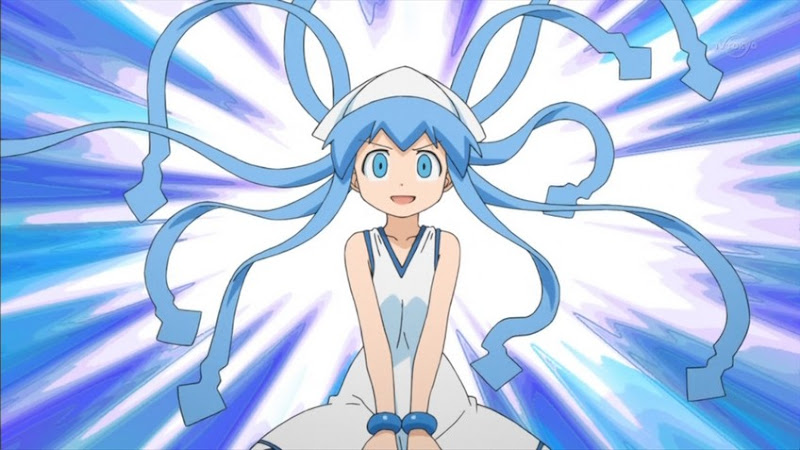
5. Squid Girl

If I were to time travel and hand this list to myself at the start of the fall season I wouldn’t believe it. Squid Girl was the complete shock of the year coming in with a quirky concept that is executed brilliantly. The jokes fly fast and the characters are endearing enough to suck you in, once caught the charm of Squid Girl alone is enough to keep you hooked. The adorable lead and her interactions with the interesting cast of characters is a joy to watch and the concept of a Squid being anthropomorphized is played straight no matter how odd from Squid Girl’s ability to produce ink to her bioluminescence. The jokes do get a little receptive and the art is uninspired standard Moe fair but the writing is enough to make Squid Girl an excellent little show.

4. Soredemo Machi wa Mawatteiru

Like Squid Girl, SoreMachi is a gag anime that brings some unique concepts to the genre to create something new. But, unlike Squid Girl, SoreMachi has the benefit of the art of Shaft and the directing ability of Akiyuki Shinbou in order to take this gag show up another level. The structure of the show constantly shifts and its treatment of science fiction elements create a strange entry into the comedy genre but one that will leave a profound impact on those who watched it. The best part being the bizarre Science fiction elements mixed in and played as if they were just another piece of the slice of life drama. Rarely is there an anime that is so boldly odd.

3. Durarara!!

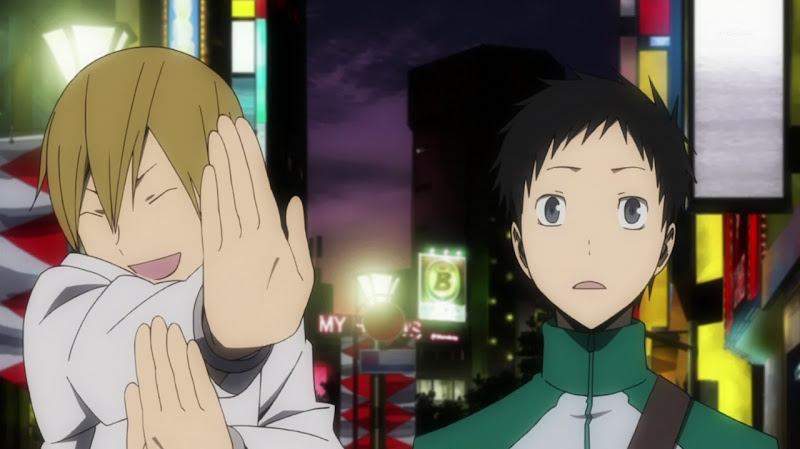
I doubt one could find a “Best of 2010” list without Durarrara!! on it. It came out early with a force and captured the imaginations of the fandom with its style and excellent cast of characters on top of a storyline that speaks to the current generation in a profound way. The action and drama combined in a perfect blend to create a piece that drew the audience in and keep them excited with some epic moments. At its heart is the idea that all urban legends are true, which include everything from the strongest man in the district to a headless woman who rides a motorcycle (and calls it a horse!). I’m eagerly looking forward to more and desperately hope they animate the remainder of the light novels.

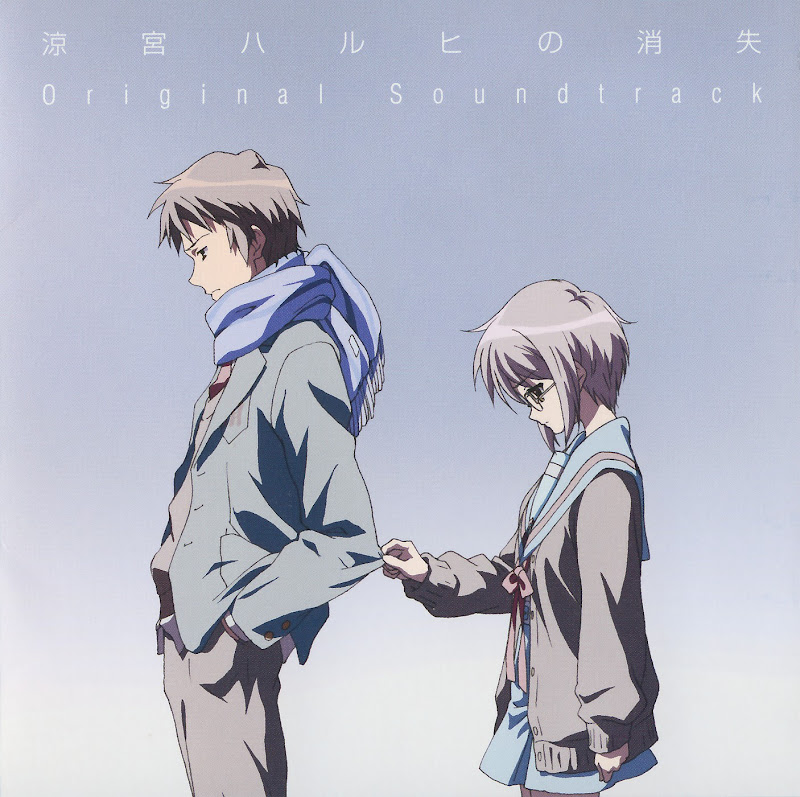
2. The Disappearance of Haruhi Suzumiya

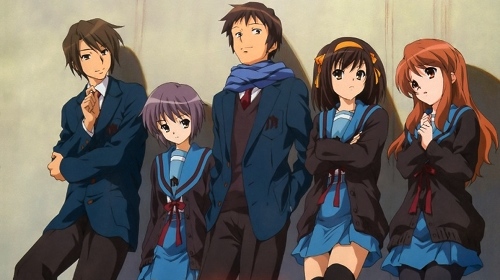
The latest chapter in the Haruhi franchise became the most anticipated piece of the story after the troll that KyoAni tossed at us with Endless Eight. Disappearance brings the Haruhi science fiction elements to all-time high as well as developing characters far beyond what they were in the series. We finally got to see Kyon step up and play the part of protagonist without being led by the nose by Kozume or overshadowed by the flamboyant personality of Haruhi. We also get to see Nagato as if she were a human girl, a vulnerable and touching version of the normally cold and distant character. The Disappearance of Haruhi Suzumiya is a deep character study wrapped in a terrific science fiction story.

1. Tatami Galaxy

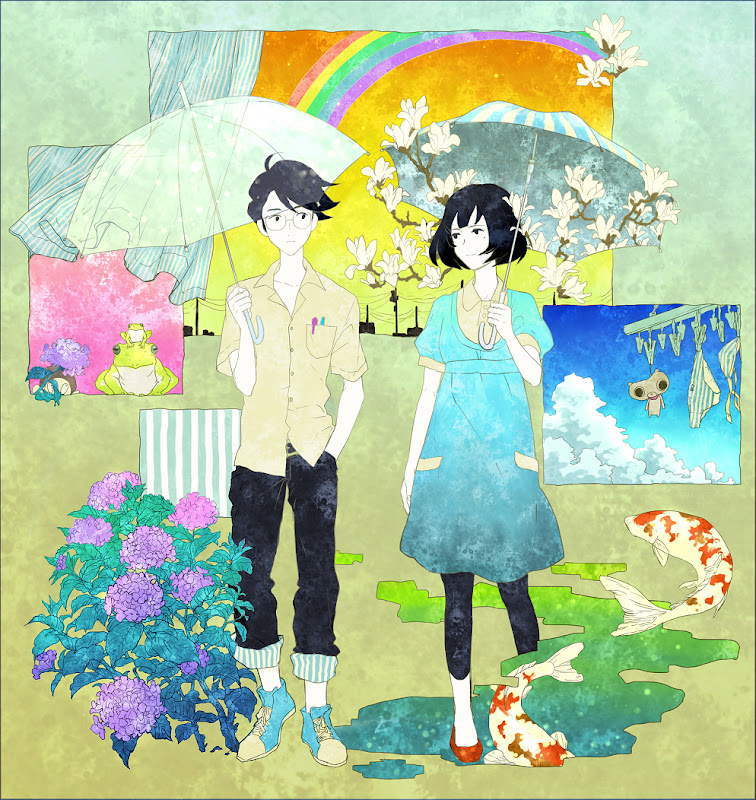
Tatami Galaxy succeeds on so many levels that it is difficult to list them. Thematically and visually It is beyond a masterpiece. While the narrative is geared towards students finishing or starting to finish their college career, which is why it spoke to me so profoundly, the message stands as a timeless reminder that little things we do may change our lives profoundly but the large opportunities will always be waiting for us to grab them. The art style is masterful; MadHouse and director Masaaki Yuasa create a cutout art style in 2D. The art was used effectively to visually highlight important aspects of the story and some creative pieces standout as bold attempts to delight the audience such as a seemingly random scene where Master Higuchi plays music to summon a massive golden fish from the ocean, what purpose that scene played in the narrative remains a mystery to me but it was entertaining as hell.

Review: The Disappearance of Haruhi Suzumiya

As Christmas approaches SOS Brigade chief Haruhi Suzumiya announces that there will be a Christmas party in their clubroom. The brigade members prepare decorations and food for the party but several days later Kyon comes into school to find that no one remembers Haruhi or the SOS Bridage. Kyon begins to search for an answer to the mystery aided by a non-alien version of Yuki Nagato.

Kyoto did a fantastic job make the film feel theatrical. Having not seen any Haruhi in over a year, since season 2 ended plus eight months longer than the Japanese fans had to wait to see the film, I appreciated how it started by introducing each character briefly and showing off the traits that we’ve all come to love in each of them and ending, of course, on the title character herself. The first thirty minute or so, the “prologue” as Kyon himself calls it, is simply a love letter to Haruhi fans. It contains all the elements that fans swoon over. Kyon is annoyed, Haruhi is insane, Koizumi is a jerk, Yuki is strange, and Mikuru is adorable. There may be more hilarious character interactions in those first thirty minutes than in all of season 2 combined. The material felt fresh again and Kyon’s role as the only voice of reason using his trade mark sarcastic tone had me laughing throughout the entire scene. Haruhi herself was in overdrive, showing an amazing amount of energy and her dialogue couldn’t have been funnier. It was an absolute delight and a real potent way to start the film.

The majority of the film features Kyon’s attempt to understand and figure out the title event; why has Haruhi disappeared, and in doing so the audience is treated to a Kyon they’ve never seen before. Normally sarcastic, annoyed, and sometimes angry, Kyon went into a complete panic when his world was turned upside down. The aspects of his character only assumed and hinted at before came out in full force when the parts of his life he constantly complained about were taken away. In those moments the true Kyon is revealed. It was shocking and yet so obvious simultaneously. The largest change to any of the characters in the Haruhi-less world was Yuki Nagato. In a world without Haruhi she doesn’t need to be an alien observing the titular character but is transformed into a normal shy girl with emotions and feelings. The change is reasonable; Yuki retains all the traits from the alien version but instead is placed in a human context. She is still quiet and shy but actually reacts to the people and events around her instead of sitting and passively. While a drastic and shocking character change it wasn’t an unbelievable character change. It was Yuki imagined as a human girl, as simple as that.

The film’s main plot contain some serious and complex science fiction concepts wrapped up in a Moe costume, just like Haruhi should be, but everything feels like the stakes are much higher. Most of the series has to do with the danger of Haruhi finding out about her powers and running amok, the movie turns that plot in a new direction by showing a world without Haruhi. This puts Kyon finally in the driver’s seat instead of living in the shadow of the energetic Haruhi Suzumyia. Instead of the phantom threat of Haruhi destroying the world the conflict of the film comes from Kyon trying to get his life back, the life so wonderfully portrayed at the start of the film and all that can go away unless Kyon puts things right. The conflict is far more immediate than it has ever been, Kyon might lose Haruhi forever, the audience might lose Haruhi forever, and keeping her is finally something Kyon believes is worth fighting for and something the audience can get really distressed over.

The film, as exception as it is, is not without problems. Most of them come from the length. Kyoto wanted to make the Haruhi fans as happy as possible and to do that they adapted the novel practically word-for-word. The film’s runtime comes in at 163 minutes and it started to feel long by the end. Elements that work in novels such as references past events constantly, long sequences of omnipotent narration, and wrapping up the narrative with long scenes of dialogue after the action is long over slowed the film down. As a Haruhi fan I was in love with every word that came out of every character’s mouth, maybe not -Esper guy-, but as an Anime fan the film obviously needed some serious script editing to improve the flow of the film and tighten u the dialogue for maximum effect in minimum time.
The Disappearance of Haruhi Suzumiya is a near masterpiece. It gives Haruhi fans everything they want from a piece of the Haruhi franchise while opening up the story to a greater level of depth, science fiction concepts, and narrative. However, the films goal to appear to the hardcore fan harmed the overall quality by slowing down the pace of some scenes and making the film longer than it really needed to be.

Good

  • Haruhi characters are at their absolute best in humor and drama
  • Reaches new narrative and conceptual highs for the series
  • Calls back on past events to link both of the past seasons with the film
  • Direction and visuals are excellent even for Kyoto Animation.

Bad

  • Scenes that work in a novel feel long on screen
  • Long scenes of dialogue and omnipotent narration slows the pace of the film


Set Up and Pay Off, the Problem with Bleach

vizard10

Shinji hat I’m sure every Bleach fan has had a love-hate relationship with the anime because of its long run. The majority of the hate, of course, comes from the long and tired filler arcs stuffed into the show when the anime catches up with the manga. While the length of the show is starting to annoy me I can’t help but continue to watch and be excited by the latest episodes. The main reason: The formula has never changed.

  From the start of the show we were always treated with new powers and foreshadowing at what will be coming long time down the road. Those two elements have kept the show alive and popular for years now. Back during the first season what we knew of Soul Society were the stories that Rukia told Ichigo. But in the next arc the world that Rukia only described briefly slowly gets revealed as the heroes slowly creep their way into the fortress and start to fight the Shinigami. Each new Shinigami fight brought new powers and a new interesting dynamic to the way the combat of Bleach works.

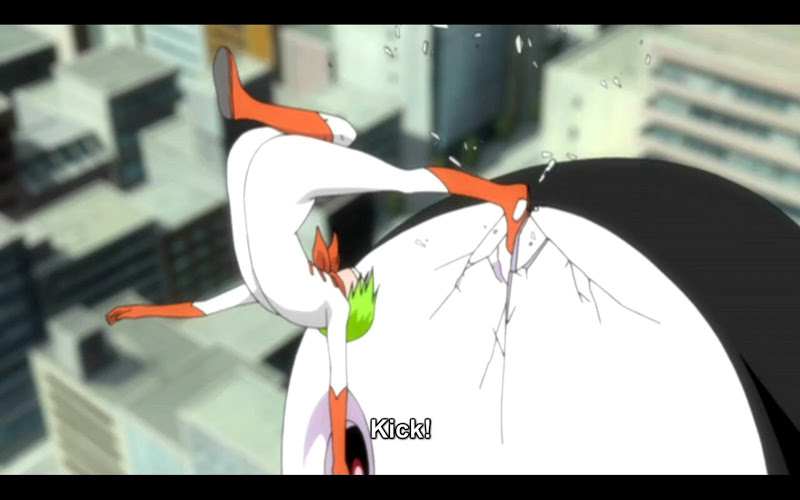
Unfortunately the discovery aspect of Bleach is mostly gone. During Hueco Mundo the feelings of suspense Kick! due to the interesting battles was still there but each fight felt like a pale shadow of one already done earlier in the show. The feeling of uncovering the universe was gone because Hueco Mundo was painfully uninteresting compared to the rich world and characters of Soul Society.

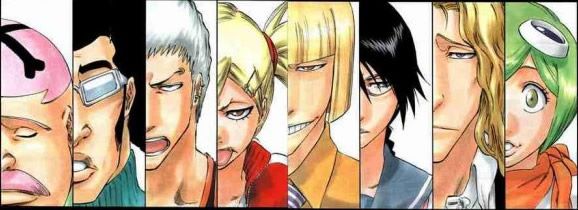
Now that we are entering what should be the final arc, the battle with Aizen, I was hoping for a speedy end with a few cool fights. But instead Shinji hollow of that I’m starting to see some part of the original Bleach returning. The arrival of the Vizzard, not a spoiler since it was established way over a year ago that they were on their way, has seen the unifying of story elements left scattered throughout the after-soul society Bleach. As all these elements fall into place I realize exactly what happened to Bleach: Tite Kubo dreamed too big.

Looking at the size of the story he created with the number of characters it is amazing he was able to pull off anything as satisfying as he did. But he did bring everything together, very much like he did at the end of the Soul Society arc; he just did it in such a large way that the audience became completely lost in minor fight after minor fight and became unable to see the bigger picture of the Bleach story.

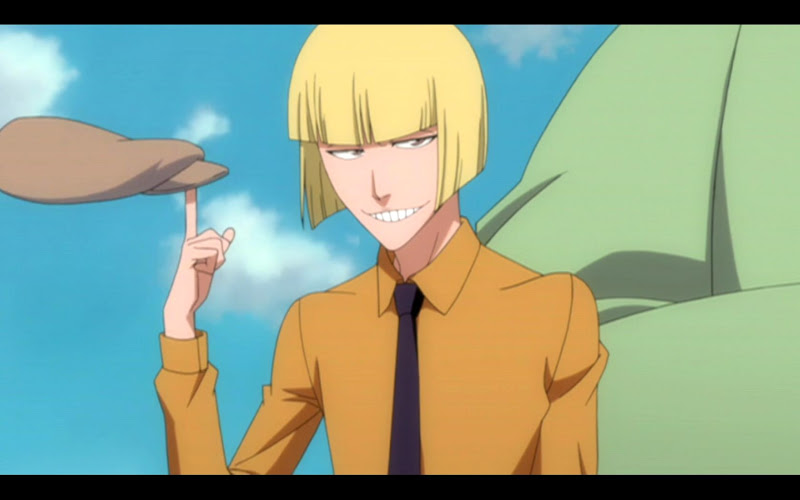
But now what all of these side plots, character relationships, and final hidden powers of the Shinigami captains Shinji - Captain Commander are being revealed and coming to satisfying climaxes I have to say the time it took to get to this point was worth it. The filler wasn’t, but I am willing to ignore that aspect of the show for now. The length of time used to tell the story aids even the smallest of events in order to make them appear spectacular and without them those rushes of excitement when a villain reveals a new, more powerful, attack would be lost.

Were many of those small, minor fights needed for this effect? No, they were mostly a waste of time which is why I say that the weakness of the post-soul society Bleach comes from Kubo’s failing to keep the audience focused on the bigger picture. He set up plots and characters masterfully and then ignored them in order to pad the series.

Shinji The effect of the return of the Vizard and clashing of all the build up to this point would have definitely gone for nothing if Kubo didn’t take the time to set all the pieces into place. But Kudo needs to be more discerning when plotting out the story. Everything that has happened for far this season has been well worth the wait, but there is no reason why the audience was forced to wait for a satisfying resolution to these story arcs.

I look forward to the end of the Bleach anime. I’m still too stubborn to switch to the manga. Unfortunately, it seems I’ll be waiting a long time for either of them to come to their ends as Kudo doesn’t show any signs of stopping despite having Aizen take the battlefield over fifty episodes ago, not including filler! Ah well, I guess Bleach will guarantee a half hour of dumb fun every week for the next few years.

What do you say? Is the current arc in Bleach satisfying? Have you given up on Bleach altogether or just switched to the manga? I’d like to hear your opinions in the comments.

Review: Occult Academy

occult%20academy[1]


Waldstein Academy is a high school devoted entirely to the occult. Mara Kumashiro returns after a long absence for the funeral of the principal, her father. Having seen her father’s obsession destroy her family she sets out to destroy Waldstein. But her plans are interrupted when Fumiaki Uchida, a time agent from the future, arrives to stop a world ending calamity. Bandaged[1]

Occult Academy starts off as a tool to poke fun at shows containing supernatural elements by building its  premise around a school dedicated to the occult. This becomes a vehicle to explore different types of stories involving supernatural elements from monsters to near death experiences. In fact, the entire premise of the show transcends genre in an attempt to combine science fiction and fantasy into one big super show. But all these elements don’t fit together perfectly and parts of Occult Academy seem like they don’t belong in the show at all.

The first episode is about a poltergeist haunting in place of the dead principal, the second episode is about a time traveler who returns from the future in order to prevent an alien attack, and the third episode plays out like a wacky romance anime. On paper those two plot lines sound like they couldn’t possibly fit together but the early episodes of Occult Academy enable these elements to work well together and it is fresh that a show is attempting to transcend the tropes of these genres by combing them, by weaving them together. But that pattern soon ends and Occult Academy becomes a monster of the week show where the group encounters a new occult-esque problem and go off to find its source while the main plot is completely ignored. This seems comparable to the X-Files where each episode Mulder and Scully encounter a new supernatural element and attempt to disprove it. However, the monster of the week episodes of Occult Academy have the characters doing a lot of running around and participating in cheap action sequences instead of exploring the source and mythology behind these unique creatures. I have always been a fan of stories that have been able to combine elements from different genres. Robert Heinlein’s Glory Road and the anime Scrapped Princess filled that desire but Occult Academy constantly fell short because of its silly tone but also because the show didn’t juggle its genres well. Not that all the elements of Occult Academy failed, a lot of the genre mixing was interesting and gave the show its initial shine. There was simply too many elements playing in this and no one genre was treated with proper respect. 

Maya%20upset[1] While the one off episodes hurt the overall quality of the show the characters do a good job of rescuing it. The two main characters are complex and each get plenty of time in the series for their stories to be explored and it brings a human element to the jumbled narrative. The time traveler, Fumiaki Uchida, is forced to face himself in a past where he has no utility over his life, having his physic ability exploited for profit by his mother. This adds a compelling element as Uchida has to confront his demons by literally facing his past self. Maya Kumashiro goes through a similar arc, hating everything about the occult because she believes it made her father distant she is brought into a world where the occult is revered. She slowly comes to accept her father’s work and the positive impact he had on the students of Waldstein.

The background characters act only as that, background. While they do help shape the two lead characters all the side characters lack depth. I didn’t expect them to have much of an impact on the story but they appear in every episode and never seem to grow or change along with the story. Even after being witnesses to some pretty amazing supernatural spectacles they go on as if nothing happened. I’d expect them to think about withdrawing from the school after a few of the deadly encounters with supernatural monsters but no, nothing prevents them from making it to class on time every day.Evil%20Witch[1]

While the monster of the week episodes distract from the main story it picks up in the final three episodes, which  are completely dedicated to the main plot of the show bringing the total number of plot centric episodes to six. The elements that made Occult Academy fresh and exciting in the beginning return, but with more elements and genre switches the plot becomes weighed down and overcomplicated. Occult Academy attempts to make all the monster of the week episodes connect to the main plot but it is forced with only the tiniest of hints being in the individual episodes that they are all connected to the central plot. Each episode leading to the finale introduces more twists that change the show, destroying any payoff the main storyline could have possibly had. Despite the inadequate juggling of the material I found the last episodes enjoyable because it went back to the original aspect that made Occult Academy such a huge star of the summer season, the show reinvented itself with each episode. While the narrative didn’t pay off, it certainly was entertaining. More importantly the best aspect of the show, the character arcs of Maya and Fumiaki, were brought to a satisfactory end.

The most offensive elements of the show were the pseudo science fiction that the show implemented. In a show that combined so many genre elements I’m not surprised that Occult Academy didn’t really has a solid grasp on any of them individually. But it breaks its own rules constantly as it reaches towards the sacrosanct conclusion that I could tell the writers just didn’t care about following any kind of logic. Inconsistency and illogical plot harm any story but it is especially detrimental to science fiction.

While many of the elements of Occult Academy are refreshing and the main characters have some real depth that is explored well throughout the series, the pointless monster-of-the-week episodes and haphazard main storyline drag Occult Academy down to mediocrity. Still, there is a lot to like about Occult Academy because of the innovative ways it plays with genre. I think this will serve as an example of how the mixing of genres can be interesting but still serve to undermine the quality of a story.

Good

  • Main characters and compelling and developed well
  • Innovative in the way it combines genre and plays with genre tropes

Bad

  • Monster of the week episodes don’t advance the main plot or characters.
  • Main storyline becomes weighed down and over complex
  • Ending relies on “twists” not on building a successful story arc.
  • Minor characters are flat, don’t act realistically.


Convention Report: New York Anime Festival 2010

nyaflogobig[1]

Yes, this post is extremely late, almost three weeks late, but I felt other things took priority on the site. Any other excuse I won’t bore the reader with because they shouldn’t be bothered. While much of what I have to say has already been said… I hope you enjoy my Convention Report:

This is the first year that New York Anime Festival had been merged with New York Comic Con and the numbers speak for themselves. Last year around 21,000 people attended NYAF and 71,000 attended Comic Con, so the merge wasn’t exactly even. The fear before the event was that Comic Con would completely overshadow the Anime Fest and in a way, it did.

The Convention was divided into two main sections: The Comic Con section featured the massive Exhibition Hall, the Comic Con artist alley, the autograph area, the variant stage, and the Comic Con panel room. Then the Anime section which featured a modest artist alley, the maid cafe, screening rooms, panel rooms, and the massive screening room where Haruhi and other major releases were shown. While it was convenient to have all the anime events in a single area it felt like we were brushed aside, placed in a corner while the “big boy” convention was going on. I could live with that, as strange a dynamic as it was, because those fans that could care less about Comic Con could stay in the Anime section and be completely happy, right? Wrong.

P1010187.JPG.scaled500[1] The separation wasn’t complete enough to make the “two cons at the same time” scenario work. The Amine dealers and distributors were in the Exhibition hall mixed in with Comic Con. The worst part was that the anime stuff was all jammed into the back corner of the hall and due to the amount of fans that went for the Anime Festival and wanted to see Anime merchandise those two allies in the back were impossible to navigate. There was a jam of people wanting to get in and see what the dealers were selling but just by stopping and trying to look they made the jam worse. Granted, this was the first time the two conventions merged perhaps the management figured that those dealers wouldn’t be in high demand, but the management knew that at least 21,000 people wanted to see the stuff in those two isles. Had they put it more towards the middle it wouldn’t have been a problem because there is more room for the crowd to disperse, they aren’t locked against a wall on one side and could move into one of two isles around them, and the isles towards the middle felt bigger. They could have put something more niche, like the custom art toys, in that corner and not had the massive jam. Just because of the difficulty of getting near those booths I’m sure the vendors lost some serious sales over the weekend.

Comic Con did bring plenty of crossover potential to the show by attracting the large video game companies. I’m sure anime fans appreciated being able to play upcoming games from Nintendo, Rockstar, Hudson, Square Enix, and Sega. It also allowed me to discover a new aspects of the toy collector; custom art toys. There was half a row dedicated to these artistic toys specifically designed for other artists to come and customize them. It was cool to see how creative people can be on a plastic form and the ability wasn’t going unnoticed either with the custom versions having markups as high as $150.

P1010193.JPG.scaled500[1]In terms of guests, Minori Chihara in attendance was something spectacular and the big bands they got, X  Japan and Puffy AmiYumi, were a treat for fans but I doubt the merger with Comic Con affected their attendance to the convention.

If they are going to continue to have the joint convention they need to do one of two things, either completely separate them or merge them entirely. This half-separate, half-combined thing that happened over the weekend wasn’t the best solution. The anime section felt ghettoized and less respected than the large glittery booths of the Comic Con show floor. The fact that the Anime dealers booths were swarmed almost constantly means they need more space and placing the anime dealers in their own dealers room may be the only way to go considering it is impossible to make that exhibition hall any larger.

Highlights:

Exhibition Floor

P1010196.JPG

The Exhibition Floor, as I said above, was massive due to the presence of ComicCon. All the major video game companies had booths, including a massive booths for Square Enix, Sega, Nintendo, and Ubisoft. The anime presence was sparse, at best, and constantly crowded but Bandai managed to have a fantastic booth right in the front of the room where Minori Chihara and other starts signed autographs. Apparently, they also gave away free K-On! posters that I was unaware of at the time. Anger.

The second half of the Bandai booth showed off almost every model kit they had at the show. Dozens of Gundam, including the new kit from the Gundam Unicorn OVA, alongside Bandai’s other mecha properties. I picked up a Guren Mk II from Code Geass, it’ll be my first large Bandai model kit s so… hopefully everything goes well.

The hall was chaos, and looking back all I remember was chaos. The crowds were tough to manage, the most popular booths had unapproachable lines, and some obnoxious booths blasted loud music to disturb the people browsing in the Manwa booth.P1010150.JPG.scaled1000[1]

I avoided the American comic booths, having no real interest in buying classic comics. But the ComicCon artist alley was filled with a ton of interesting things. Again, because of the crowd and sheer size of the hall it was hard  to give everything as thorough a look as I would have liked. While I was mostly uninterested in the Hollywood stars giving autographs there was at least four cast members from Battlestar Galactica that I was fanboying over. I even got Nicki Clyne’s autograph! Squee!

The only other thing I purchased on the exhibition floor was a movie poster for “The girl who Leapt Through Time,” which was a great deal at $5 for the full sized poster. I might have bought I lot more if I didn’t have to take cabs and trains the whole weekend, but that is the problem with holding such a large convention in New York City.

The Exhibition hall was incredible and I wish I spend even more time there, but there should have been a little more organization to the place. Even late on Saturday I continued to discover places that I hadn’t seen before and while that was a magical feeling it doesn’t bode well for someone who sets out to see the entire convention.

Anime in Academia Panel

As someone who wants to approach anime from a more serious viewpoint that most would (hey I need to get some use out of that English Literature degree) I made it a point to check out the Anime in Academia Panel run by Alex Leavitt a stellar blogger and MIT researcher. I have approached anime from a literature studies point of view, focusing on the narrative; themes; how we as Americans are supposed to interpret those things, and reflections those ideas have on society. The panel that Alex assembled ran the gambit of areas of study that I wouldn’t have considered, most notably Sociology. The panelists were more concerned with the people who watch and make anime than the content as it exists.

The best advice they gave for anyone wishing to study anime on an academic level is that you must adapt anime into whatever interdisciplinary you wish to pursue in order to study it. So if one was a history major, they’d have to find a way to write about how Anime impacted history in a profound way, a socialist would look at Anime’s impact on society or study anime as a reflection on society. The primary topics of research that were most focused on were Toys, Collectors, Anime, Anime consumers, and Toy consumers which, when broken down, really show the varied niche topics one could study when the broader categories are broken down so finitely.

If one wanted to study anime seriously, as in any field of study, the panel suggested one to read widely and in many different media. So if your focus was manga than you should consume normal novels, American conics, ect in order to gain some perspective on what makes your media unique, what it does that sets it apart from other media. One should also experience the world and fold those experiences back into your field of study. The image of monks focusing their entire lives on study is a noble one but in order for anything to have context or to be relative to a good number of people it needs to be grounded in some real world experience.

When preparing your research there are some points to remember. The first is to always place the study in context, what does the study mean to someone outside the specific topic? Writing about anime for anime fans is great, but academia’s goal is to apply knowledge to all fields of study, so again this is where context is important to any field of study. The instinct is to write about something that is “shocking,” like an obsession with boys love manga, but focus should be on things that are genuinely good not topics that’ll draw controversy.

One drawback the panel pointed out in the academic world is the dominance of English. Japanese scholars are widely ignored by the American academic world unless they are published in English. While this is unfortunate the benefit is that being published in English is a great honor to Japanese academics so what little English language work we have from Japan is superb.

During the Q&A something was asked about the state of the industry and one of the panelists made a solid point, publishers ignore scanlators when times are good and villainize them when times are tough. Just an interesting point that reflected the recent crackdown on scanlators as the sale of manga has begun to drop.

List of suggested academic books:

The Disappearance of Haruhi Suzumiya

My full review of The Disappearance of Haruhi Suzumiya should be up in the next few days.

I have never seen an anime film in theaters, for whatever reason. Watching a film with a large audience is much different than watching alone or with a small group of friends , but that much more of an experience when the audience are massive fans of what they are about to see. There is a crowd reaction that is infectious. If you have a chance to see a really great anime film with a huge group of fans, or any type of film with a group of nerds, do it. Without question.

Minori Chihara Concert

The concert experience was strange, the crowd seemed to be divided to people who were extremely into the music and those who were just there to enjoy a show. But when she played the classic Haruhi closing theme, Hare Hare Yukai, the crowd went wild. Despite the fact that filming wasn’t allowed I couldn’t help but try and get that performance.


Hatsune Miku screening

The Hatsune Miku “concert” was the most disappointing event at the convention , I actually believed it was going to be some sort of concert but instead it was a screening of the Miku live concert DVD. It was enjoyable, but nothing I couldn’t have watched on Youtube. I love Miku… if you haven’t watched any video of the live concert it is amazing, the way the crowd reacts to a 2D idol is unbelievable.

Posts from New York Anime Festival 2010: