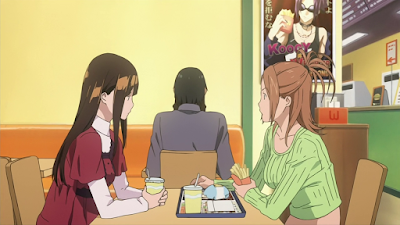
Bakuman is often criticized for its misogynist undertones and from the first episode it was clear that the show’s portrayal of women was odd. But what is the source of Tsugumi Ohba’s low opinion of women? I believed that the Misogynist vibe in Bakuman is rooted in the Japanese work ethic and comes from the intense pressure to succeed. The success of Mashiro and Miho’s relationship in Bakuman is dependent on their individual career success. In essence, Bakuman is removing the emotional element from relationships and basing them on status alone. While that is true at the core of the problem it seems that the blame may rest directly on the author.
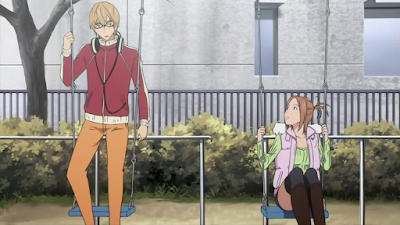 Women are portrayed as obstacles in the path of men who are trying to reach their goals. In the most direct sense, Moritaka’s mother refused to allow him access to his Uncle’s studio and refused to accept his dream of becoming a Mangaka. It was his Father and Grandfather who stepped in and insisted that he be allowed to pursue his dream, telling the mother that some things “men have to do that woman can’t understand”. This applies also to romantic relationships and why Miho is set up as the ideal woman. Miho also has a goal she is trying to accomplish, and no other woman in the series seems to share her values. She wants to put off their relationship knowing that it would get in the way of her dream of becoming a voice actress. The “normal” girl is shown during a scene when a young girl chases her boyfriend to the roof chastising him the entire way for changing his High School of choice. She is upset because they won’t be together. This is what Ohba sees as the normal girl, chasing after a boy and having no goals of her own. The action of the young man is what the author acknowledges as the correct choice, personal progress over romance.
What becomes the enemy in Bakuman are laziness, sloth, and complacency. Relationships are portrayed as wastes of time and energy. Moritaka doesn’t have time to go see a movie because he uses every bit of his free time perfecting his skill as a mangaka. Akito’s relationship with Miyoshi becomes the model for what relationships can do to one’s time, energy, and goals. At the start of their relationship she constantly tries to take Akito away from his work in order to go to spend time with her. Most of the time Akito refuses and Miyoshi is left upset, but slowly she begins to understand what Akito and Moritaka are trying to do. Unfortunately, this leads to the most condescending portion of the series.
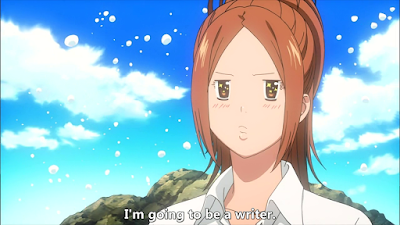
Miyoshi becomes jealous of all her friend having goals except for her, so she decides one day she is going to be a writer. Her decision comes from the desire to fit in; the group has Mangaka and a voice actress but no prose writer; not from the desire to actually become a successful writer. She decides to write Miho and Moritaka’s story instead of coming up with an original idea and not knowing where to begin she enlists Akito for help. Instead of Akito working on his own story, he ends up helping Miyoshi with her romance novel and, in fact, writes the whole thing. She becomes excited for herself when the first part of the novel becomes a success and takes all the credit. Miyoshi displays no personal motivation; she enjoys the end result of hard work. She is the antithesis of Miho, Moritaka, and Akito. The dream ends when Akito refuses to write the next part of ‘her’ successful cellphone novel. She tries but quickly gives up writing it herself, changing her dream to be the same as Akito’s dream. Her ‘goal’ in life becomes that Akito and Moritaka become famous Mangaka, showing she has no aspirations of her own and has to live in the shadow of her boyfriend. After Miyoshi realizes she almost broke up her boyfriend’s team she goes from being bitter that Akito doesn’t have time to spend with her and jealous of Moritaka and Miho’s dream, she gives up and becomes a cheerleader for them. She is content to be in the background getting tea and making meals for the hard-working Mangaka. She is happy to fall into a domestic role after Akito promises to marry her, which reveals her only true aspiration to be marriage, everything else being a method of getting Akito to notice her.
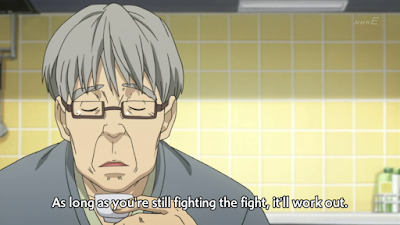 Miyoshi’s role in the story says a lot about Ohba’s view towards women. It is comparable to his Death Note character Misa. Misa initially begins her own Death Note fueled rampage in order to get Kira’s attention, but once Kira pretends to be in a relationship with her she becomes completely obedient to him. Akito’s mother also follows this pattern, while she is a successful school teacher her husband losing her job breaks her, almost cripples her emotionally. She decides to channel the disappointment in her husband into her children, pushing them hard so they don’t fail. Instead of picking herself up and focusing on her career, she relied on her husband to create a stable household. It seems that Ohba’s view on women is that they only show initiative to attract men. The obvious way this is portrayed in both Death Note and Bakuman suggests this might be a conscious bit of social criticism; however it is more likely that he just can’t write female characters in any other way. Nothing is known about the Mangaka’s personal life, if he is married or in a relationship, the most the public knows is that he collects teacups and “develops manga plots while holding his knees on a chair.” Whether his opinions on women come from bitterness or ignorance may never be answered definitively but the blankly negative female character he has written makes the answer a bit obvious. There is, of course, one exception to his negative female characters. The heroine of Bakuman, Miho, is written as the ideal woman.
I’ve already stated some reasons why Miho is the ideal woman in the series. I will restate some of that and build on top of it here, because Miho is the antithesis of every other woman in Bakuman, for positive and negative reasons. Unlike the other women in Bakuman Miho actually has a personal goal, she wants to become a voice actress and even though she is meek and shy she is pushing forward with that dream no matter what it takes. In that respect she is equal to Moritaka and superior to any other woman in the show. She is the ideal girlfriend in that she stays out of the way, she doesn’t ask to be taken out, and she doesn’t get involved with Moritaka’s business. She remains on the sidelines as a silent cheerleader. She only contacts Moritaka when she actually has something to say, mostly congratulate him, and she never brags about her own accomplishments. She is also extremely loyal and in love with Moritaka without any real reason to be loyal or in love with him. She is his fantasy girl and all he has to do is become a Mangaka, which was his childhood fantasy, and she will marry him. 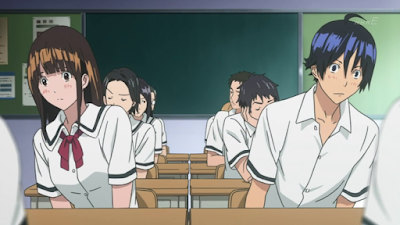
Bakuman is about a Mangaka, and in order to be happy the Mangaka has to create a successful manga. It is clear that Miho is the ideal woman for Ohba and that every other woman in the series represents Ohba’s narrow view of woman and that he, as a successful mangaka, should have found true love. While it is unusual to make assumptions on the author’s personality from a piece of fiction I think Bakuman is an exception. It is, after all, a story written about Ohba’s profession that combined with the consistency of his female characters. Bakuman is the result of an author constructing a fantasy in which he can be the hero and get the girl as an author. If we take the experiences of Akito and Moritaka as true reflections of Ohba’s life; working to become Mangaka to the exclusion of all else; Ohba might be the teacup collecting lonely writer that his only existing bio makes him out to be. To the end Bakuman is the fantasy of a man who has dedicated himself, with the vigor of a Japanese businessman, to his art and never had time to find someone to love.
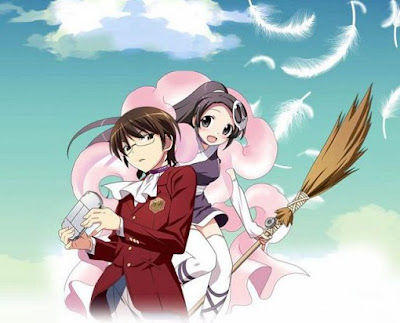

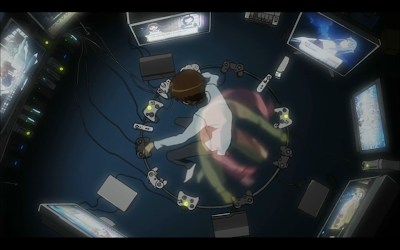

 What drags The World God Only Knows down are the one off episodes. In a 13 episodes series there are three painful filler episode and one none-arc episode that passes only because it helps establish characters. The author knows how to play with this world and the characters in the format he created for Keima’s targets, but stepping outside of that the characters lose their appeal. The jokes around Keima being a hardcore gamer work in the regular episodes because they are mixed with the rest of the narrative, but when we get two episodes dedicated to him playing games the joke is stomped to death in the first few minutes and the episode simply become a rehash of those two or three jokes repeated for twenty minutes. These episodes also allow the disgusting misogynistic nature of the series to come out, lacking the charm and quality of the official arcs.
 to show this to the average American they would either take the sweet cliché romances at face value or be offended by Keima’s attitude towards women. No one is going to wait around for someone to explain that the reason the clichés are paper thin but they are being used to poke fun at paper thin clichés. I can only end my personal indecision on The World God Only Knows by saying that it was effective at what it set out to do, use Keima and the clichés to create interesting and sweet romantic stories. If a person comes to the show not knowing that the show was parodying the tropes it used, then it would probably be unwatchable for them.
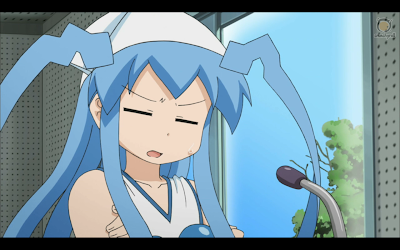
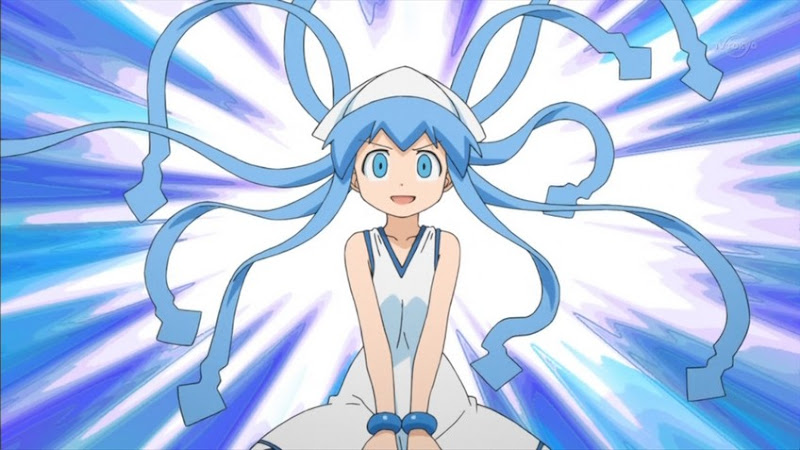
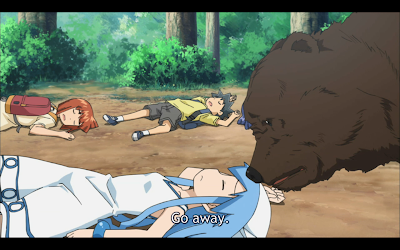 The supporting cast plays a large role in the humor of the series, but really they exist to place Squid Girl into situations where she has to react and confront a problem in a “squidly” manner. There is Sanae who develops an obsessive crush on Squid Girl, Cindy Campbell a US researcher who believes Squid Girl to be an alien, Chizuru who is a seemingly sweet girl until made angry, and Nagisa who is employed by the cafe and becomes terrified by the invader from the sea; a fact which Squid Girl couldn’t be happier with. Each character represents a single gag and when they appear a variant of that joke immediately happens, the writing is clever and each encounter is varied enough to hide repetition. While the characters are funny on their own the real joy is when they interact with Squid Girl. Squid Girl is unable to adapt to simple concepts so when she is faced with an absolutely mad group of people she doesn’t quite know how to process it, and the show continuously tosses wild elements at each other and just how they react. The result most is bizarre confrontations that are played as charming and humorous.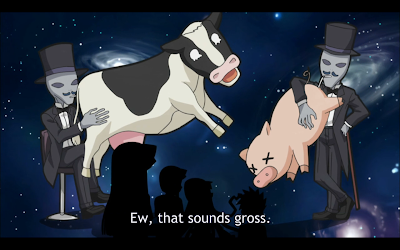
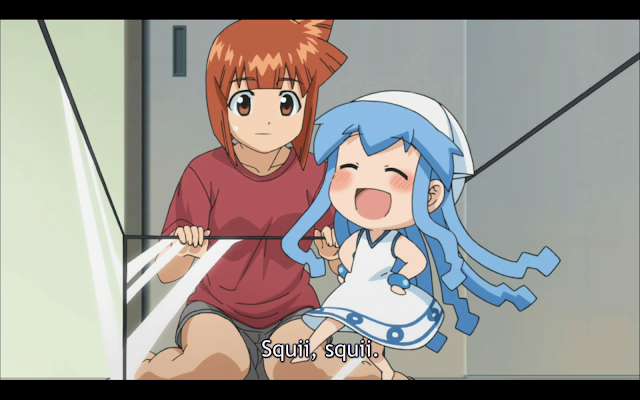 The final episode of the series attempted to cap it off with an emotional ending as Squid Girl loses her powers and leaves the tea house. It feels artificial and contrived, even as a person who has become a huge fan of the show and fallen absolutely in love with Squid Girl I wasn’t at all emotionally moved by Squid Girl leaving because it was obvious she was going to come back. I understand the need to have a neat ending to close the series but by dedicating two thirds of an episode to such an obvious plot line the only thing they accomplished was admitting they couldn’t write an effective ending to the show. They should have stayed the course and produced two high quality shorts, as we have come to expect, instead of such an obvious ploy for closure.


 Verdict: SoreMachi is a visually innovative and witty slice of life anime. The animation and direction propel what would be an average comedy series into a uniquely powerful piece that appears insightful beyond its content. At the core it is a well written comedy that has a well exploited mystery theme running through most of the jokes, plus its ability to portray Science Fiction elements in a deadpan slice of life tone brings an odd twist to this extremely enjoyable show.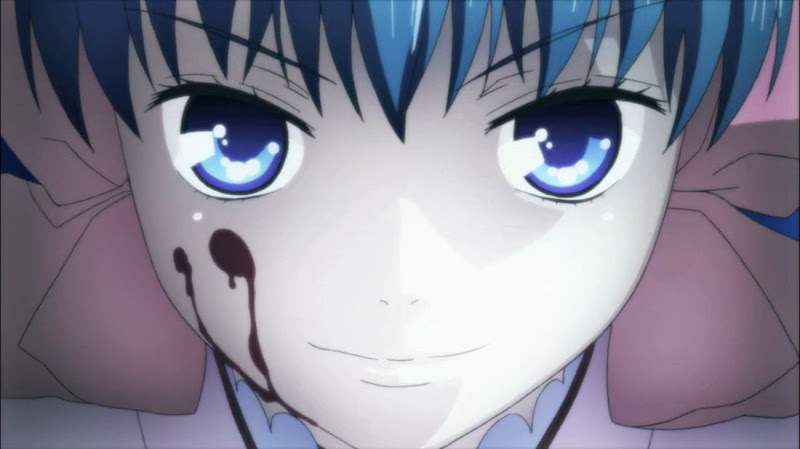

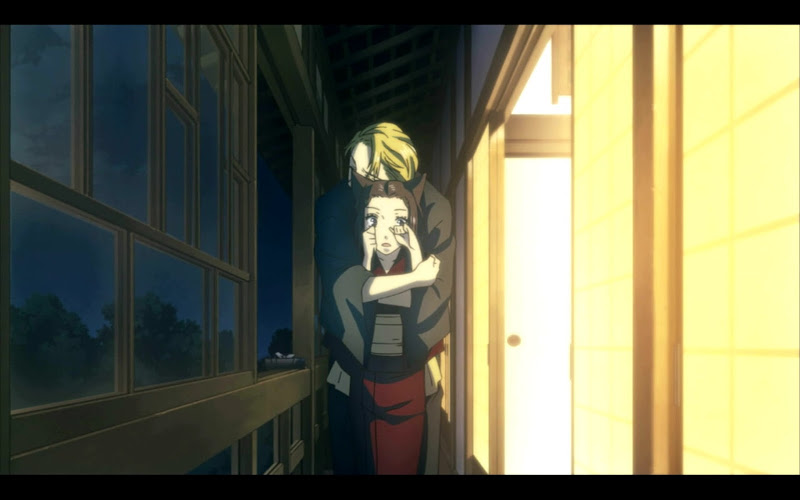
 struggle between old and new worlds all climax in a fantastic end. The issues of time play a factor but Otome Yokai Zakuro strength lies in the main cast, and Zakuro herself, more than the storyline. The show gives plenty of time to develop at least Zakuro’s character as it brings the narrative to a close, so much so that I can forgive some of the rushed elements. So much of the narrative is geared towards wrapping up the main thread that some of the larger thematic and conceptual elements of the series also get left in the dark.
 Otome Yokai Zakuro is a fantastic romance series with strong plot, world building, and characters. The overarching plot unravels a mystery based on the dynamic characters the show presents to the audience. However, even with those strong elements Otome Yokai Zakuro’s action becomes repetitive and strong thematic elements that start to develop early on become lost in the romantic story and lose their effect when the relationships between the characters attempts to be a metaphor for the old and new coexisting while the show forgets the basic set up of the narrative. The show becomes crunched for time causing a rushed, neatly tied up ending in place of something more genuine.

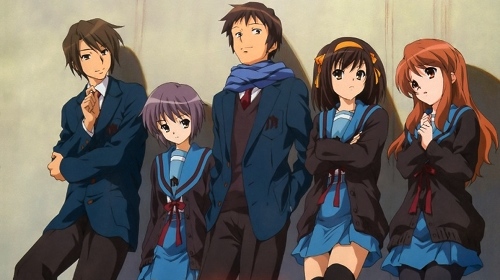
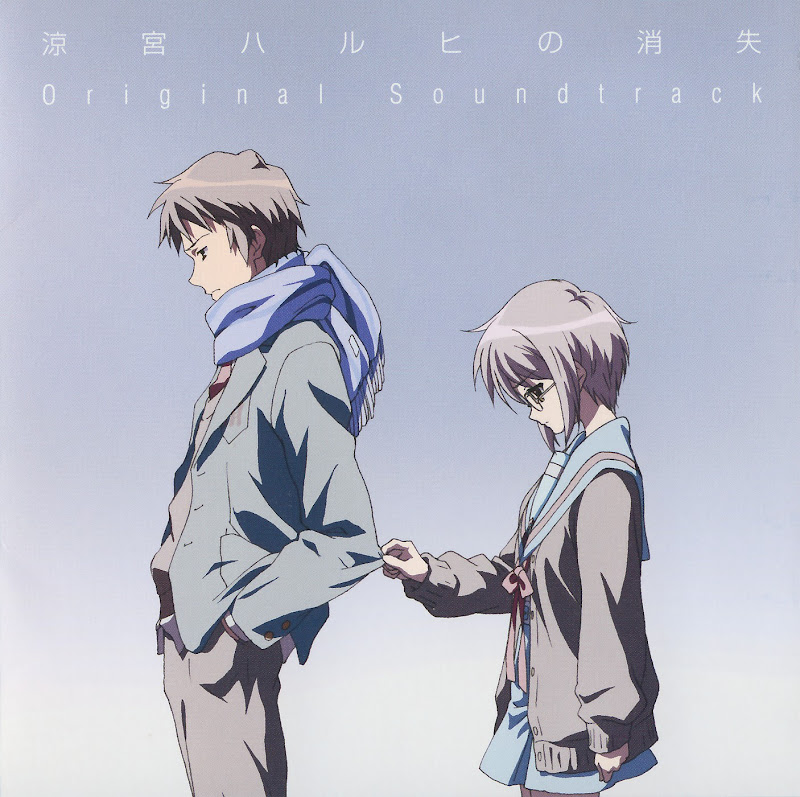
 feel long by the end. Elements that work in novels such as references past events constantly, long sequences of omnipotent narration, and wrapping up the narrative with long scenes of dialogue after the action is long over slowed the film down. As a Haruhi fan I was in love with every word that came out of every character’s mouth, maybe not -Esper guy-, but as an Anime fan the film obviously needed some serious script editing to improve the flow of the film and tighten u the dialogue for maximum effect in minimum time.
![occult%20academy[1]](http://lh6.ggpht.com/_lh4zKkFS1gg/TOL4p3dUAQI/AAAAAAAALBQ/zBJ3QsCW0vA/s800/occult%20academy.jpg "occult%20academy[1]")
![Bandaged[1]](http://lh4.ggpht.com/_lh4zKkFS1gg/TOL4qELJ9cI/AAAAAAAALBQ/aN-t4eV0ohw/s640/Bandaged.jpg "Bandaged[1]")
![Maya%20upset[1]](http://lh4.ggpht.com/_lh4zKkFS1gg/TOL4qH49a8I/AAAAAAAALBQ/FQFQ5Tz3x_w/s800/Maya%20upset.jpg "Maya%20upset[1]")
![Evil%20Witch[1]](http://lh4.ggpht.com/_lh4zKkFS1gg/TOL4qV3Uk4I/AAAAAAAALBQ/X32S9WoNbA0/s800/Evil%20Witch.jpg "Evil%20Witch[1]")
![nyaflogobig[1]](https://otakuinreview.wordpress.com/resource/WindowsLiveWriter-ConventionReportNewYorkAnimeFestival2010_83F-?fileId=9261958 "nyaflogobig[1]")
![P1010187.JPG.scaled500[1]](https://otakuinreview.wordpress.com/resource/WindowsLiveWriter-ConventionReportNewYorkAnimeFestival2010_83F-?fileId=9261960 "P1010187.JPG.scaled500[1]")
![P1010193.JPG.scaled500[1]](https://otakuinreview.wordpress.com/resource/WindowsLiveWriter-ConventionReportNewYorkAnimeFestival2010_83F-?fileId=9261963 "P1010193.JPG.scaled500[1]")

![P1010150.JPG.scaled1000[1]](https://otakuinreview.wordpress.com/resource/WindowsLiveWriter-ConventionReportNewYorkAnimeFestival2010_83F-?fileId=9261967 "P1010150.JPG.scaled1000[1]")
 Hollow Pursuits