Author: Scott Spaziani

Top 5 Anime of 2011

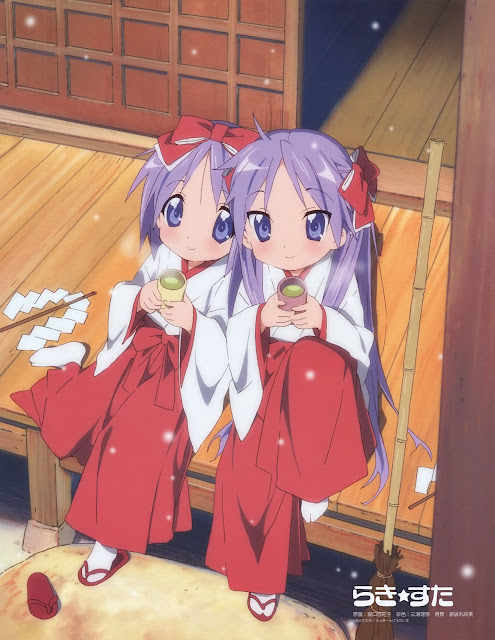
luckystar01.jpeg2011 turned out to be an interesting year. It seems the moe craze is starting to dimmish a bit with a few notable failures; Yuru Yuri I’m looking in your direction; but overall 2011 turned into a pretty good, especially for Funimation with them pushing out two of the titles on this list on top of their exceptionally successful FLCL rerelease.

The titles on my list paint 2011 as a year where Japan returned to attempt reaching a western audience, where an auteur director came of age, where artistic exploration reached a new pinnacle, where sweet and simple narratives play with our emotions, and where Japan proves they are still capable of creating some of the finest Science Fiction in the world.

Each of the titles on the list represent different reasons why I’m an anime fan. The chief reason among them being how much depth the medium has to offer. The qualifying rules are simple, a series had to have finished airing in 2011 and a film has to have been released on DVD or screened in the United States at some point in 2011. Now, on to the list!

5. Tiger & Bunny
Tiger-and-Bunny.jpeg


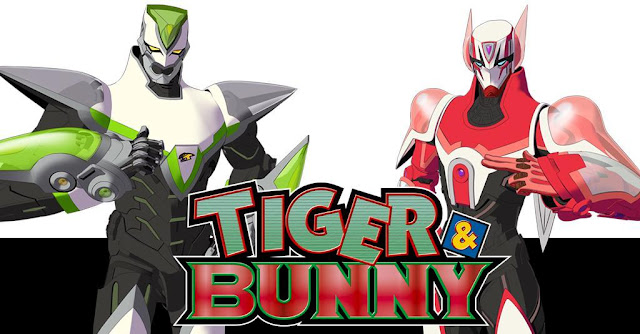
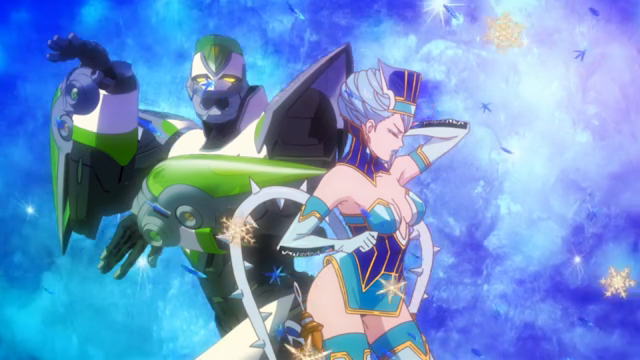
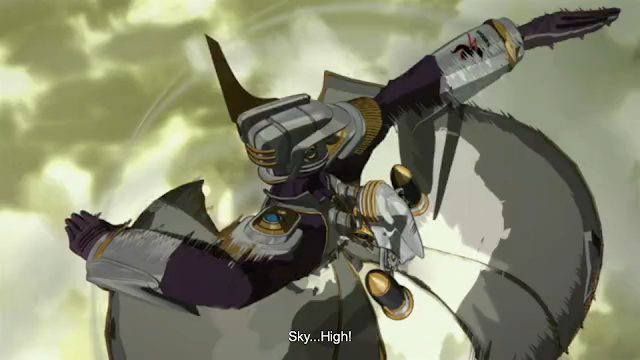
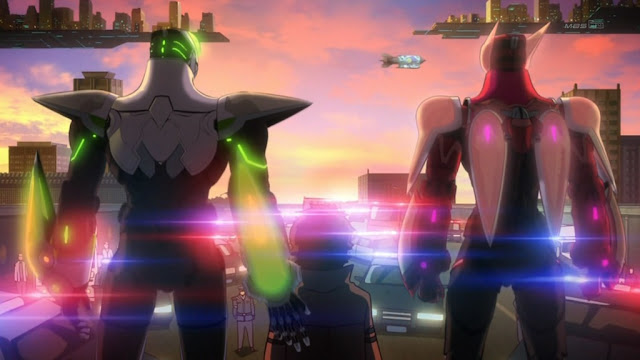
Tiger & Bunny stands apart from other Japanese attempts at superhero stories because it relies so much on the characters. They are beautifully drawn and full of life, so much that I desperately await more stories set in the universe. Tiger & Bunny has the potential to be the new gateway drug for the next generation of Anime fans just as Cowboy Bebop was for my generation. It has themes that appeal to a western audience but enough anime tropes to prepare an unsuspecting audience before jumping into the vast world of the medium.

Above all else Tiger & Bunny could keep me on the edge of my seat with excitement though the majority of the final arc and allow me to build a strong enough emotional connection with the characters to have me break down in tears. For an action show to do both of those things elevates it above the majority in its genre.

4. Summer Wars
summer-wars1.jpeg


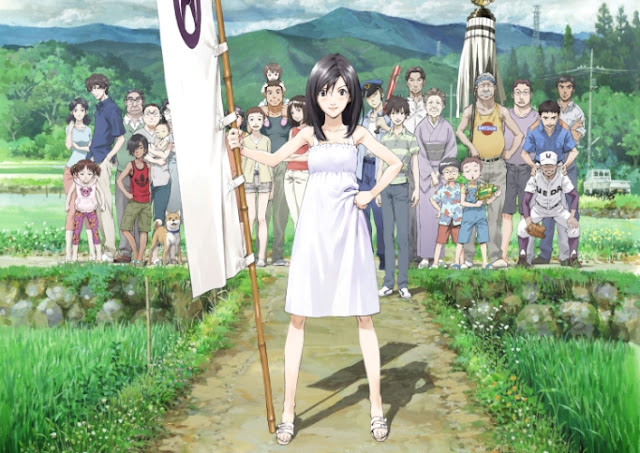
Mamoru Hosoda made a huge affect the industry with his film “The Girl Who Leapt Through Time.” Summer Wars represents the first time Hosoda directs an original script and it definitely shows off the level of creativity of which he is capable. The imagery is stunning from the rich and full virtual world of OZ to the subtle beauty of rural Japan. The narrative pits old world family values against the need to be connected through a digital world and the stark difference between how the two worlds look aids the theme in profound ways.

The greatest achievement of Summer Wars is Hosoda’s handling of characters. The family depicted in the film easily contains two dozen members and yet with a few short scenes the audience feels as if they understand the make up of the family, and the character of even the most minor players. This is done by relating universal experiences and allowing the audience to fill in gaps with their own experiences. Truly, a magnificent style to immerse the audience in your world.

3. Puella Magi Madoka Magica

gg_puella_magi_madoka_magica_-_11_44209da8-mkv_snapshot_01-48_2011-04-22_23-12-39.png


In an attempt to describe Madoka Magica I called it “The Dark Knight of magical girl shows” and indeed I believe that it took a genre that had been traditionally for young girls and transformed it with gritty realism and dark characters that left the idea of escapism normally associated with Magical Girl shows far behind, instead turning the idea of “Magical Girl” into a fate I wouldn’t wish on my worst enemy. This isn’t the first show to turn Magical Girl tropes upside down but it certainly did it in a lasting and profound way.

The greatest achievement of this show is the direction of Akiyuki Shinbo as he weaved his fantastic cut out art style into the show which gave a stark contrast between the evil witches and Ume Aoki’s adorable character designs. The dark shadow filled world he crafts work to create the sinister undertone that drives Madoka Magica forward as it slowly destroys the emotional stability of the audience.

2. Usagi Drop
Usagi%252520Drop%252520-%252520Vol%2525202.png


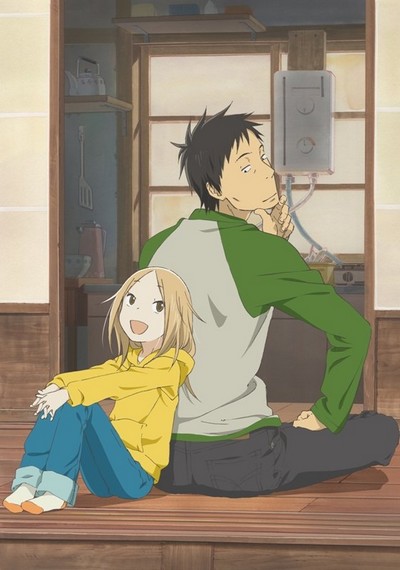
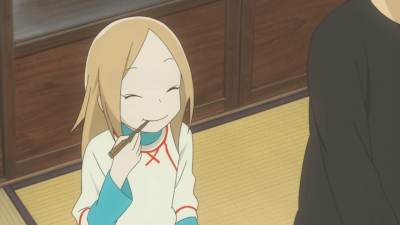
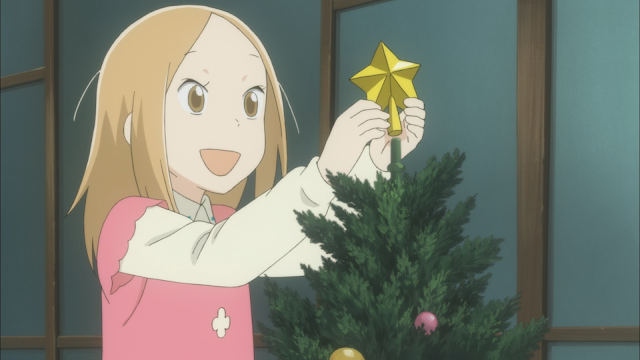
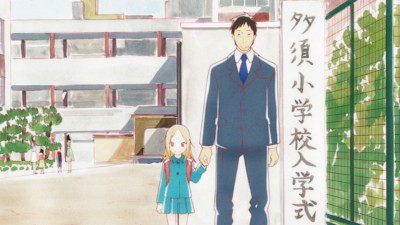
I can’t stop talking about how much I love this show. Compared to all the other shows on the list it might seem like nothing special. The animation is simple and the story is almost nonexistent, being a slice of life drama. So how can it compete with shows that have innovative animation and narrative techniques? With pure heart. The show is the sweetest thing I’ve ever seen and it handles it’s subject, a single guy taking in a little girl, with sincere realism. The characters are so beautifully and realistically constructed that one cannot help falling in love with all of them, even the annoying bratty kid who befriends Rin.

Usagi Drop is a beautiful, universal narrative which succeeds because of how honest and true it is executed. It transcends the medium and is a product that shows a universal human experience no matter what age or disposition from which the viewer approaches.

1. Evangelion 2.22
vlcsnap-2010-05-25-22hmk4y.png


Evangelion 2.22 took the number one spot late and pretty much by default. It wasn’t until I was compiling the list and went over my rules that I realized that Evangelion 2.22 qualified, and that’s why it wasn’t on last year’s list even though the first time I saw it was in 2010.

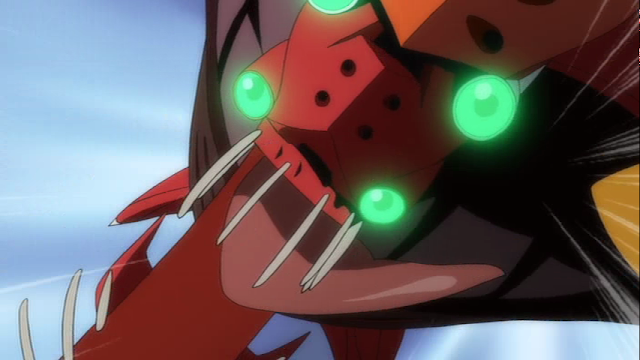
Evangelion 2.22 is an amazing accomplishment chiefly because it takes it’s source material, the Evangelion television series, and improves on it. There are few anime series that come close to the complexity of narrative and depth of character development that the television series accomplishes and this film comes to much the same place using much tighter and complete character arcs. Not only is the structure of the narrative better but the visuals and action are perhaps some of the greatest ever seen in Japanese Animation. The style of the opening fight with Evangelion Unit 2 accomplishes what took the television series needed twenty minutes for in seconds. The intensity of the final battle with Zeruel seeds doubt into the audience as to what the outcome will be, and this is a remake of a much loved series! Hideaki Anno has improved on his own masterpiece and there is no question that Evangelion 2.22 takes the top spot for Anime released in 2011.

As always, I look forward to what next year will bring. Another year, another fantastic list of shows to represent the medium. I hope you enjoy.


Correction: The Girl Who Leapt Through Time was not Hosoda’s first film. I know Digimon exists, I just temporarily forgot about it. 
Review: Children Who Chase Lost Voices from Deep Below

ChildrenWhoChaseLostVoicesFromDeepBelow.jpeg

Makoto Shinkai has been called the next Hayao Miyazaki, for good reason. In his newest work he creates an adventure narrative in the vain of the greatest of Miyazaki’s films, a departure from his extremely emotional love stories. By making a Ghibli-esuq film he is making a direct challenge to the master of Japanese animation but is it too early for him to be making such bold declarations or is this Shinkai clearly declaring his rightful place in the animation world? Asuna is a young girl who has been forced to mature early due to the loss of her father and the hectic schedule of her mother. She spends her time on the mountain listening to strange music from her crystal radio. One day a mysterious boy saves her from a beast, this starts her on a journey that brings her to the underworld Agartha and will lead her to a power capable of resurrecting the dead.

867660843.png

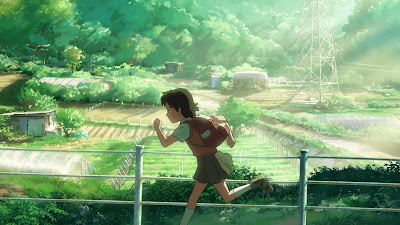
The film is gorgeous. Known for his fantastic art and attention to detail, Shinkai again creates some beautiful landscapes. There are dozens of frames in the film that deserve to be framed and hung on a wall, moments where I audibly gasped at the landscapes that Shinkai creates. Shinkai is probably the best artist currently working in Japan and he has poured all of his talent into crafting this film. When Asuna descends into Agartha we’re treated to the remnants of a once great civilization, here Shinkai builds magnificent ruins and gives them an unbelievable sense of scale. It can’t be understated how a meticulous use of background detail aids world and character building. Being able to see shelves and books, various containers, and other elements of life make the people of Agartha come alive. The creation of a lived in look to the villages and cities is comparable to Miyazaki’s towns in Nausccia and Princess Mononoke. The audience is immersed in this world completely. It feels alive.

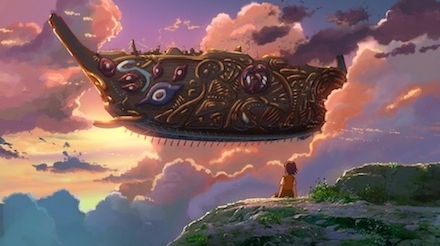
One of the most exceptional images of the film is when Asuna reaches the edge of Agartha and sees a massive crater, the center of which is the gateway of life and death. Clouds hang over the crater and past it lies a flat desert. As the clouds hang above the crater the sun starts to peak over and the light transforms the entire horizon into a brilliant orange. The images shapes itself and one beautiful image transforms into a magnificent image as you watch. This is one of the best visual treats that Shinkai employs and it’s always stunning. He allows the subtle change in nature to tell a piece of the story, to define a bit of his theme, and to imbue the audience with a slight emotion. Again, Shinkai’s genius comes in attention to detail.

sayonara_2.jpeg

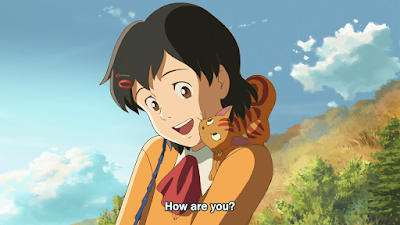
Asuna is a fantastic character and Shinkai spends the first part of the movie showing her daily life. Her relationship with her pet squirrel, how she takes care of the household chores, and prepares her own meals. Shinkai’s subtle use of visual narrative gives the audience a ton of information through quick visuals or background noise. Her mother isn’t around and a line is dropped that she’s working at a hospital, which conjures a host of images in the viewers head. During an early scene Asuna is seen praying at her Father’s shrine, so without beating the audience over the head with her circumstances the audience understands and is immediately sympathetic. The same can’t be said about most of the other characters of the film. Mr. Morisaki, who becomes the driving force of the journey into Agartha, has a rushed development and little is known about him before a twist has him on his way to the gate of life and death. Years of research and this life threatening journey are the result of the loss of his wife, who we never see and recieve no information about. We’re supposed to take it at face value that Morisaki would endanger a young girl, recruit a group of commandos, and recklessly journey across a dying world on foot in order to bring her back to life. His obsession is the driving force of the film, he is introduced by teaching the myth of Agartha to Asuna’s class long before we learn that he lost his wife. He also never speaks personally about his wife during the film, even after he becomes close to Asuna. This lack of any sympathetic qualities turns what should be a rich, sympathetic character into a flat obsessive villain.

Makoto Shinkai’s films are traditionally slow, which allows the characters and imagery to take center stage. “5 Centimeters per second” used imagery, narration, and dialogue to tell its story. “Children Who Chase Lost Voices from Deep Below,” being an action/adventure film can’t relay on those tropes that Shinkai has mastered. The first ten minutes of the movie do follow that pattern, as I wrote above much of

children_who_chase_lost_voices_from_deep_below_3.jpegAsuna’s characterization comes from Shinkai’s brilliant use of imagery. Once the action starts is where some of the problems begin. The pacing is extremely start-stop, never finding a consistent middle ground. Characters felt less that they were traveling in the epic world of Agartha and more that they were fulfilling plot points as they came along. This is where comparing Shinkai to Miyazaki breaks down. Most Miyazaki films stick to a strict structure which leaves room for great action while winding the pace down smoothly to explore the characters and insert humor. Shinkai hasn’t developed that ability yet, but the shortcomings in the plot and pacing aren’t large enough to ruin the film, it’s one of the failings that arises when attempting to compare Shinkai to the mastery of Miyazaki.
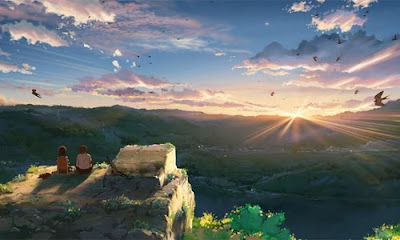

Shinakai’s themes are always fantastic and “Children” is no different. The film is an extended metaphor for grief, the process of overcoming the death of a love one and what happens when someone isn’t able to let go. It’s a beautiful theme and well executed, the characters all come to a point where they have to make a difficult emotional decision and some fail that test. Even with the problems in characterization the desire that Morisaki had to bring a loved one back to life carries an emotional wight which is executed with profound skill.

Shinkai also adds a single sword fight to the movie, a quick minute long sword fight that happens near the end. It is perhaps the greatest action scene ever animated, comparable to the best action scenes from Princess Mononoke. Character movements are extremely fast and fluid, the choreography is exciting, and it feels like there is something serious at stake. Where most anime’s action scenes can come off as flashy Shinkai favors realism, as with his backgrounds, and captures the complex nature of humans in a physical struggle with the same profound skill he uses to craft his stunning landscapes.

children-who-chase-lost-voices01.jpeg

Shinkai achieves near greatness with this newest film but by switching from his traditional style to a formula that strongly resembles that of Hayao Miyazaki he now enters an area where he is overshadowed by giants. However, the most exciting part about Makoto Shinkai is his age. When Miyazaki constructed his first “masterpiece” in “Nausicaa of the Valley of the Wind” he was forty-three years old. Makoto Shinkai is currently only thirty-eight. The exciting part about Shinkai is that his art is still developing. He already is one of the best animators working in Japan at this time and plenty of time to work on characterization, plotting, and other narrative failings of this film. So while some elements hold “Children Who Chase Lost Voices from Deep Below” back the career that this film foreshadows has me more extremely excited about the future of animation.

I recommend “Children Who Chase Lost Voices from Deep Below” as an enjoyable adventure story despite some of it’s narrative failings. However, the artistry in the film and the sheer beauty that scenes are animated make it an incredible visual experience. Even if the narrative doesn’t win you over the few scenes that make you gasp in delight will be well worth the investment.

Convention Report: New York Comic Con 2011

NYCC_2011_Logo_HIGH2.jpeg

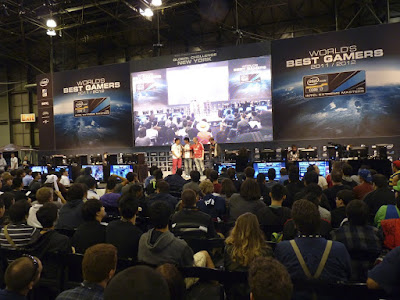
It’s hard to say anything about New York Comic Con that hasn’t already been said, or that isn’t a repeat from what I talked about last year’s show. The event was definitely bigger than last year and the space was far better utilized than last year with them opening up the North Hall for the autograph area. Of course, this being Comic Con, even with the large show space the crowding was horrible. Building a multi-genre show has its positives and negatives but I fear that Comic Con may have finally crossed the line into being more of swap meet with a theater showing clips from upcoming pop culture hits rather than a space to celebrate any type of fandom.

IMG_1777.jpgThe main component of New York Comic Con is undeniably the show floor. A massive space that serves as both a dealers room and a place where marketing professionals can attempting to push their new products on con-goers, a space for meeting your favorite artists and writers, or check out some fantastic indie art pieces. The show floor comes with all the spectacle that you’d expect from a geek event that takes place in one of the largest cities in the world. This is, unfortunately, a double edged sword. While the show floor is so large as to keep attendees busy for an entire weekend it is also the main place where the majority of people will be concentrated. Over all three days it was difficult to get from one end of the floor to the other. There is a constant fight against the raging mod to see anything and if you happen to be stuck behind someone who wants to take a photo the halls immediately get blocked with dozens of people fighting, not realizing that they’ve been halted by a guy with a camera phone and desire to get a third picture of Captain America. They’ll always be something to enjoy on the show floor, but be ready to fight in order to see it.

IMG_1678.jpg

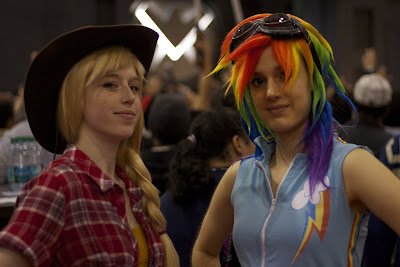
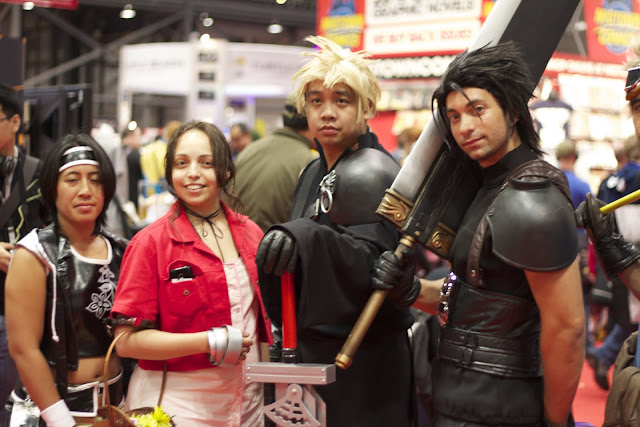
Surprisingly, this is an improvement over last year. The anime section of the show floor experienced a massive traffic jam making that entire area impassable. This year the anime booths were spread throughout the floor, making it hard to hit all of them but it ensured that they were actually approachable. Overall, space between booths was much improved and even though the crowds were difficult to move through there were no complete jams like last year. It seems they did everything possible to increase the flow of traffic, if only they could prevent people from stopping and gawking at

IMG_1738.jpg

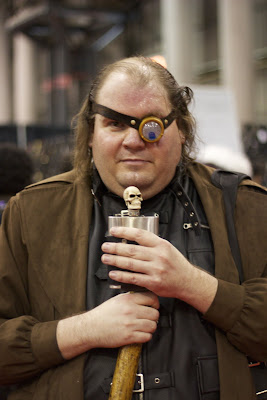
costumes.

The biggest question hovering over the convention this year was if the anime section would be improved or continue to become a shrinking piece of the convention. Well, while anime artist alley was moved from the basement to the gallery at the very top of the convention center it was still a difficult place simply to stumble upon. One needed to go up two escalators, following large signs, even to get to the area. Once there the artist alley was spacious and easy to browse and at the end of the gallery was a massive space which contained dozens of tables, some snack vendors, and the dreaded anime stage. Last year New York Anime Festival had a decent assortment of fan panels in small rooms. This year the only anime fan panels excepted were forced to perform on a stage, which forced the presenter to speak to a massive room where the majority of people were just sitting and chatting, not even caring what was happening on the stage. This worked for some of the game shows, like cosplay dating game, but I cringed through Aaron Clark’s Evangelion Deconstructed panel as he attempted to present serious analysis over the low rumble of crowd noise and the shouting of memes.

It’s clear that the anime fans and the comics fan simply don’t mesh together. New York Comic Con is evolving to become closer and closer to San Diego, a direction that I dread. Instead of eagerly waiting for fans speaking to fans and building a sense of community San Diego Comic Con is about room sitting all day to hear actors talk about films and television shows that are due to be released in the next few months. That isn’t a convention to me, the same task can be accomplished by reading an interview or checking a Hollywood news site. I go to conventions for the community, to see people I only know online and to experience fans speaking about their passion.

There are two main reason for the divide between the anime and comics fans. The first is simply age. Anime convention attendees tend to be younger and are more focused on hanging out with their friends than browsing through rows of comics looking for a rare issue. The other, and more important, reason behind why these two groups can’t seem to coexist is a difference in philosophy when it comes to the art. Comics fans come to these conventions to see footage of upcoming movies and get exclusive comics from the big publishers, they come to these conventions as consumers of media. Anime fans have developed a culture where they get most of their content for free on the internet, be it through illegal fan subs or the many legal steaming services. There is no surprising an anime fan with new titles or “exclusive” content because of the delay, even with simulcasting, it takes to licenses and release media from Japan. Anime fans don’t come to conventions to consume anime, they come to participate in the fandom, hang out with their friends, and buy additional merchandise.
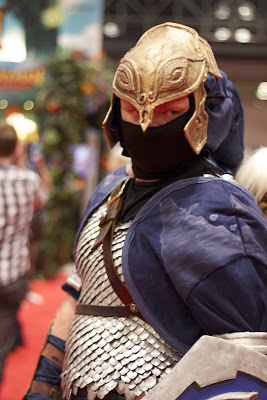
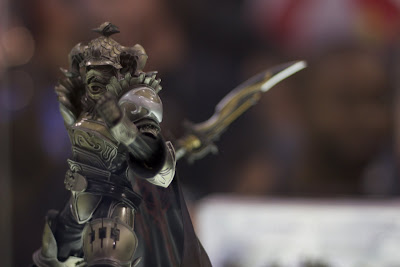
The unfortunate fact about New York Comic Con, to quote Christopher MacDonald from Anime News Network at Sunday’s ANN Q&A panel: “It’s really good for the industry, it kind of sucks for us. Well, it’s good for me as a business but it’s not so good for fans.” The sheer number of people walking through the show room floor is always going to be good for the licensing companies and allows them to expose their titles to fans outside the group that normally goes to anime conventions. That being the case the way New York Comic Con was this year will probably be the way it’s going to stay, and as much as I might not like the state of the convention if this draws more fans towards the medium than it is completely justified. We’ll always have Otakon.

Panels

Anime News Network

Anime News Network panels are always fun as they allow the people fans have come to know through their writing to interact and answer questions. In New York there were some extremely well thought out questions asked to the panel, as well as the normal awkward “how can I write for ANN” questions. For a group of writers they are surprisingly adept at handling their interesting fan base.

Evangelion, Deconstructed

As always Aaron Clark put on an excellent panel going over some of the visual, cultural, and narrative references used the Neon Genesis Evangelion. Clark seems to have an endless supply of knowledge on the subject and will always surprise even the longest Evangelion fans with some tiny tidbit. The anime stage wasn’t the ideal place for his panel to be held as he was being drowned out by the low rumble of the mass of fans sitting and going about their business. He handled the situation professionally, not even letting a minor technical glitch to get in his way. If you like Evangelion his panels, and his website are highly recommended.

Makoto Shinkai

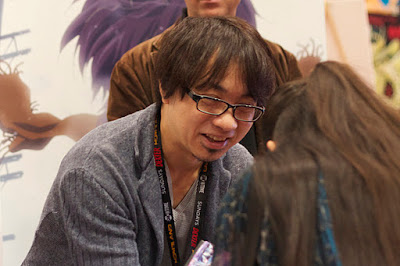
The highlight of the convention of me was getting to meet Makoto Shinkai, sit down for an interview with him, get an autograph, and watch his newest film “Children Who Chase Lost Voices from Deep Below.” I’ve been a huge fan of his for a few years and it was a great honor and opportunity. If Shinkai hadn’t been a guest at this convention this report would be a lot more negative. Read my interview with him, watch the excellent Makoto Shinkai spotlight panel with Roland Kelts, and I’ll have a review of “Children Who Chase…” up in the next few weeks.

Hiro Mashima Interview

I was able to sit down with Fairy Tail mangaka Hiro Mashima. It was an interesting talk especially since I was paired with two bloggers from South America who made the long trip to New York Comic Con!

Photos

Comic Con is a difficult place to take photos because I don’t want to be like the people I mentioned above. So I was reserved, far more reserved, than I usually am. I did get lots of very pretty photos of toys though!

My Loot

I didn’t pick up much at New York Comic Con because of the logical problem with bringing loot back on the train. But I did get a few really cool items.

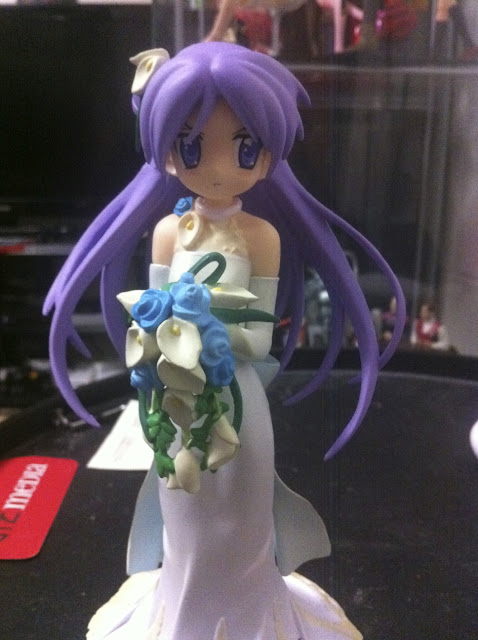
This adorable Kagami figure who is looking her most Tsundere.

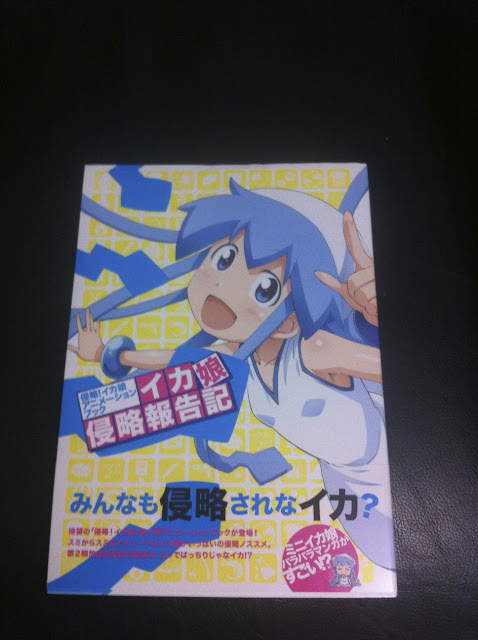
A wonderful Squid Girl art book complete with a flipbook printed onto the side of the pages.

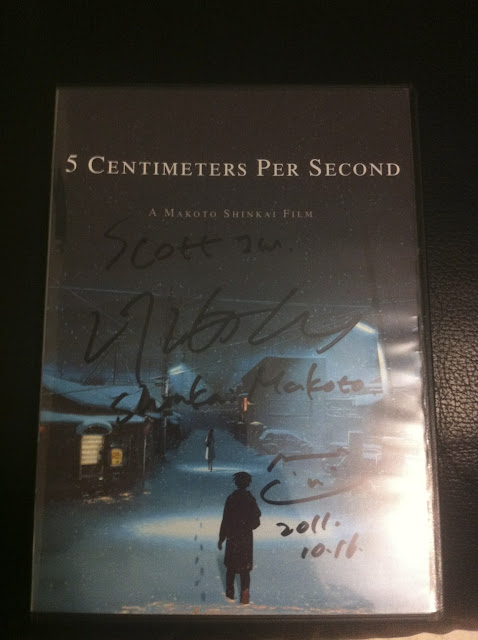
Makoto Shinkai autographed copy of 5 Centimeters Per Second. Now the crown jewel of my Anime DVD collection.


More New York Comic Con 2011 Coverage

Review: Tiger & Bunny

tiger%2520%2526%2520bunny.jpeg

Superheroes are a traditionally American trope but as Japan is trying to grow their shrinking animation market they’re making more attempts to appeal to American sensibilities. The first attempt in resent years to create a superhero anime set in America was Heroman, which failed because it felt like anime tropes shoved into an American superhero story. Tiger and Bunny comes from one of the most famous Japanese animation companies that still exist, Sunrise, and is helmed by a man who has worked on Gundam and other serious mech shows. Using talent that has created some of the most memorable Japanese science fiction they have crafted a series that is not only a capable superhero narrative but an exception example of the genre. In a alternate reality filled with NEXT, people with superhuman powers, Wild Tiger is a veteran hero who has been dropping in the rankings of the reality show “HeroTV.” His contract is sold to a new company where he is forced to pair with the rookie hero Barnaby Brooks Jr. The pair has to learn to work together to take down the criminals of Sternbild, gain enough points to win HeroTV, and track down the terrorist organization responsible for the murder of Barnaby’s parents.

Screen%2520Shot%25202011-11-05%2520at%252012.54.34%2520AM.png

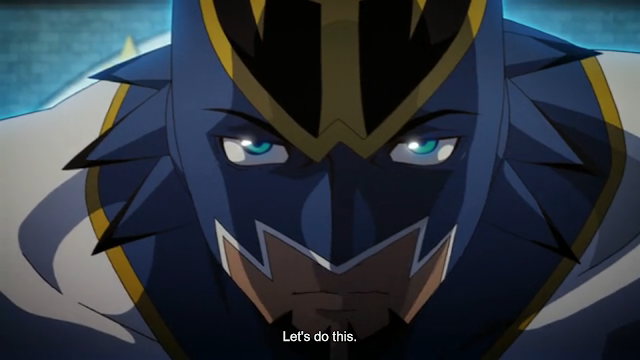
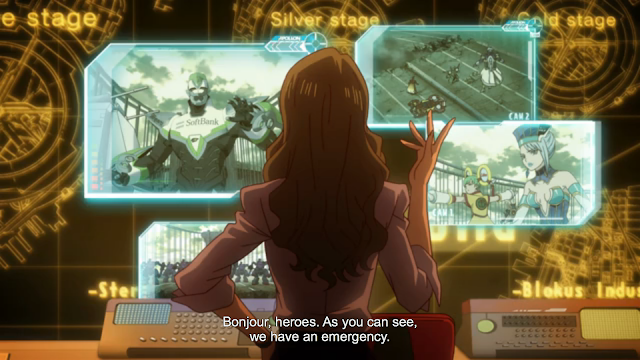
The first thing viewers will notice about Tiger and Bunny is their approach to superheroes. The audience is introduced to the heroes through the commentators of HeroTV as they attempt to apprehend a suspect. This first episode enables the audience to quickly learn the main cast and what their individual powers are but it also fills in a lot of world detail that is required going forward. The television aspect of the show makes a whole lot of sense when attempting to create a realistic superhero narrative. With some exception, it takes a lot of dedication and selflessness to go out at night and capture thugs for free. Now if you could monazite the effort without giving up your actual goals than it becomes a way to make a decent living. The sponsorships fall into the same category, superheroes need equipment and want to make money on the side just as much as athletes. There is no reason why they shouldn’t leverage their visibility in a mutually beneficial sponsorship. It may sound cold and greedy, but it’s the way our world works.

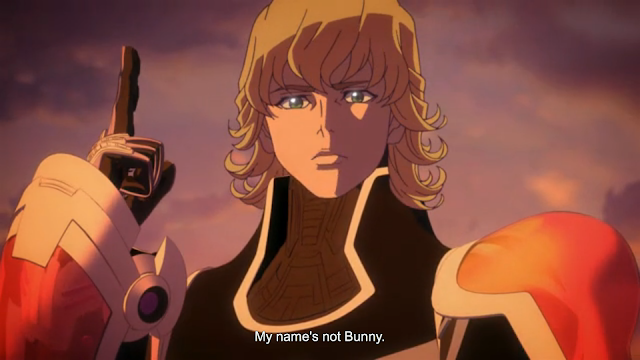
Tiger and Bunny is a show about a partnership. From the second episode onward the show revolves around the relationship between Kotetsu and Barnaby, the charm and humor of the show comes from their banter and growth as a team. The personality of the characters clash beautifully with the stoic Barnaby constantly being annoyed by the carefree and impulsive Kotetsu. Watching the two of them conflict and grow is a real treat. The constant conflict works as a mechanism to get some serious character development. The amount of trust that the two put into their partnership and what they decide to share with each other tells a lot about how the character thinks and what they think of their relationship with the other. Due to the amount of time the show uses to distinguish the personality types the moments when the two come to a point of understand are all the more profound.

Screen%2520Shot%25202011-11-05%2520at%252012.57.24%2520AM.png

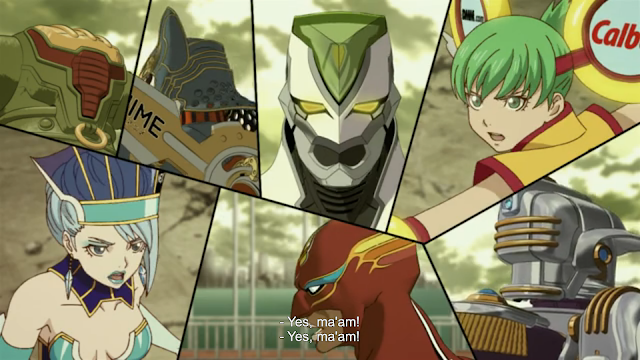
Tiger and Bunny uses a team style of superheroes making them both rivals and comrades, which creates a great dynamic among the group. All of the heroes have varied powers which fall into the general pantheon of superhero abilities such as, flight, electricity, fire, and ice. Tiger and Bunny doesn’t do anything new with these abilities either, but the abilities of the heroes quickly fall into the background to allow their personalities to shine. Throughout the series most of the heroes get their own character building episode which gave each of them some serious depth. My favorite being the one where Dragon Kid has to deal with her issues with femininity, her relationship to her parents, and to protect the Mayor’s NEXT baby. The episode hit it’s beats perfectly allowing the audience to understand Dragon Kid in only twenty minutes on top of presenting an interesting story, bringing us two NEXT villains, and fitting in plenty of banter between Tiger and Bunny. The development of the side characters gets perfectly integrated into the episode.

Screen%2520Shot%25202011-11-05%2520at%252012.58.57%2520AM.png

The animation in Tiger and Bunny is a great combination of CGI and standard animation. The character designs look more like aclassiclate 1990s style with a little modern influence. The mix of different styles in the main cast highlights the varied nationalities of the Heroes, having been recruited from all over the world to be on HeroTV in Sternbild. The clothing the characters wear is a combination of realistic and a reflection of their personality. Dragon Kid wears a one piece track suit when not in her hero uniform which highlights her reluctance to explore her feminine side which serves as a nice foil to the extremely fashionable Blue Rose. The same rule applies to their hero costumes, with the added bonus that the costumes have motifs based on their abilities. Fire Emblem, an eccentric homosexual, dresses the part when out of costume while his costume is standard superhero garb with the addition of sequence cape to give it that extra flare. Tiger’s dress is especially telling of his role in the series. His casual clothes are a dress-down formal shirt and pants with a vest and matching hat which gives him an old worldly appearance. His superhero uniform, before getting an upgrade, looks handmade when compared to the modern equipment used by the rest of the cast. The audience knows immediately that he belongs to a pervious generation of heroes.

Screen%2520Shot%25202011-11-05%2520at%252012.59.47%2520AM.png

Narratively Tiger and Bunny consists of a good number of episodic stories, most of which designed for character development as I explained above, but the show soon smooths out into two large arcs surrounding Barnaby’s quest for the man who killed his parents. This brings the heroes up against a super villain NEXT which tests the limits of Heroes, who are used to chasing thugs, and helps to break Barnaby of his stoic personality. The second half of the series starts off by laying groundwork for a much larger narrative which incorporates at least four threads started in one off episodes, naming any of them would be too large a spoiler, and weaving them together for a fantastic climatic payoff that is surprising, suspenseful, and overwhelmingly emotional.

If the show wasn’t dense enough one more layer is spread throughout, the concept of justice. This manifests itself in the non-hero, non-villain Lunatic. Lunatic is an extremely powerful NEXT, so powerful that even Tiger and Bunny combined can barely match him, who wants vengeance against criminals. Not content with simply capturing them he gets in-between heroes and their targets to murder the suspect before the heroes have a chance to arrest them. This brings a Death Note-esq question of Justice into the mix. Lunatic himself gets his own character episode which somewhat justifies his rather extreme method of dealing with criminals. At least I found myself being sympathetic towards him. The show does a wonderful job of painting him as neither good or evil, simply a force that dishes out “justice.”

Screen%2520Shot%25202011-11-05%2520at%252012.57.18%2520AM.png

I do want to talk about emotions for a moment, even though this is an extremely subjective topic. I do get emotional easily because I tend to completely invest myself in the characters. Tiger and Bunny, an anime about superheroes, had me emotionally moved in more than one occasion. Not even in large moments or big character events, although I wept like a child through those, but just during epic moments caused by characters working together or going through some pain. I loved these characters and falling in love with them happened extremely quickly. In the second half of the series I was completely hooked on all of the characters and wanted to know more about each of them. It still shocks me how much I’ve become attached to them. The character development is so perfectly mixed in with the narrative that attachment sneaks its way into the audience.

With all the praise I’m tossing on the character development it’s a shame that some characters didn’t even get their own episode. I barely know anything about Fire Emblem or Rock Bison other than the small facts learned through their conversations with the other heroes. The writers went to the trouble of giving the four other heroes screen time but perhaps just ran out of space in what does become a dense and complex narrative. If a sequel comes, I’d hope that they move away from the personal stories of Tiger and Bunny and give the rest of the cast a larger role.

Screen%2520Shot%25202011-11-05%2520at%25201.17.48%2520AM.png

While the main characters are expertly crafted the villains of Tiger and Bunny are flat. The villain of the first half wants to create a world ruled by NEXT, a plot taken right out of the Xmen except with less magnets, and will ruthlessly kills civilians just for the fun of it. This doesn’t make for a compelling villain, although from him we got some good character drama with the heroes because they were forced to battle him one on one and for the first time faced serious danger. Even so, his own personal story or reasons are only explored on a surface level and leave much to be desired. The villain of the second half of the series has a more complex reason for committing his crimes, but becomes cartoonish through the effort of covering them up. He goes from a respectable person who seems to have genuine emotions and becomes a complete psychopath at the drop of a hat. Granted, that is probably the definition of a psychopath but his actions in supervillain mode completely came out of nowhere compared to who the audience knew him as perviously. If there were a few more clues leading to the reveal that might have been forgiven, but as it stands his switch form honest man to supervillain just doesn’t ring true.

The ending also stumbles, following a classic mistake in anime. After everything wraps up in a satisfactory way and has some closure it’s undone so Sunrise can insert a little afterward which reverses the ending and winks to the audience that more Tiger and Bunny is possible. If Sunrise wants to make more Tiger and Bunny I welcome it but if they don’t then this ending will forever ruin a chance to put a nice bit of closure on an otherwise fantastic series.

Screen%2520Shot%25202011-11-05%2520at%25201.20.28%2520AM.png

It’s rare that Japan produces something so perfect for a western audience but I think finally they’ve completed a masterfully constructed superhero story filled with complex plots, amazing action, and deeply moving character drama. What few flaws there are could be blamed on the genre they’re working in rather than any shortfall on the creators part. They’re playing with tropes well established in the west and almost brand new to them, so a fumble or two is understandable. I believe that Sunrise has created a group of characters and, more importantly, a world that has the potential to rival any of the currently sitting Superhero or anime franchises. I’m looking forward to a second season and hope for many more after that.

Review: Sailor Moon Vol. 1

51ZuN40hWfL.jpeg

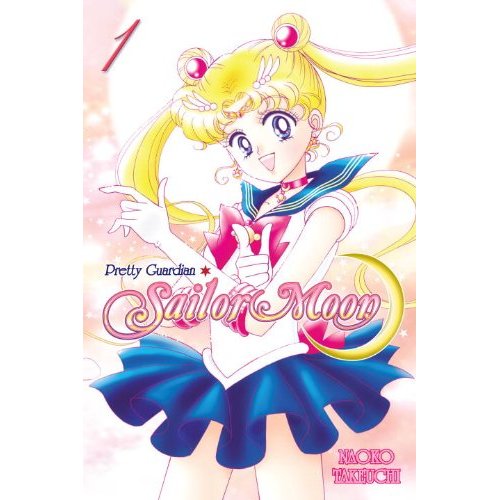
It’d be hard to find someone who doesn’t recognize Sailor Moon, even outside the fandom. The series is responsible for giving Anime it’s first big push into mainstream pop culture and for defining the magical girl genre. I’m happy Kodansha decided to release Moon in the brand new 2003 editions from Japan, potentially introducing this classic series to a new audience. Usagi Tsukino was a normal young girl, although a little on the ditzy side and a bit of a crybaby, who stumbles over a talking cat. This cat, Luna, grants Usagi the powers of the Moon and tasks her to find and protect the legendary silver crystal and protect the Princess of the Moon. To aid her quest she must first recruit allies to her and form a team of Guardians of Justice.

IMG_3299.jpg

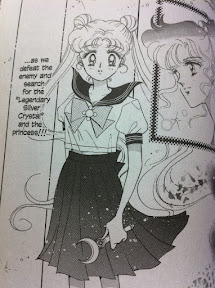
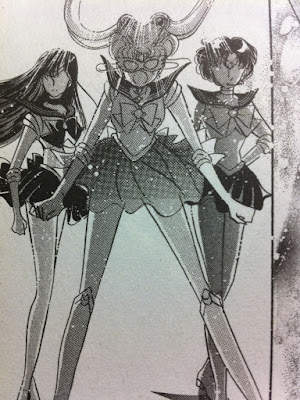
Compared to it’s prequel, Sailor V, Sailor Moon’s art is of much higher quality and much cleaner. It’s stunning considering the series were created at the same time but it’s obvious that Takeuchi had some assistants and a much larger paycheck to help her craft Sailor Moon as opposed to the sporadically published companion piece. The character designs are fantastic with each of the girls getting a distinctive look that suits their personality. Their transformations, although all consist of a similar sailor uniform, have slight differences to help distinguish between the characters. The differences are as slight as giving them all different shoes and slightly different jewelry but it is a nice touch that Takeuchi threw in, it expresses her attention of detail.

I’m coming at Sailor Moon comparing it to Sailor V because Kodansha released both at the same time so I was able to read them back to back. Takeuchi was able to improve on almost all of my complaints in Sailor V in the short time between the two series. Sailor Moon is more contiguous, has a defined goal for the main characters, gives the villains a face and motivation, and Usagi gets a clear character arc in this first volume which takes her from a lazy middle school girl to preparing for the responsibilities of leading the Sailor Scouts.

IMG_3302.jpg

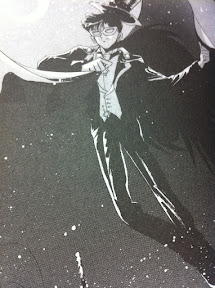
The most impressive part of the work is how well it combines Shojo with Shonen elements. Sailor Moon is clearly a shoujo title with the romance between Sailor Moon and Tuxedo Mask appearing early and often throughout this first volume. Even with the relationship budding, Sailor Moon doesn’t know exactly who Tuxedo Mask is or what are his exact goals. Is he a villain? Ally? Why does he want the legendary silver crystal? These questions come into the narrative to create a mystery that adds another layer of plot and character depth. The fighting and team of warriors are nods to Shonen or super sentai, monster of the week type shows. The enemy, although more fleshed out than in Sailor V, still lacks any kind of depth. They are evil people who are doing evil things for evil reasons, and while they are starting to have personalities in this first volume they’ve never around long enough to get any individual characterization. Each of these threads on its own doesn’t make a completely compelling narrative but by interweaving them they build into an entertaining and fun story.

IMG_3303.jpg

The goal of this volume is to bring together what will be the main cast. Each of the Sailor Scouts gets their own origin story that gives amble background and personality information which explains why they receive their chosen powers. The introduction of the scouts and the interaction between the characters was the most enjoyable aspect of Sailor Moon. Mercury, Mars, and Jupiter are all strong and capable people and it seems odd at first that Sailor Moon is chosen as the leader of the group. It’s in the interactions between action scenes and in the introduction of characters that her leadership is shown. She is friendly and likable, and those qualities draw people to her. So while she is not the most capable fighter of the group she is certainly the most charismatic and perhaps most illustrates the aspects of a “Guardian of Justice.”

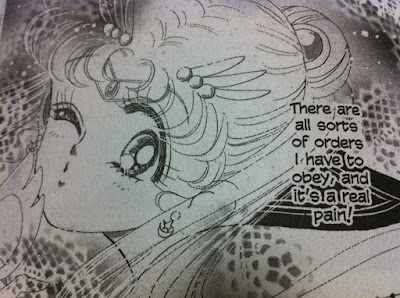
Usagi is at first an odd choice for the heroine of the series. One of her biggest traits is that she is a crybaby, which is exploited for humor early in the book, and isn’t really that enthusiastic or driven by her sudden powers. She finds her abilities severely lacking and even requires aid from Mercury, who was recruited by Usagi, to complete her training. Having the heroine start at such a low point gives plenty of room for development, even at the end of this first volume Usagi begins to see her own short comings and dedicates herself to push beyond them. What seems to be building is a unit that can’t work independently but a team that needs to draw from each other in order to fight. Those themes are certainly common in Shojo, friendship and love, so it’s not surprising that I see them plastered all over Sailor Moon.

IMG_3301.jpg

The path I see the series going down is that Tuxedo Mask will be a crucial part of this group, giving Usagi the confidence and drive that she lacks. Is this a positive theme in a title meant for young girls? I’m not going to condemn the series based on speculation but even if the crutch of the show relies on Usagi needing a man to feel confident the rest of the cast already consists of some strong and independent characters to even out Usagi’s weaknesses. Mars, a shrine maiden who jumps to action without hesitation, and Mercury, a super intelligent girl who spends all her free time studying even though she is already at the top of her class, those two alone are solid role models that balance out Usagi’s failings.

While Sailor Moon isn’t revolutionary or new to seasoned manga fans it offers a good historical perspective on tropes that havebecomealmost universal to the word “anime.” New fans, especially young women, will find what is presented in Sailor Moon new and excited, incredibly enjoyable, and fun. The characters are solid and interesting, there is a developing mysterious that kept me drawn in, and the action is standard shonen fun. Surprisingly, there is something inside Sailor Moon for everyone and it’s necessary read for anyone who claims to be a fan of manga.

Interview: Makoto Shinkai

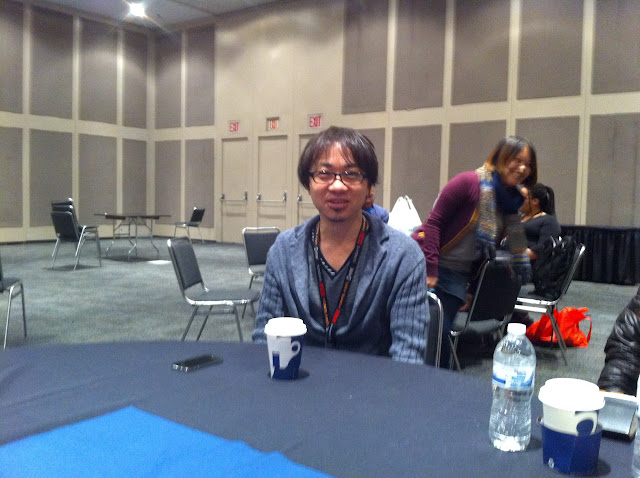
During New York Comic Con 2011 I had the privilege to sit down with Makoto Shinkai; director of Voices of a Distant Star, 5 Centimeters Per Second , and his newest work Children Who Chase Lost Voices from Deep Below. This interview took place, unfortunately, before the screening of his new film so my questions focus on his previous work.

We start by talking about some of the influences and themes of Children Who Chase Lost Voices from Deep Below, then I transition into some specifics about the creation of 5 Centimeters Per Second and the upcoming manga that Kodansha is bringing to the US market. We end the interview by asking about his attention to background detail, his thoughts on the state of the Anime industry, and his advice for upcoming Anime creators.

My questions are indicated with “Otaku in Review” and the other interviewers present are indicated simply by “Press.”

We began the interview by introducing ourselves to Shinkai-San. He then humbly introduced himself to us:

Makoto Shinkai: I’m Makoto Shinkai. I’m a director. 5 Centimeters per Second is, I think, my main title.

Otaku in Reivew: So you think 5 Centimeters Per Second is your greatest work?

MS: Many people say so but it’s been four years since its release and I’d like more people to pay more attention to Children Who Chase Lost Voices From Deep Below. The two titles are completely separate they have different styles and topics so some like one over the other.

OiR: Unfortunately I haven’t seen the new film yet, I will be at the screening tomorrow. Reviewers have compared the styling to Studio Ghibli, is there any influence?

MS: There is no Japanese Animation creator who hasn’t been influenced by Studio Ghibli. That’s the atmosphere that we live in.

Press: What is your influence? Is there anything in your past that influences your work?

MS: During University days I was studying Modern Japanese Literature and I am a big Haruki Murakami fan. I think that influenced my storytelling a lot because I read his novels over and over again.

OiR: The theme of your first three works seems to be “relationships through distance and time,” why does this theme resonate with you?

MS: When I was making those three films I was thinking a lot about human relationships and at the same time new technology was coming into play. Human relationships and how people communicate was a theme I was thinking about a lot so when I made Voices of a Distant Star that was when people were just starting to use Cell Phones in Japan a lot and they were sending mail, short messages, and because of that technology sometimes a message would come five minutes later, two hours later, or maybe in a day or even, in the case of Voices, like a few years later. I was thinking of the way new technology effects the way relationships develop.

Press: I’d like to ask you to talk about Children Who Chase Lost Voices From Deep Below. What was your underlying theme for this film? Was it also a study in human relationships and how people communicate?

MS: The biggest difference is that this is also about human relationships, how people relate to each other, but this time it’s about the relationship between a living person and a person who has already passed away. That’s the biggest difference. It’s still about human relationships but this one is about the relationship with someone who has already passed on.

OiR: I have a couple about 5 Centimeters because I have yet to see the new film. Masayoshi Yamazaki’s “One more time, one more chance” plays a prominent role in the ending of 5 Centimeters Per Second. How did it play in the creation of the film?

MS: We made 5 Centimeters I wasn’t planning on creating a new song to match with the story. I was telling a story that happened in the 90s so I looked at a bunch of pop songs that happened in that era. When I heard Masayoshi’s “One more time, One more chance” I thought it fit the story perfectly and it was extremely popular when it was released so everyone was familiar with it.

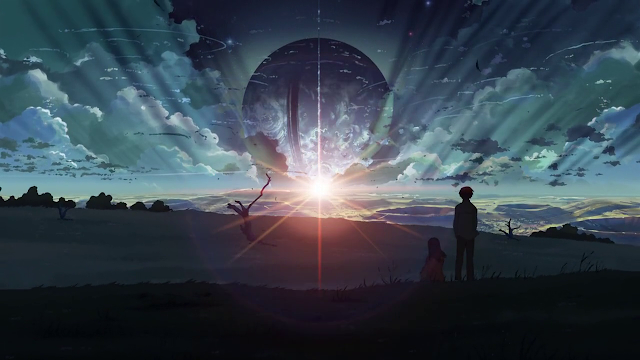
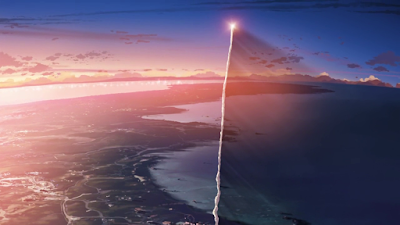
OiR: At the beginning of Episode 2 of 5 Centimeters Per Second there is a magnificent image of the sun rising behind the earth. (image above) Can you talk about creating that image?

MS: Takaki, the male character, had dreams of this girl he liked who was very far away. In the image they’re both on a distant planet that is far away, so he’s dreaming that he’s with her even though she’s in a far away place. That image came from something a bit different. When I was in High School I had a recurring dream where I became lost on a faraway star.

When I was in high school I was really into Science Fiction and I used to read a monthly magazine called “Newton,” a science magazine. Today the images in science magazines are computer generated but at that time they were hand drawn and I thought they were really cool. So I was thinking about those a lot and had those dreams.

OiR: The 5 Centimeters Per Second Manga will be coming to the US soon. How do the manga and the film pair with each other?

MS: Normally in Japan there is a manga first and it gets popular, sells millions of copies, and then they make the anime. The story behind the 5 Centimeter manga is like this: First when I came up with the story I made the anime. Then after I made an anime there were a lot of things I wanted to improve on so I wrote a short novel and in it I fixed the elements that I thought were weak in the anime. Shortly afterwards I was approached by Kodansha and they asked if they could make a manga out of the short novel. The manga is actually a culmination of both the anime and the short novel so I believe it’s the best representation of the work I wanted to make. It mixes the best elements of the anime with the best elements of the short novel together. I recommend people check it out.

Press: I’d like to ask your opinion on the Japanese animation industry in general. What’s your opinion on the recent trends and the thematic elements used in recent anime?

MS: Right now in Japan there is a lot of anime being made for lots of different tastes and that’s a good thing. There are new styles of anime, for example the noitamina slot on Fuji TV. Noitamina is animation spelled backwards so they take anime and they try new things all the time. I don’t know if this works economically and I don’t watch much anime myself, but I know what’s going on. In the old days the anime was very similar and everything was typical so I think the new varieties of anime is healthy for the industry. However, in the long term it’s a question mark as where 2D animation is going in Japan. As we see in the United States 3D is taking over and becoming more popular. I think that will eventually happen in Japan as well which means that what we know as anime today may go away because of 3D coming in and because there are less and less people who can actually make anime these days. That’s a little bit sad but it’s just evolution and it’s the way things should evolve in the future.

Otaku in Review: In the last ten or fifteen years the people who do background animation are retiring or leaving the industry. Yet you focus a lot on background detail and the tiny elements in a scene. Such as She and Her Cat which is compact and beautiful and yet is filled with vibrant detail, even small elements like the kitchen. Why are those backgrounds so important?

MS: When I made She and Her Cat I was working on a Fantasy Role Playing Game during the day. In a fantasy role playing game your surroundings are very rich and detailed. But I was living in a typical small Japanese apartment and around the apartment building were concrete telephone poles with lots of electric wires. That’s a typical kind of surroundings we have while living in a very small place. Even though the surroundings may be jumbled with ugly things I wanted to find the beauty in the things all around me. Even living in a small apartment surrounded by electrical lines I wanted to make it look detailed and beautiful to express that it was ok to live in such a situation. That’s why I believe I focus on all these background details.

OiR: Has your time in England inspired your work at all?

MS: I lived in London for a year and for the first six months I was going an English school, even though I was thirty-five years old I was going to school with a bunch of college kids. The next sixth months I spent working the script for Children Who Chase Lost Voices from Deep Below. During that time I was able to visit all the museums, I especially enjoyed the British Museum of Art and the World History Museum where they had ancient artifacts. When you see the film you’ll see ruins of ancient societies so going to museums influenced me that way. But when you watch the film you won’t think it has a British influence, while I was in London I was able to explore some global things.

OiR: For upcoming animation directors do you recommend the independent route or should they go the classic route, start at Key Animation and climb up the ladder while working in the industry.

MS: It’s difficult to suggest the best way right now because there are no barriers to entry. If you’re an artist and want to create something and put it on the internet and everybody can see it. But there are some demerits for that because you feel like your job is done, you’ve shown everyone your work. It’s different from the old days where you’d make something and take it to a publisher to see if they’d publish it. They’d be a lot of back and forth and negotiations required to get your work out. In that sense it’s good so you can get your work out quickly but it’s also still good to work for a studio and climb the ladder that way because in the old days you’d have had to brush up your work before it went out into the public. You had to work hard before you could show it to the public. Now it’s so easy you don’t even have to work too hard.

Maybe the best was it to make the best possible thing by yourself and get it out there and then from there it’ll make it easier to talk with studios and then you can enter a professional studio and work on things. Maybe that’s the best way


I’d like to thank Makoto Shinkai for taking the time to sit down with me during his busy trip to New York. I’d also like to thank Crunchyroll’s Vincent Shortino for helping bring Shinkai-San to New York Comic Con and for help with translation.

Also check out video of Makoto Shinkai opening and closing the screening of Children Who Chase Lost Voices from Deep Below and the Makoto Shinkai panel


Screenshots from Children Who Chase Lost Voices from Deep Below taken from Manga Market.

Review: Usagi Drop

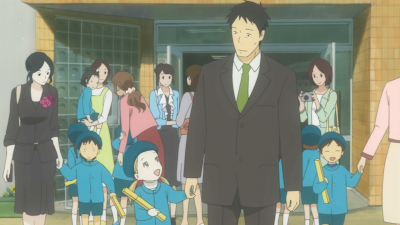
Based on the Eisner Award nominated manga, Usagi Drop is a beautiful anime about an adult learning how to take care of a small child. What seems like an adorable slice of life comedy slowly turns into a much richer experience as the show explores themes of sacrifice and what it means to be a parent. Daikichi, a thirty year old salesman, goes home for his Grandfather’s funeral and learns that he had a six year old daughter with an unknown woman. After overhearing the family’s plans to set Rin up for adoption he swoops in and decides to take the girl home.

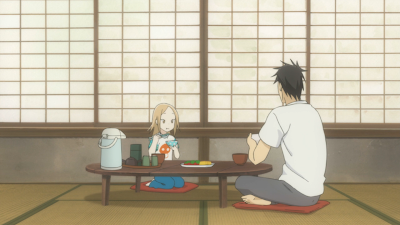
The basic structure of Bunny Drop is as a slice of life show. The entertainment comes from Daikichi learning how to cope with the sudden change in his life as Rin grows and develops. The audience is carried along with Daikichi as he learns what taking care of a six year old girl requires. The problems start almost immediately when Daikichi forgets something as fundamental as signing Rin up for a nursery school. The single change, having to make sure Rin gets to and from Nursery School, forces him to complete alter his morning routine and prevents him from putting in the hours of overtime that he is used too.

The refreshing aspect of this slice of life show is that it isn’t played simply for comedy. While Usagi Drop is extremely funny it takes a realistic approach to the subject showing how a man like Daikichi’s life would change if he was suddenly tasked with taking care of a young girl. The humor of the show comes as a result of Daikichi failing to remember or realize an obvious aspect of raising a child and becoming frustrated, or as a result of Rin or one of her friends doing something cute. It’s a natural humor and is worth more because it comes from how endearing the characters are to the audience and not from a simple one off joke.

The animation and character designs of Usagi Drop are beautiful. Taken directly from Yumi Unita’s Manga they favor a more realistic approach while maintaining the anime style. Characters’ age is expressed well with the fresh faced Rin having a simple, round, cute face while Daikichi carries distinctive characteristics of age while displaying emotions subtlety, with the occasional exaggerated expression. It’s a little refreshing to see adults in anime actually take on the characteristics of age, especially in a show like Usagi Drop where the narrative is about growing up and gaining responsibility. The color palette of the show also helps with the realistic tone, choosing muted colors and even employing watercolor style art for some backgrounds and wild life.

Rin gets the most character development throughout the series, although Daikichi is a close second, mostly because she is still a young developing child. It’s fantastic to watch her go from the shy and mostly quiet little girl shown in the first episode at her father’s funeral and over time slowly grow into an intelligent, smart, and somewhat independent little person. The show does a good job of highlighting important moments in Rin’s development such as her first few moments at Nursery school where she first started making friends, her struggles with wetting the bed, getting over her fear that Daikichi will die one day die like her father did, and her ability to get herself ready for school. All of those moments are small but each one of them represents a large move forward for Rin. Even watching her skills develop as the series progresses is a treat, for example she goes from knowing how to make rice balls, to helping Daikichi with small tasks in the kitchen, and finally to cooking mostly on her own. My reaction to thinking of those moments can be summed up as an emotionally charged “D’awwww,” and unless a viewer doesn’t have a soul they’d be hard pressed not to admit the same.
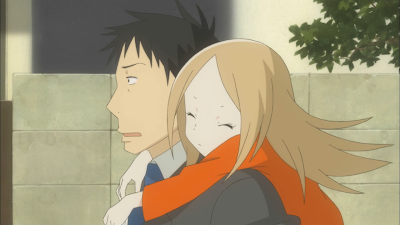
The surprise of the series is how deep it would get at points. The theme of sacrifice runs through the entire series as Daikichi talks with different parents about how they dealt with the burden of parenthood. The most profound one is Daikichi’s coworker who asked to be demoted so she could spend more time with her child this goes against the classic image of the Japanese business ethic where work comes before family in almost every respect. Yumi Unita wants to challenge that notion, to rewrite that idea in the minds of the Japanese people. With Daikichi starting as the classic notion of a Japanese salary man, one who works long hours and drinks with coworkers long into the night, the idea of having to sacrifice career for family is radical, even upsetting, for his coworkers and subordinates.

The exploration of personality types and parenthood also is a constant theme that runs through the series. Again, Daikichi’s coworker displays a noble love for her child to the point of sacrificing personal goals where Rin’s own Mother disappeared from her child’s life so she could pursue a career. Various other foils pop up throughout, the most extreme being Daikichi’s sister who is getting married but laments the fact her husband wants children cause she isn’t finished having fun, while the other father’s Daikichi meets at Rin’s school wouldn’t exchange fatherhood for anything, even the fun of their youth. Yumi Unita goes through extra effort to cram in the full range of parental personalities into the show. Early I found her negative attitude towards men, because of several women who complain that their spouses do nothing to help raise the children, as her own opinion on the majority of fathers and Daikichi stood alone as the ideal man. However, further into the series she introduces men who are more involved with their children than their wives. Again, realism wins in Usagi Drop above all else as Unita goes through the trouble to explore all attitudes people have towards parenthood.

The only misstep in the series is the strong hints at a romantic relationship between Daikichi and Yukari, Rin’s friend’s mother. There is a ton of tension and clues throughout the series but at the end the audience is left knowing nothing about the progress of their relationship. Some small hint before the series ended would have been enough but hopefully that thread gets explored more fully in the manga. From what I’ve heard after the anime ends there is a nine year time jump, so the possibility of that relationship being developed beyond a crush is unlikely, which makes all the tension between the couple a tease and nothing more.

Usagi Drop is a beautiful slice of life series about a man learning to cope with suddenly having to care of a six year old girl. His struggles with the new responsibility create a wonderfully subtle and realistic sense of drama throughout, combined with some fantastic characterization of both him and Rin. Beyond the simple Slice of Life narrative is some deep commentary about Japanese life and the impact and meaning of being a parent, which takes the show from being about a cute little girl and transforms it into an exploration of personality types within parenthood. The subplot of Daikichi’s romance with another parent is sweet, but never develops anywhere profound before the end of the series. However, that is one small blemish on an otherwise perfect piece. Usagi Drop is a rare gem that many will try to imitate in the coming years but none will be able to balance the elements with the kind of precision that Yumi Unita has achieved.

Usagi Drop is currently streaming on Crunchyroll.com. No excuses.

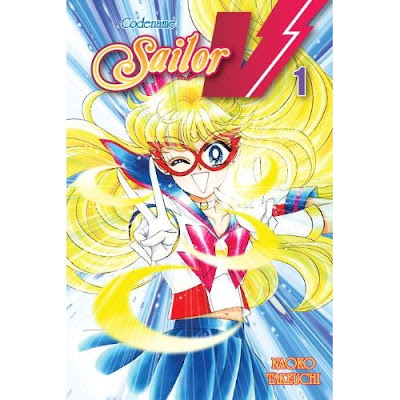
Review: Codename Sailor V Vol. 1


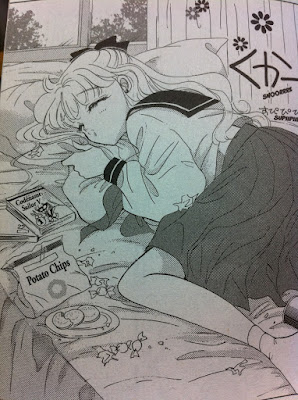
Naoko Takeuchi’s first venture into the world of Sailor Moon is the short series “Codename Sailor V.” Sailor V serves as not only prequel to Sailor Moon, but also as a first draft of what would become one of the most popular Shoujo series of all time. Minako Aino is a normal High School girl until she meets the talking cat Artemis who grants her the powers of Venus and the ability to transform into Sailor V: Defender of justice.

Sailor V is a short manga that was published over six years and due to this it feels extremely episodic. Every chapter Sailor V reintroduces herself to the reader and catches them up with the fact that she has the power to transform. This gets tired fast when you have a Tankobon with half of the series collected. A cohesive narrative doesn’t seem to exist even though V is battling the same evil organization throughout, but the reader is never treated to information about what this organization is or knowledge of their goals. They act as a blank stand in so V has an antagonist to face. It wouldn’t be a problem to without complete information from the reader on the identity of the enemy but withholding awhat their actual goals are gives the narrative almost no sense of urgency. This group wants to suck the energy from people, that’s all the reader knows.

Obviously a manga where the main character has to reintroduce herself at the start of every chapter isn’t going to have the deepest characters. Minako is a collection of traits that she is forced to overcome to defeat her foes; those being laziness, lack of motivation to study, and easily becoming obsessed with idols. Most of the enemies of the manga being disguised as idols allow V to face this weakness and this aspect of the narrative actually makes a surprisingly bold statement about pop idol culture. Takeuchi manages to sneak in a lot of social commentary for the benefit of the young female readership. While Minako is relatable, with her general apathy towards studying and obsession with idols, when the “Dark agency” attempts to brainwash all of Japan into believing that work and studying are worthless Minako steps up and defends them. Although she might not be enthusiastic about those obligations she knows they’re important, especially after getting a snapshot of how the world works if the Dark Agency succeeded.

Sailor V has to look past the obvious and see deception before she is able to defeat her foes which sometimes causes frustration for the reader because no matter how many times she defeats “The Dark Agency” Minako still manages to fall for the majority of the agency’s obvious plans. Minako even regresses after Chapter 4, where she suspects the new idol foe before the consultation of Artemis. But those instincts seem to be gone by the next chapter, a symptom of the episodic nature of the series.

Minako doesn’t grow or change much over the course of the volume until the final chapter where some of her preconceptions are challenged when she falls in love with a punk gang leader. Minako is able to grow a little thanks to facing her first real love and comes to terms with the idea that looks can be deceiving, as it were. The gang leader’s duality contrasts the “Dark Agency” which is only painted in black and white terms.

Sailor V is far more a comedy than it is an action or romance story. The action sequences are contained in two or three pages per chapter leaving the rest of the book dedicated to character humor. Not only are Minako’s own personality flaws exploited for humor expertly but I was endeared to the poor police detective who becomes frustrated that Sailor V keeps solving his cases, or the police superintendent-general who has fallen completely in love with Sailor V. The best part of each chapter is the costume that Sailor V decides to disguise in during each story. Using her powers she can transform into anything she wants and this leads to some of the most humorous and adorable scenes in the book. My favorite of these transformations is when she decides to take the form of a “GI fighting girl” which personified her resolve at that moment. That transformation is great due to the sheer randomness of the choice, but it also represents a slight character shift, being one of the few times Minako shows serious resolve.

Ultimately Sailor V suffers from being repetitive which comes from lack of a contiguous narrative, real character development, and compelling action. The art is a step below Sailor Moon with only a few stand out images. Sailor V is best when it is being a light comedy and loses steam when the chapters move towards the conflict with “The Dark Agency.” There is enough good in Sailor V to make it a fun read but its shortfalls are obvious, especially after reading the first volume of Sailor Moon. Fans of Sailor Moon will want to read Sailor V because of how they connect and my reading of Sailor Moon was definitely enhanced by what I learned in Sailor V. But I recommend that most readers simply move on to the sequel and leave this book for the more hardcore Takeuchi fans.

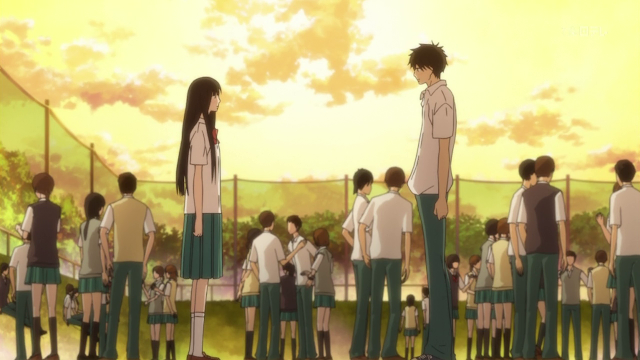
Review: Kimi Ni Todoke Season 2

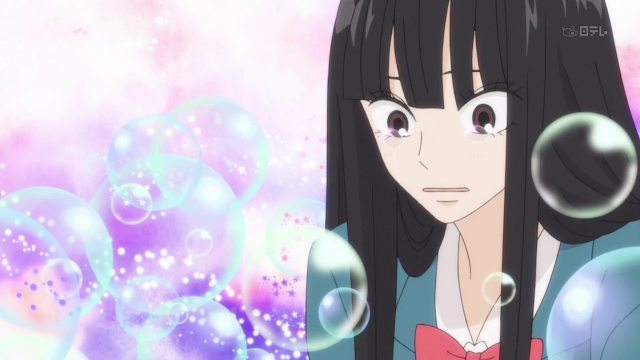
Kimi Ni Todoke was a hit because of its beautiful art and sweet narrative about the reclusive Sawako as she slowly broke out of her shell and learned how to make friends. The sequel picks up months after the original left off. Now accepted by her classmates, Sawako struggles with confessing to Kazehaya; the boy she loves and the person responsible for breaking her out of her shell; but can Sawako muster up the courage to tell Kazehaya how she feels?

The animation of the original Kimi Ni Todoke was beautiful working in a standard style, super deformed bits, and an amazing watercolor-esque. effect based on the covers of the manga. The sequel surprises with some far better animation than its predecessor. This is apparent because the show works in some old animation from the previous series, in the Episode 00 recap and in some brief flashbacks towards the end. The lines of the animation are crisper; perhaps due to being animated in a higher resolution; the colors are more vibrant, and the animation seems more fluid. Production I.G. clearly wanted to do the series justice and by limiting it to thirteen episodes was perhaps able to get the look they wanted.

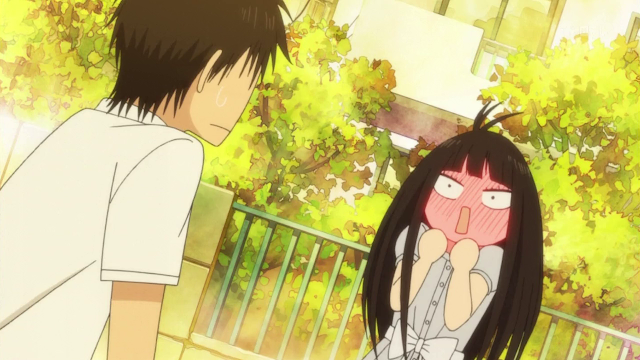
The series picks up shortly after the original, making this review a little redundant because anyone who watched and liked the original doesn’t need to read a review to know they want to continue. The first series ended with Sawako and Kazehaya sharing an unofficial date on New Year’s but neither take any initiative to actually admit their feelings for the other. The frustrating part of Kimi Ni Todoke is that the two main characters are in love with each other, but both of them are too scared to admit it to the other out of fear of being turned down. Kazehaya fell in love with Sawako because she was quiet and shy, and never fawned over him despite him being the most popular guy in school. Sawako fell for Kazehaya because of his unbiased view of people, he doesn’t care that Sawako is weird and sheltered from the rest of the class his goal is for everyone to be able to get along.

The main draw of Kimi Ni Todoke are the characters themselves, unfortunately this acts as a double-edged sword as some romance fans will find both character’s apathy frustrating. The relationship is sweet and innocent in a fashion that is almost unrealistic. However, Kimi Ni Todoke characterized Sawako and Kazehaya carefully enough to make their innocence realistic. Sawako is such a sweet and lovable character, there is rarely a scene where I don’t want to hug her and ensure her that everything is going to be all right, but it is backed up by years of being teased and isolated from her classes. She has spent much her childhood alone and thus doesn’t know how to interact with people as a normal high school girl. It does become frustrating that the characters are so slow to make any type of forward movement. Sawako and Kazehaya fall into misunderstanding on top of misunderstanding and have to dig their away out of it. The audience is given the tiny details of their thought processes along the way, which slows the show down to a crawl and yet it hits a cord with me and sucks me into the drama. The audience gets into the heads of the characters, lives inside them, and comes out the other side still frustrated by the lack of progress in the relationship but absolutely enthralled by the level of character drama.

The structure of the thirteen episode second season is around a single goal, the story of how Sawako and Kazehaya finally get together. The original series allowed some room for side characters to get a storyline and Sawako to play a supporting role but here Production I.G. focus’ is on the main story of Kimi Ni Todoke and they tell it beautifully. The slow development of Sawako and Kazehaya’s relationship match the tone and art style of the series to create a beautiful snapshot of two shy teenagers attempting to express their feelings for each other. The importance that the show gives to the confession leads to some melodrama, but it is rare that a teenage romance is without some melodramatic themes and the premise of Kimi Ni Todoke Season 2 is that the confession is the most important step for Sawako to make to further break out of her shell. It is weaved into the fabric of the series and because of that the melodrama is more forgivable that in less well-crafted narratives.

Kimi Ni Todoke has some elements which just don’t work after thirty episodes. The one-note joke of Sawako looking and acting scary has overstayed its welcome. It was an effective way of introducing Sawako to the audience as a starting point for a character which needed to progress further but it now has less to do with character development and is used for humor, which simply falls flat. There is a character type in anime, the naturally scary girl that Sawako supposedly is, that I don’t get. I’ve also seen it attempted in D. Gray Man and Ramen Fight Miki, something is lost in translation and I just don’t understand the humor. The pacing, as I’ve stated above, is also going to turn some fans away. Kimi Ni Todoke is a slow show. The romance was started in the first episode and now 38 episodes into the series the pair comes to the point of confession. It is a slow character drama and if you don’t know that going in, the pacing is going to turn you away.

Kimi Ni Todoke is an exceptional anime romance with some interesting, well written characters and an adorable narrative that follows the growth of two shy high school students. The depth in which Kimi Ni Todoke gets involved with these characters is unparalleled in any other anime romance I’ve seen. Being an intense High School drama the show does lean towards some melodrama, but it works within the context of the series. The show isn’t without its blemishes; of course; what little comedy the show has is poorly executed, most of the action in the series takes place in the character’s heads, and the relationship of the main characters progresses at a crawl. Kimi Ni Todoke’s second season picks up where the original left off and concludes the main question of the story, will Sawako and Kazehaya get together? It doesn’t disappoint.

Review: Disappearance Diary by Hideo Azuma

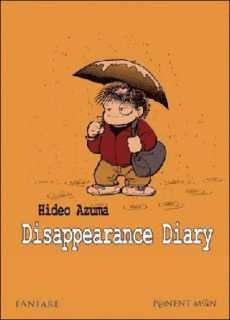
Disappearance Diary is a fine example of the scope of Japanese Comics. Here we have a veteran of the craft writing a tale about the lowest point in his life, a truly touching life story about a human pushed to the breaking point, how his life is destroyed, and how he puts himself back together. Disappearance Diary is an autobiographic work by the father of Loli-con, Hideo Azuma where he recounts the two times he ran away from his life; his career as a Mangaka; and his struggles with alcoholism.

Disappearance Diary is a story told in three parts. There is no initial backstory, no history on the author at the start of the book. Azuma tosses you right into the first disappearance where he excuses himself from his studio claiming to go buy some cigarettes and simply does not return. The piece starts “This manga has a positive outlook on life, and so it has been made with as much realism removed as possible,” and the art work reflects that attitude. Azuma himself is a cute little character with stubby legs, ruffled hair, and a single large eye. The cute art helps soften the blow of the content, as intended, because it simply is less tragic to see a cute chibi Azuma sleeping in two inches of water than it would a photo realistic Azuma.

In the first part Azuma leaves his studio and decides to live in the woods behind an apartment building. He survives by scrounging food from the trash and picking up cigarette butts off the ground. After the police find him and return him to his wife. Three years later he runs away again, this time sleeping in parks until he takes a job with a gas company laying pipes. He works for the company, his goal being to do anything to escape from the life of a Mangaka. Then the book recounts Azuma’s Manga career as he takes job on top of job, lives a life of sleepless nights, and is almost unable to say no as editors pile more projects on top of him. The final section of the book explores Azuma’s fall into Alcoholism and his time spent in the hospital in recovery.

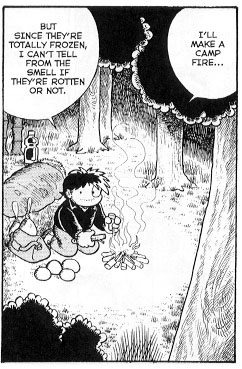
The title is becomes somewhat procedural because it is written in the form of a diary, Azuma goes over his journey step by step explaining the tactics he used to survive outside of civilization. The clever ways he uses the resources available to him to, for example cooking himself Ramen while avoiding the notice of a residents of a nearby apartment building, are a fascinating snapshot of homeless life. The first disappearance story is filled with his survival tactics and they are all bitter because the reader knows he is coming up with these clever tricks to avoid returning to his former life. He could simply go home and eat a warm meal, sleep in a warm bed but he chooses to sleep in snow just to maintain the feeling that he escaped from his life.

The second disappearance is similar to the first, but Azuma meets a large number of interesting characters that he establishes expertly in just a few images and off the cuff phrases. One homeless beggar has the strangest goofy expression on their face which instantly that establishes them as a character that the reader is not supposed to take seriously. In the narration Azuma describes him as “odd” and the goofy expression works to reinforce that. The simply artwork is used like that in all the small characters Azuma comes across. Azuma’s partner in the gas company was a much hated womanizer. The first panel he appears, even before Azuma tells the reader who he is, the character boldly states “Banged another woman I pulled through phone dating yesterday!” while wearing a wide, stupid grin which instantly establishes his character type and attitude. The reader immediately recognizes the world Azuma was entering as he shifts from artist to Blue collar labor.

The effectiveness of the Disappearance arcs wouldn’t be nearly as powerful if not for the inclusion of Azuma’s history as a Mangaka. I was taken aback by the way the piece began, with Azuma walking out of his studio on his first disappearance, but as the story went on I came to accept that it didn’t matter why he decided to leave his world behind as long as the audience understood that this was a deeply broken individual. The process of unfolding his career is quick but effective and explains how fast he became overwhelmed by the amount of work, and in those few pages it clicks with the audience why Azuma would just drop everything and run away. It was a beautiful moment and an exceptional way to bring the back story into the narrative, the audience immediately understands the reason Azuma ran away after knowing the story of his experiences the desperation and sadness in the first two sections hits the reader all at once and Azuma becomes an absolute tragic character.

The final piece tracks Azuma’s time spend in rehabilitation for Alcoholism. Using the same tactics he used to track his disappearances he describes the procedures though the ward expertly, he colors the people in the ward; no matter how tragic; in a cartoonish hue, and his telling of his experiences are in the same simple and cute art style in which depressing events are made less so by the lack of realism. What sets this chapter of the piece apart is that Azuma is not describing the selfish escapism of the first half of the book but he is describing his struggles with addiction. This is perhaps the lowest part of the author’s life and yet it appears on the page with cute art and a sense of humor. It is an amazing and rare accomplishment because while many artists go through drug rehab they don’t have the gall to write about it in such a light and humorous fashion. Azuma expresses to the reader how dark this part of his life was but also doesn’t shy away from making fun of himself at the same time.

There is a general lack of characterization in the book, which suits the diary style that Azuma was going for. But we never get any actual detail on which Azuma is and apart from the quick sketches mentioned above all of the side characters lack any sense of depth. The most unfortunate out come at this is the lack of information on Azuma’s wife. She is constantly in the background and becomes Azuma’s constant assistant while drawing Manga. She is a woman who put up with her husband walking out and living as a homeless person twice, watched her husband work himself nearly to death, and saw him become consumed by alcoholism. Yet, we never are given a reason why she put up with him. What made Azuma a desirable husband? Why did she love him? I continue to wonder what made her stay with Azuma after the first time he walked out, let alone through Alcoholism.

The biggest strength of the work might be how personal it is to the author. This is the story of the last ten years of his life and so while he wanted to get his experience out on the page the emotional turmoil that he and his wife went through is absent. It is impressive that despite that the piece remains a touching human story, and that proves Azuma’s skill as an artist. But the book could be so much richer if Azuma had shown how these events affected the people who love him, rather than simply showing us the events in a cold procedural manner.

Disappearance Diary is a colorful look at the darkest moments of a man’s life. It’s heavy and depressing while at the same time maintaining a light and humorous tone. It is a wonderful experience and a look at the stress that Mangaka actually have to endure. At times it can feel a little procedural, when Azuma describes the processes he used to survive or the processes of the hospital, has weak characters, and lacks a deep emotional connection. But this is a Diary; as the title suggests, so those details give a sense of realism to the story rather than slow the narrative down. The piece shows the power and flexibility of the medium and should be on the shelf of any manga fan.

Images sources: 1 2 3 4