Author: Scott Spaziani

Summer Preview 2012

 I’m four weeks late. FINE! But I had a crazy month and lots of content coming in video and podcasts and a few more reviews that I’m really excited to post. I only watched five shows, I think that is going to be the standard going forward. So here is my Summer Preview! I picked shows I wanted to watch and shows I saw that were excessively decisive. So, here we go! 

Sword Arts Online
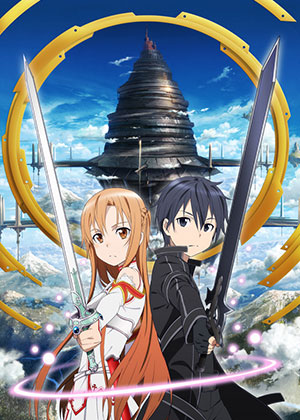
  

In the year 2022 the new Virtual Reality Massively Multiplayer Online Roleplaying game “Sword Arts Online” is released and bought by ten thousand dedicated gamers. In a twist the game designer has turned the game into a death match where players must reach the 100th floor of the game without dying, and any attempt to leave the game will cause their death. Kirito strives to use his experience as a beta tester to stay ahead of the rest of the players and reach the end of the game. 
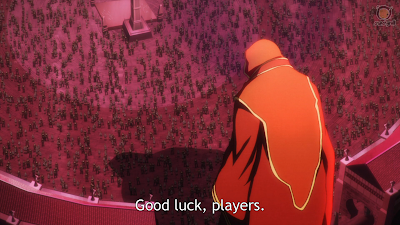
 I came at this show tainted by the memory of .Hack//sign but the show does a good job of building a realistic situation with the types of people who would obsess over the new release of a hard to get game. There are some beautiful little moments that, as a gamer, I appreciated. The scene where the pristine, beautiful avatars fade away replaced by what the players actually look like takes on a whole range of standard gaming tropes from the young kids to the unkempt twenty somethings. The best is the female characters who suddenly became old, balding men. It rang a little too true. 

The little interfaces that pop up, from the game menus, experience information after battles, and life bars take the audience out of the beautiful fantasy world that the characters have been placed in, which is exactly what they are designed to do. The show wants the audience to be reminded that they are in a game, and those little touches destroy the emersion of an MMO and they are a constant reminder of the show’s set up. 

 I’m worried that once the show starts it’ll devolve into standard fantasy combat but right now the setup is enough to keep me interested for a few episodes. I like the main character, the isolated, lonely gamer; and I can’t wait to see if it turns a rather monotonous sounding task; clearing 100 levels; into something exciting to watch. 

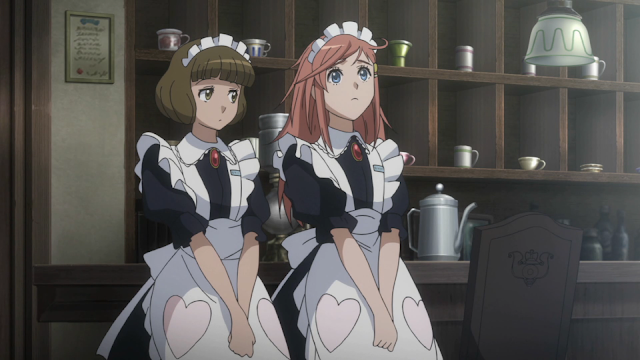
Humanity has Declined
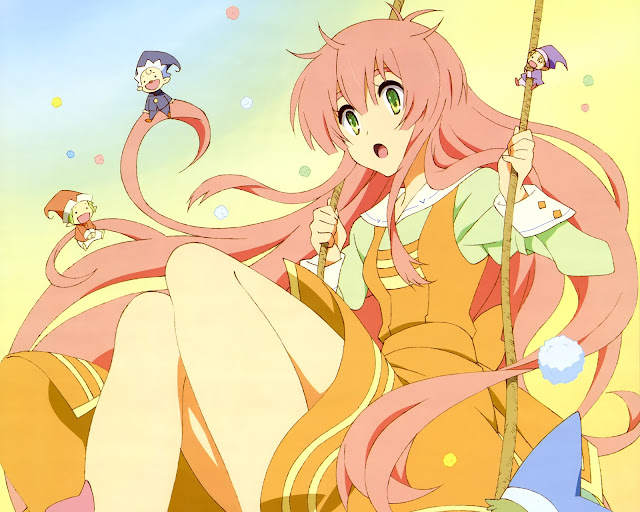
Centuries after the decline of humanity a race of fairies is the most powerful species on Earth. They are friendly, and seem to want to help the humans as what is left of humanity struggles to survive as food becomes scare and the necessities of life are disappearing. Suddenly products from the “FairyCo” start appearing in town and the unnamed protagonist; a mediator between humans and fairies; is tasked with investigating the origin of the mysterious food.
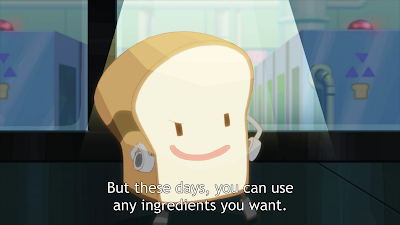
The show works on several different levels. At the very basic level it has an “OMG CUTE” factor thanks to the adorable fairies and their obsessive nature. Beyond that, the humor gets pretty deep. There are satirical elements where the show comments on bureaucracy and human nature in a dark way considering that set up of the show sees most of the human race dead. 

The art is bright and cute, the light tone is matched by the simple designs of nature and the fairies and is contrast with the dark comedy by displacing the messy and chaotic offices of the bureaucrat. The character designs are adorable, especially of the Fairies who have a mix of creepy and adorable look to them as they don’t seem to be capable of an expression other than a massive smile. 

The episode concludes are the protagonist is starting her investigation into the FairyCo with a scene that I won’t describe here because it needs to be seen, not ruined. It sets up a third level of humor for the series; complete absurdity. 

This show is difficult to explain, a unique piece of art even among the strangest of series that have come from Japan. It’s definitely worth checking out, if for nothing else than to see how crazy the show can become with such a loose premise and writers who seem to be able to do anything they want. 


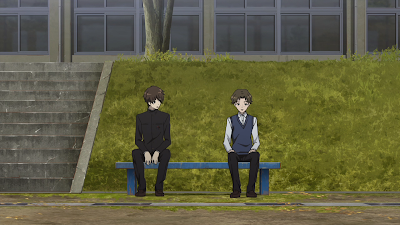
Kokoro Connect
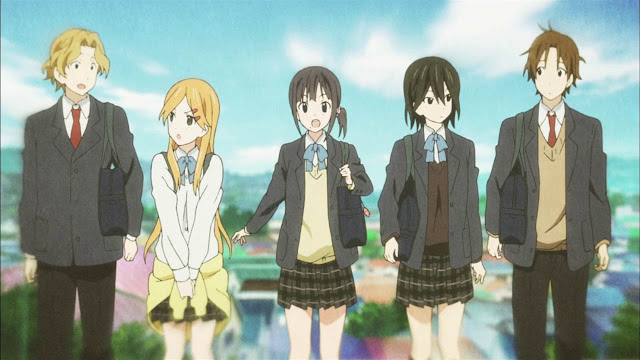
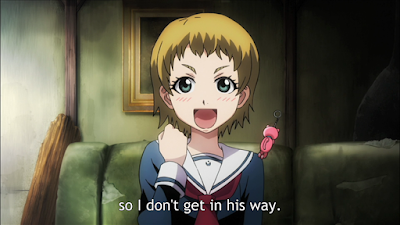
Five characters with different interests come together to form a Cultural Club. Suddenly, the characters start to switch bodies through some unknown effect. 
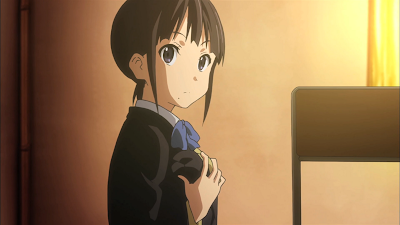
The main problem with Kokoro Connect is that we are only just introduced to the characters before the body switching effect is introduced. So we really don’t know these characters when they start to talk about their personalities switching. Ultimately, no one character is interesting and the first episode features mostly gender related jokes. The first pair that switches has a failed romance going on between them and the second switch features the obvious joke when the male character is transferred into the female character’s body, he is suddenly shocked and enthralled by the fact he has boobs. 

 The aspect that is hard to get over is that the character designs are lifted right from K-On!, both shows feature character designer Shiromizakana except that the animation quality is a noticeable step down from the high standards of Kyoto Animation. When the characters are sitting around the club room table and idly chatting I can’t help but think that it is just a cheap way to take advantage of a built in audience looking for their next moe fix.

The show is a group of characters sitting around a table blandly talking about the weird fact that they are switching bodies. If there was some development before the body switching it might be an interesting concept, or if the concept was added to an existing show like K-On! it might work as an arc. As a standalone show? It just hasn’t built compelling enough characters to make the hook interesting. 

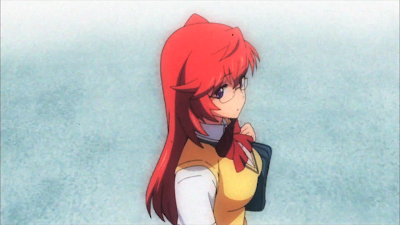
Tari Tari
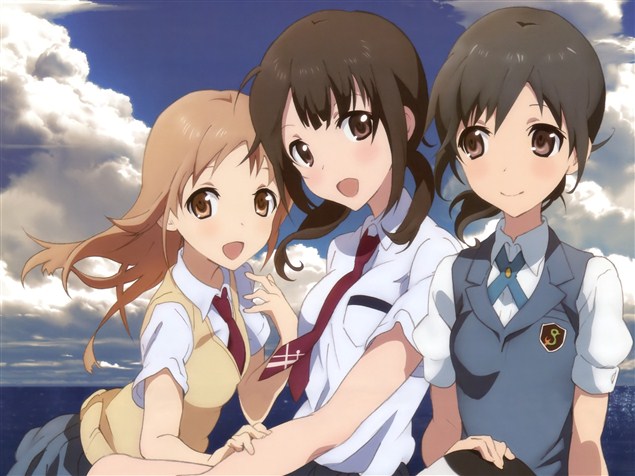
Konatsu Miyamoto leaves the choir club after being told she won’t be able to participate in a public performance due to her struggles with stage fright. She starts her own music club and begins to recruit others; Wakana Sakai a talented singer who refuses to use her talent, Sawa Okita who is Konatsu’s best friend and obsessed with horses, Taichi Tanaka the only member of the Badminton club, and Atsuhiro Meada a transfer student from Austria. 
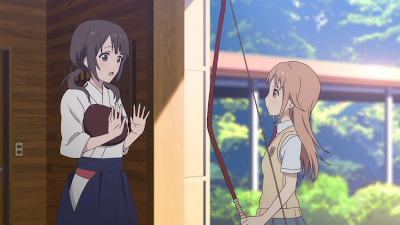
This is the second show in the summer season that is being compared to K-On!. This time it isn’t in aesthetics, in fact this show’s art is incredibly dull. The scenes start to blend, the colors are muted and boring, and the worst is that all the character designs are essentially identical. I had trouble keeping track of the characters because of how similar they were in appearance, even between different genders! 

The story is also bland. There are some interesting opportunity for character development, especially with Wakana Sakai, but this first episode didn’t do enough to build up any one character to the point where I’m compelled to return. The most interesting character to watch was the transfer student and that was only because his misunderstanding of Japanese customers were humorous.

Tari Tari might develop into a show worth watching. It has the buds of interesting characters and a hook to bring these characters together. This first episode does nothing to lead me to believe that they’ll take advantage of any of the potential they’ve laid out. I don’t think Tari Tari will be a bad show, but it will be a bland; average show at best. 


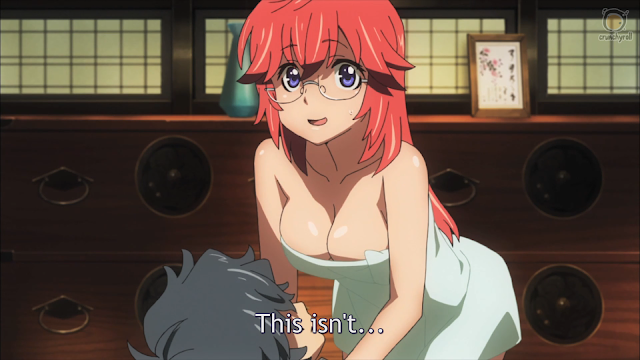
Natsuyuki Rendezvous
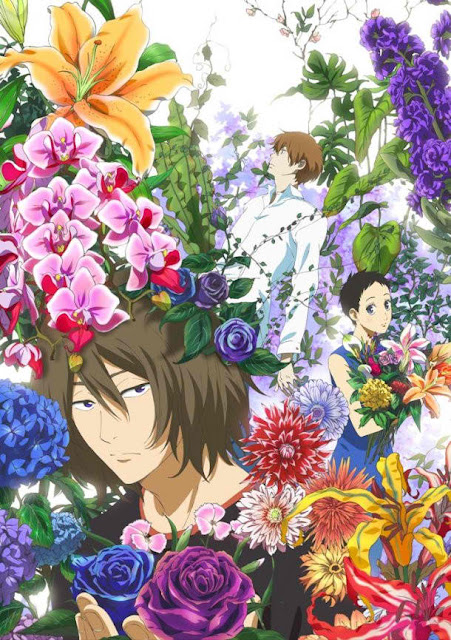
In order to become closer to Rokka, owner of a local flower shop, Ryosuke jumps at the opportunity to work for her part time. Finally, after six months of working for her, Ryosuke is invited upstairs to her apartment where he stumbles across a half naked man. Disheartened, Ryosuke soon learns that this isn’t Rokka’s live in boyfriend but the ghost of her late husband, Atsushi, that only he is able to see. Ryosuke is determined not to give up on her even with her dead husband desperately trying to stop him.  
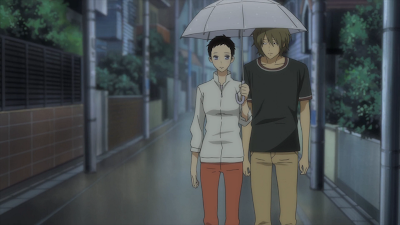
I’ve watched much further than the first episode of Natsuyuki Rendezvous so I will be brief so I don’t give anything away: This is the best show of the season. I love the characters; Rokka is an adorable character with a strong determined will to succeed fueled by the loss of her husband. Ryosuke is a sweet guy who just wants to get close to Rokka and actually makes progress towards her! 

Natsuyuki Rendezvous is the most realistic romance I’ve ever seen come out of Japan. There is a scene in the first or second episode where Ryosuke confesses his love for his boss. This isn’t treated like the biggest event in these character’s lives like it would in so many high school based anime, Rokka nods and doesn’t answer; they simply go on their way to lunch and then back to work. Rokka takes her time in considering the proposition like an adult would; an adult who hasn’t dated in eight years due to a tragic loss.  

It’s refreshing to see a realistic romance anime once in a while. I’m always shocked when I do see one and I give it extra points for trying. The added layer of having Ryosuke battle against Rokka’s dead husband makes it all the more compelling. The ghost lingers around the house just as Rokka’s love for him has lingered over the years, and like her own feelings the husband is getting in the way of her moving on to a new partner. I look forward to watching how the series plays out, and how the relationship develops going forward.


The failure of Double Zeta Gundam

I was warned. Cautioned. Told, specifically, that Double Zeta Gundam was not something that I wanted to experience. But I made a pact with myself. A sworn vow. I was going to watch all the Universal Century Gundam! As an anime fan, as someone who has used the screenname “Gundampilotspaz” for the last ten years, I need to at least have seen all of the shows in the original Gundam universe, right? Well, even Bandai must have had better sense than I did going into this series. Double Zeta Gundam is the only chapter of the original UC Gundam that has not been released in the United States. Maybe I should have taken the hint?

After the success of the reedited Gundam trilogy movies the new 50 episode Zeta Gundam series was massively successful. Ending on a cliffhanger, the show needed a sequel in order to conclude narrative threads started at the end of the series. So enter Double Zeta Gundam! However, from the first episode the series takes on an obvious tonal shift. By the end of Zeta Gundam, the show had become exceptionally bleak. In fact, the show ended with Kamile, the main protagonist and Gundam pilot, mentally damaged after his final battle with Haman Karn. While the Titans are defeated in the final battle the return of Zeon promises that the work of the Argama crew is no where near complete. 

Double Zeta begins by quickly having Kamile rolled off to a hospital, leaving the Argama without a main pilot. The damage to the ship and crew looks bleak but we are introduced to an entire new group of young men who have mobile suit experience! Unfortunately for the Argama crew, they are more interested in stealing the Gundams and scraping them for profit than fighting the forces of Zeon. The first six episodes or so follow this pattern: Judau and his friends manage to steal Zeta Gundam and scrap it, Zeon appears and attacks, Judau defeats the enemy, the Argama somehow gets the Gundam back. That is the pattern for the first six episodes! The most puzzling aspect is in most of the battles they keep coming up with reasons to leave the cockpit doors open. Sometimes it’s because Judau isn’t sure how to close to hatch, other times the Zeon officers take mobile suits that don’t have doors installed. For some reason, Tomino decided that for the first few Gundam battles the hatches had to be open. Humor? It might be humor?

Those first few episodes are also filled with the poorest slapstick humor I’ve ever seen. The Zeon commander’s incompetence is supposed to be funny, the fact that Judau is constantly able to steal the Gundam is supposed to be funny, and there are scenes where the Gundam’s themselves are the subject of slapstick humor including one horrible scene where Zeta Gundam gets it’s head stuck in the ceiling of the hanger deck while the audience is treated to a shot of it’s flailing legs. Even after the first ten or so episodes the comedy stays around and seems to be the driving force behind the narrative.

When the more serious piece of Double Zeta begins we’re introduced to a character named Chara Soon who is a high ranking officer in Haman’s new Zeon army. She seems to be a rational, obedient officer… until she gets in the cockpit of a mobile suit. Once piloting a mobile suit she looses her mind with battle lust, caring only about fighting and winning. This, to say the least, destroys any credibility the character had. I’m convinced that it was some kind of meta joke Tomino snuck into the series. Outside a Mobile Suit, Chara Soon hates violence and wishes the war is over quickly. Once inside all she cares about is personal victory. Is Tomino providing commentary on on his own characterization? It’s possible, but the audience has to dig deep in order to come to that conclusion.

Once the series crosses episode fifteen it improves by a good measure by actually returning to the main antagonist of the show, Haman Karn, and working on a huge subplot where Judau’s only goal becomes the return of her kidnapped sister from Zeon Officer Glemy who is using her for …something? Honestly, I never quite understood why he kidnapped her. He seemed to be preparing her for live in the Zeon court but why he would pick a random orphan girl from a backwater colony to be a member of the Zeon court is beyond me. It seemed like Glemy’s obsession with the girl was an excuse to give Judau a reason to continue fighting with the Argama, and nothing more.

Hands down the most frustrating part of the show is that no one learns from their mistakes. Early, the Argama allow a group of kids to steal their highly advanced combat ready Mobile Suits effortlessly …several times! Once Judau joins the Argama crew this doesn’t stop. People seem to just take off in a Mobile Suit whenever they feel like, disobeying orders in the process. Captain Bright’s answer to this is to shrug and have a “boys will be boys” attitude. Does anyone remember what Captain Bright did to Amuro Ray when he took the Gundam without orders? He tossed him in the brig! Yet he allows any member of the Argama Crew to just launch in any Mobile Suit they want while he sits in his Captain’s chair mumbling, “No, stop. Please don’t do that. Hey, be a friend.”

There is so much not to like about this series, but those come from the characters and the narrative. I found the majority of the battle scenes in Zeta Gundam to be paint by numbers and repetitive while in Double Zeta they were more consistently exciting. The animation is also a step up with the Mobile Suit designs taking another wide step forward. Granted, I would have preferred the Double Zeta Gundam not separating into it’s three components quite so often because, at times, it just didn’t make tactical sense and harmed Judau’s chances of winning the battles when it was employed. 

The last twenty episodes have a lot to like in them. The small side stories on the earth are well written and entertaining. They also give the audience a good slice of how much the on going war has affected the Earth as well as what the remains of the original Zeon occupation have been doing since Amuro Ray’s oringal victory. The episodes that are great step away from the crew and do character studies on people who have been affected by some aspect of the war. One such stories follows a woman who lost her boyfriend in the last war and has been outcast from her community for being associated with the Zeon.

The second half of the series comes to a glorious climax at episode 35 when it’s learned the Haman Karn will drop a colony on the Federation base in Dublin. It’s a two part episode which covers characters preparing for the event, trying to evacuate Dublin while an unhelpful Federation celebrates the population decrease the attack will cause and Zeon forces try to prevent refugee ships from escaping. After the colony drop the desolate waste of Dublin becomes the battle ground for an epic fight between Double Zeta and a Zaku 3, then the Double Zeta and an allied Qubeley fight the tremendously powerful Physco Gundam around the crumbling remains of the fallen colony. The battle was exceptionally choreographed, the animation was stunning, and it held some of the few genuine emotional moments of the series. They are perhaps two of the best episodes in all of UC Gundam.

The series then destroys that momentum by inserting some filler where Haman Karn sneaks aboard the Argama for no reason, as well as the return of the Moon-Moon priestesses which appeared in an awful two part episode during the first half of the series. By the time the last shoe was dropped, Glemy attacks Haman Karn and begins a Zeon civil war, the event falls flat. What should be an epic moment and an epic battle is weighted down by bad pacing, poor character construction, and a lack of stake for the outcome of the battle. While the action was fun and exciting, it felt like Mobile Suit battles for the sake of Mobile Suit battles at that point in the series.

So, is Double Zeta an attempt by Tomino to sabotage the Gundam franchise as some fans suspect? Well, I don’t think that’s true. It certainly is an attempt to create a different type of story in the Gundam Universe, to insert some comedy instead of being consistently dark and foreboding. But it just didn’t work because the audience is expecting the series to pick up right where Zeta Gundam ends and conclude that narrative. Much of the series, especially the early part, is filler that was created to fulfill Tomino’s contract so he can move on to what he really wanted to create: Char’s Counterattack. Char is obviously Tomino’s favorite character and without him in this series, it felt like he just doesn’t care. The main story is still as good as Gundam will ever be but it’s hidden behind bad characters and poor pacing.

Should it be watched? Probably not. Maybe the final fifteen or so episodes are worth watching or if one wished to be a Gundam completest for the sake of being a Gundam completest. There is just too much wrong with the series to make the few moments they get right be worth the time investment.

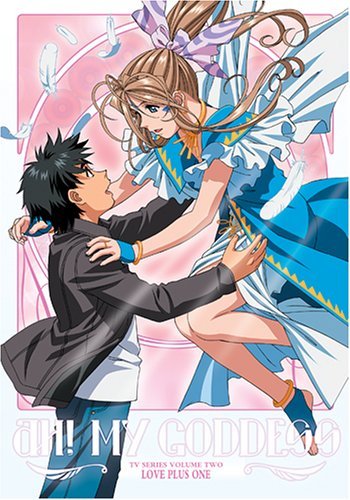
Review: Ah! My Goddess! Season 1

 I was excited to revisit Ah! My Goddess!. It was one of the first shows I watched after jumping back into anime after a burnout period and because of that it had always held a special place in my heart. Even before watching the TV series, I was a big fan of the original OVA and the film, so at the time I was guaranteed to love the series. However, the last time I watched this show was six years ago and it is rare that something matches up with fond memories. Keiichi Morisato is a student at Nekomi Institute of Technology who has always had bad luck. After selflessly helping a little girl find her wallet, he accidentally dials the Goddess Relief Office and is granted a wish. Without thinking he wishes that the Goddess stays by his side forever.

I want to approach this as fair as I possibly could, because I’ve seen this show before in several varieties and knew what to expect from the jump and yet this time watching it, I couldn’t help but feel creeped out by those first few episodes. In essence, Keiichi wishes that Belldandy stays with him against her will. That is the core concept of the show. It doesn’t matter that he doesn’t take advantage of her, it doesn’t matter that she learns to genuinely like him. This time it just stuck with me as odd. Perhaps it’s because I’ve seen this formula so many times in the last five years that the vail has been lifted. I wrote in my preview of Ano Natsu de Matteru that a show around a girl coming from supernatural place and living with a guy has been done so many times that its lost all meaning. 

Ah! My Goddess! takes that up a level as having the supernatural girl being tied to the main character by an unbreakable magical force. In the first few seconds after the wish is granted she rushes over, calls her boss to ask if the wish had been granted in a panicked voice. Only after that brief moment does she then switch over to being cheerfully sweet at the whole situation. That brief moment of panic is enough to ruin the whimsical nature of the scene and give it a creepy vibe.

The relationship of the characters does grow over the next few episodes. Belldandy honestly likes Keiichi and actively wants to get to know him. Keiichi, on the other hand, just seems happy to be with a girl. Of course, Belldandy is a beautiful and kind goddess. What guy wouldn’t instantly fall in love with her? It is the idea that Keiichi just wants a girlfriend and doesn’t care who it is part that I don’t like, and while I could see Belldandy make an effort to get to know Keiichi and slowly learn to love him over the course of the series, I never got that feeling from Keiichi. The show assumes the audience will just accept the fact that he falls in love with Belldandy because… Belldandy is a beautiful girl who appeared in front of him magically!

The initial conflicts of the series surround two rich, popular kids at Nekomi Tech. Sayoko Mishima is so popular that she believes herself to be the Queen of the school and Toshiyuki Aoshima is a playboy who becomes frustrated when Belldandy shows no interest in him. The plots that involve them feel petty, as the theme of those stories is that being rich and popular doesn’t always get you everything you want. But that plot is recycled in various ways in all the episodes that those character appear as the main antagonists. Once the more intense, magic driven narratives begin those early episodes feel like they don’t even matter. They exist to set a tone, and the two characters become annoying quickly. They might be there to make people who identify with Keiichi feel superior to their “social betters” but watching this now that I’m out of school and far away from the social politics of school life those characters and their episodes are just boring.

That becomes the ultimate problem with the entire series. I never feel like there is anything on the line. I know that Belldandy and Keiichi aren’t going to be broken up by some rich, preppy kid in the eighth episode of the series, so why should I care about this story? Unfortunately, that is what happens throughout the whole show even with the more mythical or magic based plots. All of them can be boiled down to a threat against Keiichi and Belldandy being together and each time the audience knows that it won’t end with the two of them torn apart. When the show moves away from those kind of stories it does get better. The episodes where Belldandy becomes sick and Keiichi is forced to take care of her is sweet, and when Keiichi and Belldandy help build the confidence of one of the members of the motor club for an upcoming race the character becomes surprisingly endearing. Unfortunately, those moments are sprinkled in between stories where Keiichi and Belldandy might be torn apart! Oh no! 

When the climax began, this cycle had just worn on me. Even with a powerful evil being released and Urd turning on the main cast, I just didn’t feel like anything bad was going to happen to these characters and thus I didn’t really care about the story. The climax of the show features three separate epic battles, each time having the fate of the Earth on the line, and I felt bored by the entire exchange.

The best part about the series comes from the interactions of the three Goddesses. Belldandy, Urd, and Skuld are fun characters and their vastly different personalities allow for many interesting clashes. When the show focuses on the Goddesses and not on the Belldandy-Keiichi relationship or any kind of conflict it is far more enjoyable. In that way It works as a relaxing slice of life show. Unfortunately, most of the interactions of the Goddesses come around the Belldandy-Keiichi relationship, which harms it a little, but those bouts of dialogue are a welcome break from the insufferable love story.

I’m a little sad to say how much Ah! My Goddess! bored me. Again, I go back to my preview of Ano Natsu de Matteru and I must say this kind of wish fulfillment romantic comedy just doesn’t appeal to me anymore. What bothered me most is how that even during some pretty serious, epic moments the characters never really feel like they are in danger. Without real consequences, conflict doesn’t really have any meaning. I did like the characters and how they interacted, but it was always framed by the go-no-where romance between Belldandy and Keiichi. As for the creepy factor… it was there through a lot of the show but it ended on a high note, with Haven in chaos Keiichi’s wish had been lost. So Keiichi and Belldandy are free to begin a relationship without any magical interference. The characters had grown together to a point where I accepted that they could mutually agree to start a relationship. Now maybe they’ll actually kiss at some point.
Convention Report: Anime Boston 2012

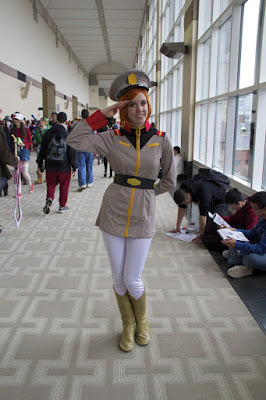
The numbers are in and I’m shocked. Even with PAX East 2012 across down, a much more mainstream convention, Anime Boston’s attendance grew yet again. A fitting bullet point for the convention’s tenth year.

I was glad they acknowledged how big a deal the tenth anniversary was and yet they didn’t go overboard in reminding the attendees of the milestone. They had a few retrospectives panels run by staff and a small “museum” in the Sheraton hotel dedicated to the convention’s history. They had shirts from all ten conventions; even if they were just staff shirts; they had badges and programs from all of them as well alongside special bits of signed merchandise and newspaper articles from the convention’s history. They even had a ten year old room sign which, when I saw it, I clearly remembered the style of sign from that original convention. As an attendee of the first Anime Boston I was happy that they had gone through the trouble to preserve the conventions history. While ten years isn’t a long time, it is a significant part of my life and my fandom that the convention has been around. I wore my Anime Boston 2003 shirt and looked at the same shirt displayed proudly in the museum as a piece of it’s own history. I felt like I was a part of something in that moment, and felt confident that Anime Boston will be a staple of the fandom for years to come.

Anime Boston is held, as it has for the last few years, in the Hynes Convention Center and Sheraton Hotel in the heart of Boston. Unlike most convention centers, which are normally build away from city centers, the Hynes provides easy access to the Prudential Center Mall’s food court. If that doesn’t sound appealing, there dozens of amazing restaurants within walking distance and an entire city’s worth of attractions if you want to drive or take public transportation. A favorite in the area has been the Pour House, which is a pub that serves an amazing burger. This year we decided to take a short drive, long in Boston traffic, down to the famous Eagles Deli which has been featured on Food Network’s Man Vs. Food for a delicious Cheeseburger and some of the best coated french fries I’ve ever had. Of course, as I have for the previous two years and because disgusting Chinese food is one of my guilty pleasures, I also went to Panda Express in the reasonably priced food court. Hynes also has the normal convention food located right in the main hallway but if you buy from those venders you’re wasting money and not allowing yourself to enjoy the food that a major population center can offer.

The Hynes itself is a beautiful convention center but can be a little large and difficult to get around. The main hallway, which connects right to the entrance, becomes completely jammed at the height of the convention on Saturday. But once that area is breached the rest of the hallways and rooms are spacious. The convention feels a lot smaller than it really is because of how much room there is for people to disperse. There was little improvement over last year, it seems that Anime Boston has found a set up that works for them and they’re sticking with it. I wish they policed the main hallway a little more and got people to move into the comparatively empty halls right off that main entrance, but that would have probably become a near constant struggle.

The convention culture is a mix of the worst kind of meme shouting super-nerd and the sense of community that I love about conventions. Marco Polo was back in force this year. In fact it felt like more of the conventions attendees were into this year than ever before. Luckily, there wasn’t much of a smell in the convention center but when I went up to tabletop gaming the smell of people who weren’t regularly showering was obvious. The plus side to the culture was the feeling that everyone wanted to be here for the same reason. From the photo gatherings, I was in the middle of a poorly organized Pokemon photo op, to just people who wanted to give high fives while going down the escalator the sense of community was there and it boosted my spirits just when I felt defeated by the negative aspects of Anime Boston.

The convention itself was set up just as it had been for the last couple years. The dealers room is massive, the largest at any convention I’ve ever been too and yet not crowded because of the space they leave for aisles are large enough that they will never be blocked even at the height of the convention on Saturday. Even with people stopping and taking pictures it was rare that I had problems navigating the floor. This comes in stark contrast to New York Anime Festival which is in a much larger space but absolutely impossible to navigate even on the smallest days of the convention. The dealers room seems to have more cell dealers than I remember there being last year; and I picked up an Azumanga Daioh production sketch; and My Little Pony has exploded in popularity this year. The figure vendors were all there, but their selection didn’t quite entice me as much as it normally does for some reason. The figures that vendors bring to conventions seem to favor Haruhi and Evangelion and I’ve already seen nearly every variation of those characters. I did walk out with a Kallen I’ve never seen before, she has become a collector character for me. It was last year that I spent too much on a rare figure of her in a beautiful red ball gown.

The Artist Alley is equally as impressive as the dealers room, featuring artists from all over the dense Boston and New York area. Again, the same trends I’ve seen in previous years are still there with the addition of more Doctor Who and a lot more My Little Pony. The dominant anime represented remained Bleach, with some interesting characters sprinkled throughout. I walked out, somehow, with only a Moogle keychain. Although I mentally purchased hundreds of dollars in prints.

The low point of the convention, and possible what was hit by PAX, was programing. According to Charles Dunbar, many of the panelists canceled at the last minute leaving gaps in the schedule. Due to this there were long stretches of time where I looked at the schedule and couldn’t find anything I thought was worth going too. The weirded part of this was the theme, which was apocalyptic anime, was barely represented. I saw two or three panels that directly represented that theme. The panels I did see were universally pretty great, and I know there were excellent panelists giving their normally high quality lectures such as Rym and Scott from Geeknights and the previously mentioned Charles Dunbar. I sat in on a retro games collecting panel early Friday which was fun. The idea behind it was to feature some huge collectors and give tips to starting and taking care of a game collection. The anecdotes were interesting and at times hilarious, the tips were practical and I felt prepared to start the hobby if I had mind too.

Next I went to Latin Latin Madoka More Latin hosted by Viga and Froborr. They seriously examined the themes and symbols in Madoka in order to dissect the pieces of fiction it was alluding too and the messages the show was trying to invoke. It was a well researched and fascinating panel. Friday night I was able to catch the always excellent Mike Toole and his Dubs that Time Forgot panel. He mostly focused on the Wizard of Oz anime versions and the dubs they received when they were brought over to the United States. Just find this panel and watch it, there is no reason not to. Many versions of the panel exist on Youtube and Mike Toole rarely recycles material.

On Saturday I stumbled into a Super Sentai panel, mistaking it for something else. That became the biggest surprise of the convention. The presenters had an enthusiasm for Super Sentai that was infectious and by the end of the hour I was seriously considering watching some of the newer shows. The panel was a history of Super Sentai and Kamen Rider, which was framed by showing which series were connected to the imported versions such as Power Rangers and Beatle Borgs. At the end of the panel they showed half the first episode of the newest Super Sentai show… which featured Pirates! I was far more excited than I probably should have been when I walked out of that panel.

Ultimately Anime Boston has settled into their space and formula with grace. The conventions have been consistently fantastic and even with the threat of being hurt by the presence of PAX the convention managed to thrive and grow. The blow to programing is unfortunate, but the convention managed to print accurate schedules and make sure that no one showed up for a panel that wasn’t going to happen. I do think that Anime Boston probably should drop the idea of having a yearly theme, I barely felt the presence of the theme and even that official convention art didn’t conform to the theme; granted the tenth anniversary celebration was probably more important than following a theme. Going to Anime Boston is like coming home. I know exactly what to expect, I know where everything is going to be, and I trust the convention to provide excellent programing. I was not disappointed, yet again, and I can’t wait for the party to continue next year.

Additional Anime Boston 2012 coverage:

Anime Boston 2012 in Photos, Part 1

Anime Boston 2012 in Photos, Part 2

Spring Preview 2012

It’s a solid season this spring but, unfortunately, one only has time to try out a few shows. I attempted to pick two of the big Moe shows, two of the most serious general audience shows, and two shows that just looked adorable. I hope you enjoy my previews of Dusk Maiden of Amnesia, Mysterious Girlfriend X, Japanese Folktale, Polar Bear Cafe, Kids on the Slope, and Space Brothers. Hopefully I help you decide if you want to check something good out… or help you desperately avoid something. 

Dusk Maiden of Amnesia 

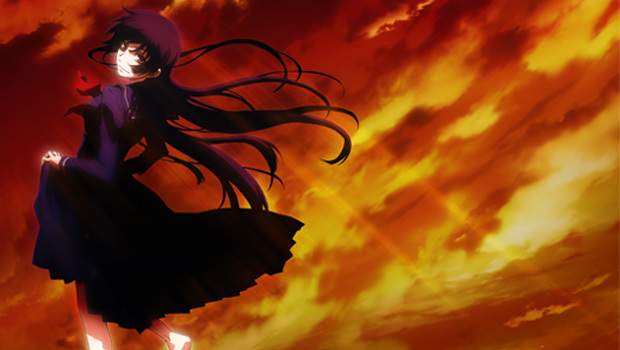
The show is built around ghost stories told at a high school. Most of them involve Yuuko-san, who is rumored to have been a student who died at the school. On his first day at Seikyou Private, Teiichi Niiya meets Yuuko-san in an abandoned part of the school and agrees to join the school’s paranormal club in order to help Yuuko get her memories back.

The episode started out extremely cute with club member Momoe going over the reports of paranormal activity and while she remains oblivious to her stuff floating around her head. She seems to revere Teiichi as someone who can communicate with spirits, someone who has a connection to the dead. When Teiichi arrives he seems more nervous and flailing than anything else, he is also talking to someone who isn’t there which leads to more fun humor as Momoe thinks he can read her mind and several misunderstood statements.

The show was enjoyable up to this point, Momoe is a cute and fun character and the fact that Teiichi is constantly distracted by something that isn’t there, obviously a ghost, was the source of some great misunderstanding based humor. 

Where the show started to lose me is that after the eye catch they replay the entire first eight minutes of the episode again, except this time the audience can see and hear Yuuko. Well, that was an interesting way to introduce the character and concept to the audience but it didn’t require reusing all the footage a second time. While at first I thought it was neat, I quickly grew bored.

After they had gotten past that point it returned to being a fun show. Yuuko’s constant annoyance at her own legends are funny as well as Teiichi’s attempts to cover up her presence to Momoe and the other characters who can’t see her. However, these are jokes that will be quickly played out as the show takes a monster of the week structure. 

 Dusk Maiden of Amnesia is a cute and beautiful show but I doubt the content will be enough to keep me interested for thirteen episodes. They had to replay a long scene in the first episode twice! That doesn’t bode well for the rest of the show, even if their intentions were to do something compelling and different. I’d watch one or two more episodes, but I don’t have high expectations.

 Mysterious Girlfriend X


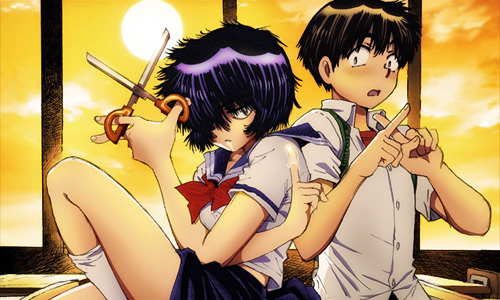
I’m not sure where to start with this show. It begins with an odd hook, where the show comes out and blatantly says that boys are constantly thinking about who will be their first sex partner. From there we’re shown the main character Akira, who is a generic anime protagonist who has no noticeable features and no noticeable flaws. That day in class a new transfer student, Mikoto, appears. She immediately gets a reputation as being odd because she sleeps during all breaks and has a massive laughing fit for no reason in the middle of class. 

 So yeah, up to this point the show is being set up to be a generic love comedy. It’s well animated and the character designs are pretty cute. It also has some interesting use of light and well directed shots. But what happens next changes everything… Akira is leaving class and notices Mikoto still sleeping so he returns and wakes her up. She has drooled on her desk and when she leaves the room he… tastes it. 

What the hell, Japan! I have grown a fairly thick skin to most of the wish fulfillment and sick fantasies that appear in Anime but this show is taking one of the strangest fetishes I’ve heard about and makes it the driving force in the show. Seriously. Akira becomes addicted to Mikoto’s saliva and has to taste it to prevent withdrawal symptoms and it is from this jumping off point that the relationship develops. I don’t know who this super niche title is meant for… I don’t know what makes the manga popular or why no one stopped the process of turning it into an anime. After watching the first scene where Akira tastes Mikoto’s drool I had instantly decided never to do a season preview again and had to talk myself into continuing to write about anime period. Thanks a lot, Japan. You came a hair short of completely crushing my favorite hobby. 

Japanese Folklore

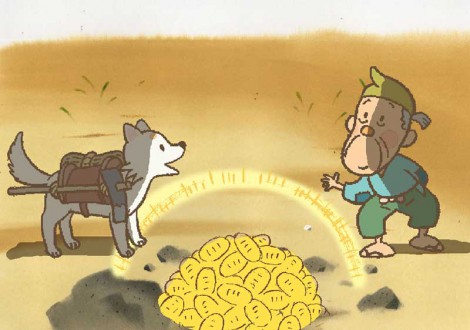
 Japanese Folklore pretty much delivers what is advertised. Its a show about Japanese Folklore. The stories are read by an omnipotent narrator and accompanied by child friendly animation. The animation is cute and colorful, which helps the audience digest an otherwise stuffy narrative format.

The show is clearly intended to teach children classic Japanese folklore. It seems like it’ll be successful but the narrative style is just too straightforward and while it is interesting to learn about these classic works of folklore, they aren’t exactly the most engaging pieces of fiction. So while I appreciate what the show is trying to do and I enjoyed the animation I probably won’t be watching anymore, unless I get an urge to study Japanese Folklore in a quick and easy way.

Polar Bear Cafe

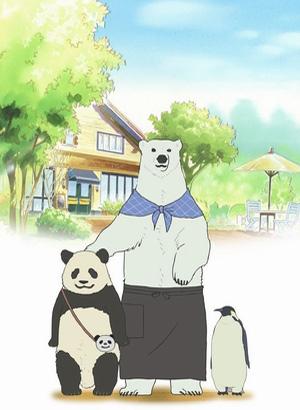
 Polar Bear Cafe is about a Panda who is pressured into finding a part time job my his mother. He’d rather just sit around and chew on Bamboo leaves, and unfortunately those are his only real skills. While out hunting for jobs he comes across the Polar Bear Cafe which is run by its namesake and features a colorful clientele of animals and humans. 

Polar Bear Cafe is absolutely adorable. The entire point of the show is just to activate the cute center of your brain and make the audience squee over adorable animals. There isn’t much characterization, with some minor exception in Polar Bear, and a lot of the jokes are repeated over and over but the cute animals make up for that in abundance. 

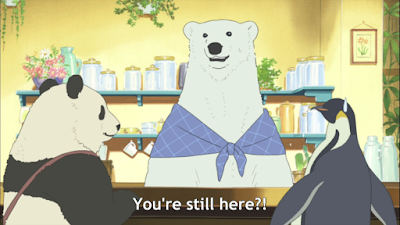
 The one setback is that a lot of the humor involves puns. Crunchyroll does a good job of subtly explaining the jokes to the audience by showing the Japanese word which works well with hearing the actor say the Japanese word. So while the jokes do go over an English audiences head, it doesn’t take much effort to understand what is going on. 

The animation style is a little strange, but not off putting. All the animals look like… animals, not overly cute anime version of animals. I think the fact I found the animals unbearably cute is proof that this choice was clearly in the best interest of the show. 

Polar Bear Cafe doesn’t have much going for it. It’s an incredibly light comedy whose main appeal is watching cute animals do things. If that sounds like it appeals to you, or you squeed at any of the screenshots there is no reason not to check this show out. 


Kids on the Slope

 Set in 1966 Kaoru Nishimi has moved in with relatives after his father had to leave for business. He’s been a perfect student to this point but that balance is upset when he meets Sentaro Kawabuchi. Through Sentaro he starts to gain an appreciation of Jazz.

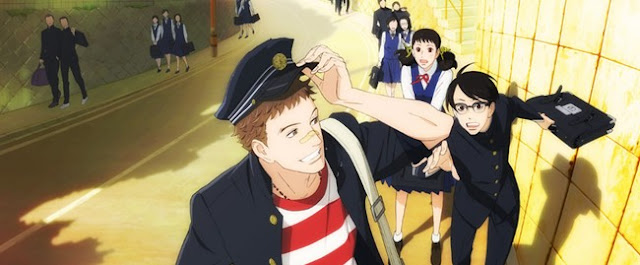
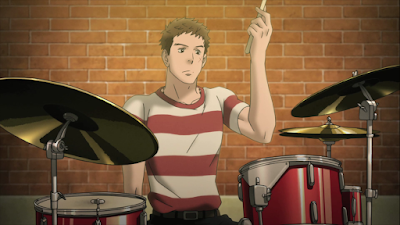
The production values of this show are extremely high. The character designs are interesting and unique, colors are vibrant and are matched to the dialogue in the scenes almost effortlessly. What few music scenes they’ve shown so far have been amazingly animated. Characters playing musical instruments are notoriously difficult to animate and painful to watch when done poorly. The highest point of the show is the music, the music staff including Cowboy Bebop’s Yoko Kanno, and in a show about music having any aspect of the music be weak would completely cripple the credibility the show. The music is infectious, background and the music played by the characters are absolutely incredible. 

The relationship between Kaoru and Sentaro will be the obvious draw of the show. Kaoru gets nervous just by hearing about the infamous Sentaro, but when he first meets him, without knowing who it is, he shows a solid boldness as he is being driven by something that he desperately wants. Kaoru is a character that is confused, in flux. He doesn’t quite know what he wants, why he wants what he wants, or where he belongs. Sentaro is a powerful character who knows exactly what he wants, to play Jazz. The contrast, even what little there has been so far, is awesome and I can clearly see where the character arcs are going to end up during the series.  

I’m a bit concerned about the narrative, which isn’t such a big deal in a character focused series, but motivating factors behind what the characters were doing and why seemed lost. Kaoru desperately wanted to get on the roof of the school and during my viewing I was unsure why he wanted to get up there so badly, although I have been told that the show mentions that being up high is a cure for his anxiety. Also, we only get a brief look at Kaoru’s home life and the fact that his father left him with his aunt seems more like a plot device to get Kaoru in an unfamiliar setting than a fleshed out story point. I’m sure most of these issues will be solved in upcoming episodes, the fact that I’m clamoring for these details is proof that I want to know everything about these characters, I should mark that as a positive. 

Kids on the Slope is a slow, plotting character drama which has some beautiful production values, amazing soundtrack, and fantastic character work. It’s the clear winner of the season. However, just from the previous work of the creators, such as Cowboy Bebop director Shinichiro Watanabe and composer Yoko Kanno, are more than  enough to keep me interested. 

Space Brothers


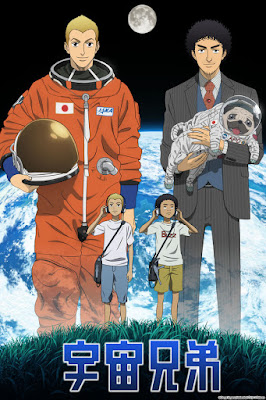
Space Brothers is about two siblings, Mutta and Hibito, who happen upon a UFO when they were young children. In that moment they agree to attempt to become astronauts. Hibito, the younger brother, has succeed in being accepted to the new Lunar missions while Mutta finds himself unemployed and back living with his parents. 

I loved nearly everything about this show. It is a solid first episode that clearly shows the division between the two characters and what the conflicts are going to be going forward. The character designs are great, showing even more of the trend this season to step away from moe, the two brothers designs reflect their personalities and their situations in life. I found the scenes when they were kids sweet, a fantastic attempt to capture the innocence of childhood. 

 There are three things that establishes the theme of the show that I thought were well played. The first is how the show begins. The two brothers were both born during major sporting events but Mutta was born during a horrible loss and Hibito was born during a great national victory. This establishes the idea of fate and luck within the narrative. The second is the innocence of childhood. There are long scenes that show the two boys exploring the woods and recording noises of nature, the two of them honestly curious about the world. As they gaze upon the UFO they see something that is unique and special, and in that moment pledge to go into space. This innocent act is shown to the audience as a sweet act of childhood, but it leads into the final theme that is well established in this episodes. 

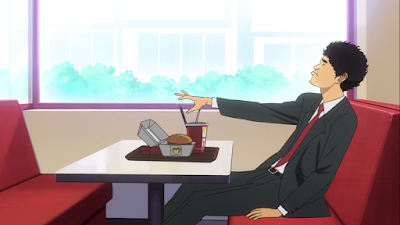
 The final theme is that of the elder staying ahead of the younger. A concept that is understandable because of sibling rivalry and conflict but even more so in Japan where the concept of the elder being held as revered remains important. Mutta’s defeat is all the more embarrassing because of his younger brothers success and it is this that drives him forward to picking his life back up. After falling low the simple idea of planning his goal to get to Mars rekindles his drive, forcing him back into the world. It was inspiring to watch, which is something I don’t get much from Anime. 

Space Brothers is going to be a fun character drama. It being wrapped in a Space Exploration narrative is a clear bonus for me. I look forward to watching a science fiction story anchored in realism, and that is definitely the feeling I’ve gotten from this first episode.


His and Her Circumstances: Building on top of Evangelion

shot0006.png

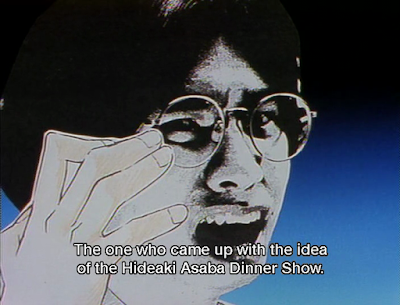
His and Her Circumstances, or Kare Kano for short, is famous among Otaku for being the final piece of animation directed by Evangelion creator Hideaki Anno, who left the project before it had finished due to disputes with advertisers and the author of the original Manga, Masami Tsuda. Which is strange because she, supposedly, claims she was unhappy with Gainax’s focus on the humor and not the romance. After watching the show I doubt that was the only thing she was uncomfortable with in the adaptation.

shot0002.png

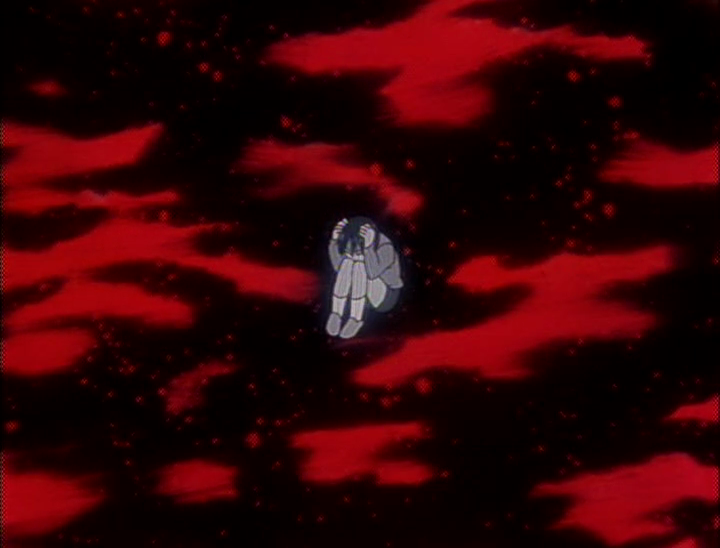
Kare Kano is an odd show, not odd in the sense that it’s a weird or hyper active like some recent Gainax titles. It’s odd because the core of the story is a generic Shoujo anime. Yet, Anno takes what could have been a simple romantic comedy and transforms it into a commentary on the nature of relationships and how they effect and charge individuals. A few episodes in the post-Evangelion style of Anno is apparent. Elements reserved for some of Evangelion’s more spectacular episodes are used in Kare Kano with abandon. These include sketches, dialogue as text for emphases, still frames, long sequences of inner monologue, manga frames, and abstract animation meant to symbolize a character’s mental state.

Lets try to go back to the time and place and get into the head of Anno as he starts to direct Kare Kano. It’s the year 1998 and he just finished creating one of the most influential anime of all time, one that’s colossal impact is still being felt over fifteen years later. Then he was allowed to refinish the ending of his masterpiece with a huge budget and again creates a masterpiece that pushes animation forward narratively and stylistically. Gainax will never raise higher than the peak they reached in the wake of End of Evangelion. How is Anno rewarded for these accomplishments? He gets to adapt a Shoujo manga.

Kare Kano is unique for Gainax. It’s the first straight Shoujo title that they’ve done and the first time that Gainax has ever adapted a previously published work. So Anno was being challenged in one respect, but he was also being restricted to a set source material. Not that it stopped him from being Anno.

shot0001.png

I’m going to a bold statement: Kare Kano is one of the most innovative piece of animation I’ve seen. I’m not saying that Kare Kano is a better show than Evangelion or Anno’s previous works but the way he approached Kare Kano is able to turn what is a rather generic Shojo into a visual and emotional thrill ride. The way Anno works with the characters and builds the relationship is unique, especially in Shojo, and taking a simple romantic comedy and transforming it into a physiological character study that Anno perfected in Evangelion.

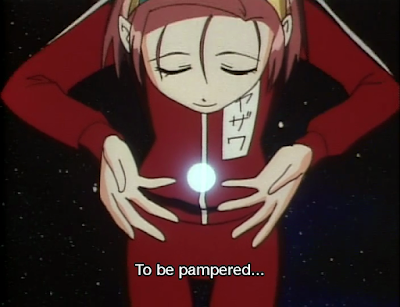
I wouldn’t be a proper Evangelion fan if I didn’t notice the constant references to Anno’s previous work. The first one happens only minutes into the series where Yukino’s is giving her opening monologue and strikes a pose that emulate’s Rei standing over the earth in End of Evangelion while a glowing white ball appears in her hand to make the picture complete. Anno reuses Evnagelion sound effects, music, recreates pieces of animation, and references Evangelion throughout the series. The chief reason these are in the series, I believe, is to give a nod to the Gainax fanboys and allow Anno to trumpet his own work. There is also a note of sadness to the Evangelion references, as if Anno lamented it being over and regretted working on his current project, but I might be projecting.

H%26H002.png

It’s clear why Anno would have been interested in Kare Kano’s narrative. In Evangelion, Anno dealt with a handful of characters who are defined by their duality. Shinji built up a wall around himself in order to hide from his Father’s rejection while pretending to hate him and Asuka coveted the praise of others because of her own struggles with an absent Mother. Kare Kano’s two main characters deal with similar issues. Yukino loves to be praised and adored so she puts on the persona of the perfect student. Flawless appearance, perfect grades, willing to help, member of every committee during special events, and beautiful. However, when that position is challenged by the equally smart Arima and she losses first place her entire persona begins to unravel. She has to work even harder to maintain her grades because holding that number one position is the basis for the entire character she constructed for herself. The breaking point only comes when she learned that Arima, the seemingly perfect Arima, is putting on a show of his own.

Arima’s desire to hide his true self comes from an abusive childhood which ended when he was taken away from his parents and sent to live with his Aunt and Uncle. Feeling ashamed at himself for his own childhood and carrying the burden of his parents, Arima attempts to make up for those aspects of himself by excelling at school and sports while attempting to not being a burden on his adoptive family.

H%26H005.png

The two characters struggle with their duality in some breathtaking scenes which explore the character’s personalities and back story in amazing detail. Anno doesn’t hold back in exposing these character’s flaws, completely cracking apart what had previously been presented to the audience. That is the exceptional aspect of Kare Kano, it goes far beneath the surface of the characters and roots the relationship deep in the psychology of the characters. They become the only people who they reveal their true selves to and in doing so the two share a connection that Yukino has only had with her family, and Arima has never had with anyone.

The most impressive part of Kare Kano is that it’s the most realistic romance anime I’ve ever seen. The relationship progresses smoothly; Yukino and Arima start off hating each other, then they become friends, followed by falling in love. Even after they admit their feelings the progress continues to dating, to needing to be around each other, and finally through the stages of a physical relationship. The majority of Shojo spends far too much time on the first few parts of the relationship, so much so that most series end after the main characters confess their feelings for each other or share a single kiss. When I hear romance anime I think of misunderstandings, love triangles, and endless dead ends. Kare Kano gets through that in the first ten episodes. Of course the narrative is the work of Masami Tsuda, but the way Anno builds the characters before the relationship even begins makes the progression of their relationship all the more satisfying.

H%26H004.pngAnno also takes some serious risks with the animation style. My experience with Shoujo is that directors traditionally don’t get excessively artistic but rather play the animation straight and add a healthy amount of sparkles. Outside of his Evangelion-esque psychological scenes there are episodes that feature heavy use of still images, sketches of characters with text, and was able to sneak in still photography.
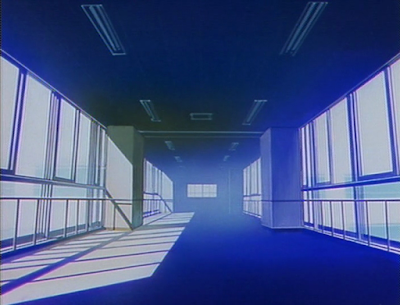
The most interesting episode, Episode 19, comes from one directed by Anno’s protege Kazuya Tsurumaki, who took over the series once Anno left. It’s a completely insane mash up of styles using photographic backgrounds, featured all the characters in a crayon like style, and had hyperbolic scenes animated using paper cut outs on popsicle sticks. The episode probably represents a time crunch caused by the departure of Hideki Anno, but it certainly is left as a testimony to the abstract levels in which Gainax is capable. Not until Panty and Stocking with Garterbelt have I seen them use alternatives to standard animation, yet here they combine standard animation with a host of other styles to create a visually jarring and yet thought provoking piece of art.

shot0005.png

Much of the nonromantic aspects of the seres pale in comparison to how Anno handles the characterization and relationship between Arima and Yukino. The middle of the series concerns side stories where Arima is noticeably absent, and Anno seems to adapt these episodes straightforward as opposed to making them his own as he did with the first half of the narrative. It doesn’t matter anyway, as the series abruptly ends and will never be continued by Gainax, as requested by Masami Tsuda. It’s a shame Anno didn’t get a free hand to do whatever he wanted with the series as a whole piece, but even beyond that, the anime no ending but just closes in the middle of the “14 day” arc where Yukino and friends are preparing a play for the cultural festival. The anime covers the preparations for the festival, but ends right before the festival begins. The play sounded like a new opportunity for deep character study and while I could read the manga to find out how the “14 days” arc plays out I would have liked to see Anno or Tsurumaki tackle a play within an anime that reflects on the characters. That seems like an ideal situation for the director to craft. Alas, it was not meant to be.

Kare Kano is, ultimately, an experimental anime for Anno that ended poorly. The core story and characters are solid but enhanced by the narrative and visual techniques of a master animator. Anno brings his craft as a director and the Gainax staff to their absolute highest and it’s a shame that the unstable Anno was unable to finish working on the series and, until the first Evangelion remake in 2007, retired from animation all together. If Anno ever returns to the Directors chair, for something that isn’t Evangelion, I think the world is in for a treat.

Review: Hanasaku Iroha

hanasaku-iroha-wallpaper.jpeg

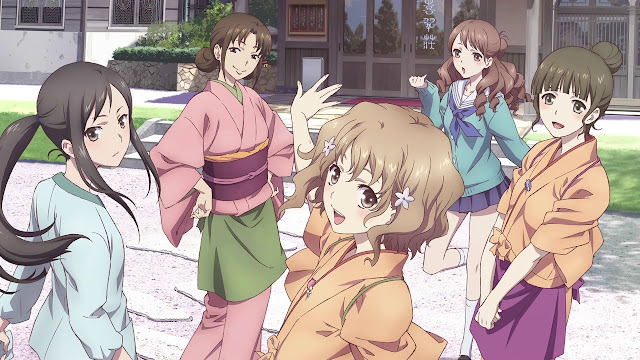
With so many Anime drama’s being built around horrible cliches and stock character designs it’s refreshing to see a show that thrives for realism above recycling tired old anime tropes. P.A. Works celebrates their tenth anniversary by crafting a show that is closer to a live action drama then traditional anime drama. Does their attempt to bring a realistic drama to modern anime work or does the show falter? Ohana Matsumae is a sixteen year old girl forced to mature faster thanks to her less-then-ideal mother, Satsuki. When Satsuki’s boyfriend becomes involved in a crooked deal they’re forced to flee Tokyo sending Ohana to stay with her estranged grandmother at a traditional Japanese inn. Ohana needs to work, learn to deal with people, and attempt to repair the relationship between Satsuki and her family.

Screen%20Shot%202012-02-27%20at%2010.56.39%20PM.png

There is a beautiful simplicity to Hanasaku Iroha. It doesn’t relay on any of the standard anime tropes or set ups, it doesn’t seem to be one of the many shows that wants to appear to the niche anime audience through their fetishes, and it doesn’t seem to care about wish fulfillment. At first glance, I expected all of these things from the show and it surprised me by avoiding all those traps of most recent anime. It has been hard to find shows that don’t reflect some of those problems, even from modern quality anime. Hanasaku Iroha strives for realism and after spending a short time with the characters and living in the world for a bit they’ve definitely hit the mark.

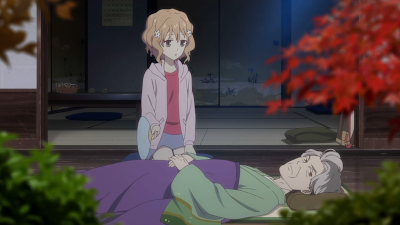
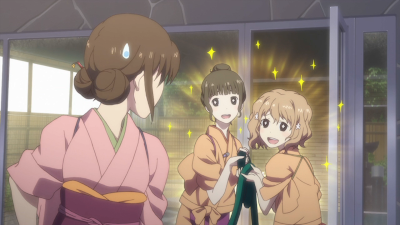
The show centers mostly on Ohana and her move out to her grandmother’s inn where, to her surprise, she is put to work. Quickly the staff challenge her world view and force her to reflect on some of her actions up to that point, especially romantically. Ohana seems like anything but a selfish character, but the tiny flaw that is exposed is exasperated when she is placed in a new location surrounded by new people. Her tiny ability to be inconsiderate is placed in the spot light and undermines her first impression of the inn. The starting point is a flaw, and the flaw is not obvious or overt but simply a normal flailing of an adolescent girl. Something that all children have to grow out of in other to adapt to new surroundings. Ohana is a relatable and likable character because the series captures her as she readies herself to become an adult.

Screen%20Shot%202012-02-27%20at%2010.53.47%20PM.png

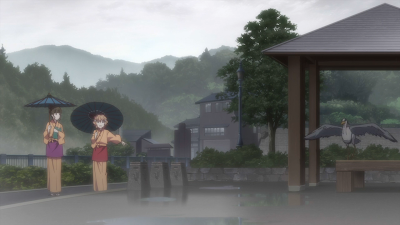
The animation is vibrant and the backgrounds contain an incredible amount of detail. Being the anniversary work of P.A. Works clearly the studio dedicated a large amount of time and resources into crafting the best looking show they possibly could. The animation aids in the immersive feeling of the narrative and the audience gets lost in the beautiful sights around the hot spring village. The contrast between different inns or the city versus the country are enhanced by the amount of care taken to craft specific details. The designs of the main female cast are all cute without falling into cliche and the personality of the entire cast can be deduced by simply looking at them, the goal of all great character designs.

Screen%20Shot%202012-02-27%20at%2010.57.55%20PM.png

Narrative style in Hanasaku Iroha is a combination of standalone episodes that are united with a unifying thread.There isn’t exactly an overarching story that ties the entire series together, rather there is an overarching theme that is planted in episode two and then is slowly cultivated over time, coming to a beautiful crescendo in the finale. However, there is some continuity that begins in seemingly stand alone episodes and end up effecting later events. It’s a great way to construct a slice of life show where there isn’t a strong narrative, the show is moved by the strong characters, but the author still wants t o create a sense that everything that happens in the series matters. That the events of the show affect the characters in a meaningful way. The fantastic part about the stand alone episodes is the shows ability to use them to craft some fun scenarios within the construct of the show. The best one being where the head waitress is determined to get fired and treats a group of rowdy military otaku guests rudely. The guests, however, being obsessed with all things military loved the harsh treatment. The episode is one shining example of how the formula can be flexible while still crafting a cohesive narrative. In the second half of the series this principal is carried over except standalone episodes before rarer and two or three episode arcs follow this same pattern. They seem like a contained story yet small elements work in subtle ways to aid the unifying narrative.

Screen%20Shot%202012-02-27%20at%2011.04.26%20PM.png

While most of the characters in Hanasaku Iroha are vibrant and interesting there are some points that subtract from the experience. As with a lot of anime I complain about I don’t think we get to see as much of the secondary characters as we might have, and much of the time we do get to experience the secondary characters it is through the filter of Ohana or one of the other young girls. I wanted to live with the chef or his assistant and really get to know them. With most of the characters the small bits were charming, at least, but there is a relationship between the managers son; Ohana’s uncle; and his college sweetheart that I found trying. On one hand I think Hanasaku Iroha was being realistic in crafting a relationship that seemed to come from benefit rather than love but up until that point I didn’t see the pair has anything more than friends or business partners, even if the young master was a little obsessed with the woman. They never even shared an onscreen kiss at that point and showed no affection for each other. It didn’t feel right and took me right out of the narrative.

Screen%20Shot%202012-02-27%20at%2010.55.19%20PM.png

The last few episodes, leading up to the finale, are heart warming tearjerkers but is also where the few cracks evident in the series start to show. The manager makes a decision that the staff disagrees with and Ohana accidentally finds herself on the other side of the argument. I thought that most of the characters broke form in those moments. Ohana for not being gung-ho against her grandmother, the staff for being so bitter and hostile, the manager for blatantly ignoring the rational arguments against her decision. In the heated moments it just felt like climactic drama for the sake of climactic drama and ultimately fell flat.

Hanasaku Iroha is a fantastic, realistic, and beautiful drama which is worthy of being P.A. Work’s tenth anniversary work. The animation is some of the best the industry has produced, character designs are exceptional, and the narrative avoids anime cliche’s and traps in favor of realism. While the mostly solid character drama has some detracting flaws and the drama inserted to build towards the end feels contrived, it doesn’t take enough away enough from the series to spoil the experience. It’s a part relaxing, part stressful, part fun, but will leave any audience with a satisfying warm feeling in their heart.

Review: Steins;gate

15903-620x-2f25f7c955ebe3bca596b93ac8c00dbe.jpeg

There are few things in the world I enjoy more than I good time travel story. Time travel offers a unique twist to a standard narrative, in that, events don’t always occur linearly. The events the characters experience are jumbled and due to this the plotting of a time travel story come out far more interesting than a standard drama. Steins;Gate takes place in Akihabara where a group of friends modified a microwave to send text messages into the past. Underestimating the consequences Okabe Rintaro, self proclaimed mad scientist, allows people to use the machine to change the past. What he discovers is that even altering the past slightly can completely change the world.

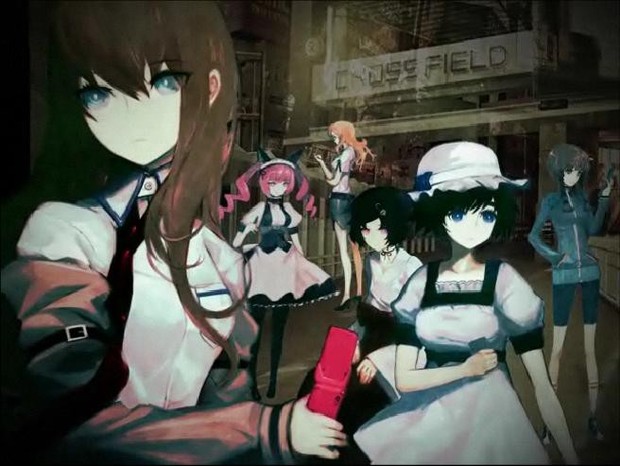
573830.jpgSteins;Gate is really two different shows. The first half is a Moe show with time travel elements and the second half is a time travel show with Moe elements. Strangely both work, for different reasons, and the transition from the lighthearted and fun atmosphere of the first half of the narrative moves smoothly when Steins;Gate suddenly becomes deadly serious. Such a change in tone is difficult to pull off, yet Steins;Gate manages it by having a fantastic first episode which encapsulates most of the elements that the series will represent going forward. The audience gets the insane antics of Okabe, the wonderful Moe of Mayuri, some of the deep time travel elements, technobabble, and murder. This execution is viewed in hindsight, however, as the first episode’s tonal imbalance may turn away overwhelmed viewers.
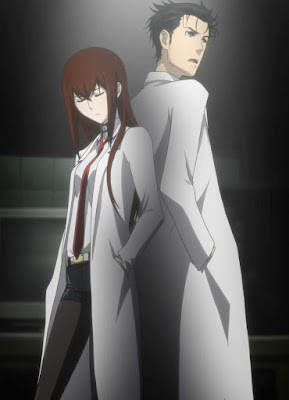
The element that really drew me into Steins;Gate was the use of internet culture as a hook, specifically using John Titor as the jumping point for the series. In late November 2000 a man who claimed to be a time traveler appeared on IRC and his claims have been immortalized on the internet. Steins;Gate’s hook is when Okabe notices that the first message they send back in time, accidentally, erases John Titor from existence. Going forward Steins;Gate uses pieces of the John Titor story has important plot points including the search for the IBM 5100, Titor’s explanation of how time travel works, and the year John Titor claimed to have been from; 2036. Prior knowledge of John Titor isn’t required to enjoy the narrative but you get a little extra out of the show by recognizing the references.

steins-gate-review-04.jpeg

Early in the show Okabe recruits Kurisu Makise, a prodigy scientist, and together they develop and test the Phone Microwave and it’s unique ability to send messages back in time, called “D-mail.” Much of the first half of the show is spent on these experiments and on playing around with the show’s moe cast of characters. Being Akihabara, many of the characters are Otaku with classic Otaku tropes. Daru is a brilliant engineer but comes off as a lonely pervert, Mayuri is an adorable cosplay Otaku who works at a costume cafe, Feyris works with Mayuri and remains in her cat persona even outside of work, and various other characters. They’re enjoyable to watch interact and the characters who get a chance to change the world with D-Mail get backstories which crush the heart of the viewer and Okabe in the same fatal stroke. However, I never felt like the majority of the characters received any depth. Most of them simply work as plot devices to drive the narrative forward, provide a reason to alter the course of the world. Even when their backstories were explored I felt more for Okabe than I did for the individual characters because he had to explain that their wishes were harming the course of time, and he felt responsible for them having to undo their changes to the past.

555913.jpeg

Kurisu Makise is also an interesting character. While she holds many of the stereotypical Tsundere traits she is given enough development to not only to overcome them but to somewhat justify them. Her secret obsession with 2channel gives her an interesting quark and the unintentional rivalry with her father both shows why she seems profoundly sad yet has accomplished so much at a young age. Even her first encounter with Okabe showed her range, at first she took a profound enjoyment out of proving him wrong and yet when he proved that time travel was possible she was humble enough to agree to work for him. I have a respect for characters who command respect and yet can be humble when they’re defeated. Mayuri offers an interesting intersect because while she is a character who exists as a plot device and doesn’t have much development you can’t help but fall in love with her. She is the sweetest, most gentle creature in the world, which works as a nice foil to the often abrasive and rude Okabe. She’s able to bring out a side of Okabe no one else sees which makes their relationship profoundly endearing.

Time travel is the main focus of the plot in Steins;Gate. D-Mails sent into the past don’t exactly change the future but shift the “world line” Okabe inhabits. He has the unique ability, conveniently, to remember all the world lines he happened to inhabit. His friends don’t notice any change because they’ve always existed in the world created by the D-Mail. So “Time Travel” for the majority of Steins;Gate is actually “world line travel.” Altering a small part of the past allows Okabe to jump between the world lines. Although later in the show more actual time travel takes place I enjoyed the plots created by the D-mails because of the mystery around what effect the message would have on Okabe’s world. One simple jump and an element he was relaying on, a driving focus of the plot for the early episodes, would just disappear forcing Okabe to completely rethink his strategy. In total, Steins;Gate uses three methods of Time travel; world line travel, consciousness travel where a person’s present mind jumps back into their physical body; and physical time travel where a character travels from the present into the past. Each of the methods are pulled off well with their own benefits and drawbacks expertly explored.

UTW-Mazui_SteinsGate_-_01_720p2994A18E.mkv_snapshot_09.56_2011.04.08_22.jpeg

One aspect of Steins;Gate that I didn’t like is that the science changed when it became convenient to the characters. At one point Kurisu declares that her field of study was in the brain when she is first scene giving a presentation on physics and had, up to that point, only mentioned being a physicist. Another bit of rule breaking that irked me was they changed rules when the plot needed a rule to be changed. At first one Time Machine is limited to only travel backwards through time, which creates a depressing departure that the show spends an entire episode fixated on. Later a time machine of the same make has the ability to travel forwards and backwards through time, which gives Okabe an extra chance to change the past. It’s sloppy storytelling and bad science fiction.

I’ve discussed how well I think the time travel elements of Steins;Gate work, and indeed at its core this is an extremely solid Time Travel narrative. However, the moe elements are going to drive away people who would otherwise find the series enjoyable. The early episodes are light on the Sci-fi and heavy on moe characters doing moe things, the pacing is slow allowing the audience to spend more time with the characters. Each episode reveals one small piece of the plot. When that shift in the middle of the series happens Steins;Gate becomes a serious time travel narrative but getting there is going to prove difficult for someone looking for good science fiction right from the start. It’s unfortunate that by playing to the Otaku crowd who love both science fiction and moe, the audience who would most appreciate Steins;Gate won’t be able to make it through those first few episodes.

520092.jpg

This review might feel a little negative but I can’t stress enough how much I enjoyed Steins;Gate. For all it’s failings, Okabe and Kurisu remain interesting characters and the way it employs the standard time travel tropes are always fun and entertaining. The dark, serious tone during the second half of the show is contains some incredible character drama despite the cast of mostly shallow characters. Okabe is forced to carry the burden of the narrative, being remembers world line jumps, that the depth of his character, what he goes through, and how he is profoundly changed by the end is truly moving. So while moe elements hold the show back and some of the science fiction elements are weak, the show comes off as a definite watch for science fiction and moe fans alike. No where near a perfect show, but an entertaining and moving piece of animation.

Winter Preview 2012, Part 2

The second and final part of my 2012 Winter season preview. Here I review the first episodes of Nisemonogatari, Lagrange: The Flower of Rin-ne, Another, and Ano Natsu de Matteru.

Nisemonogatari

Screen%2520Shot%25202012-01-17%2520at%252011.25.31%2520PM.png


Picking up right where Bakemonogatari leaves off the show follows Koyomi Araragi as he deals with various supernatural phenomena. He also has to deal with his insane girlfriend, his sisters, and a cast of lovably crazy characters.

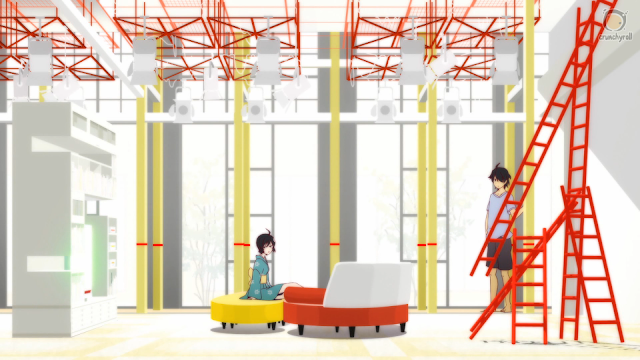
Fans of Bakemonogatari rejoice! The long awaited sequel is here. Like the original, the animation and character designs are absolutely beautiful. There is a special craftsmanship to the backgrounds in this show, probably because the majority of the show is made up of long scenes of dialogue. Due to the lack of action, the look and feel of scenes becomes extremely important. In the scene that takes up a long portion of the middle of the episode Koyomi speaks to his younger sister about life and love. The room she is in is elaborate, featuring a

Screen%2520Shot%25202012-01-17%2520at%252011.23.55%2520PM.pnglarge round couch sitting directly in the middle, a fully fledged art gallery on the left wall, and ladders arranged oddly. The camera angle shifts as they speak to highlight different parts of the scene. These backgrounds are the most beautiful part of Nisemonogatari and like Bakemonogatari I look forward to each new location that Shinbou crafts and look forward to deconstructing how they reflect the narrative.
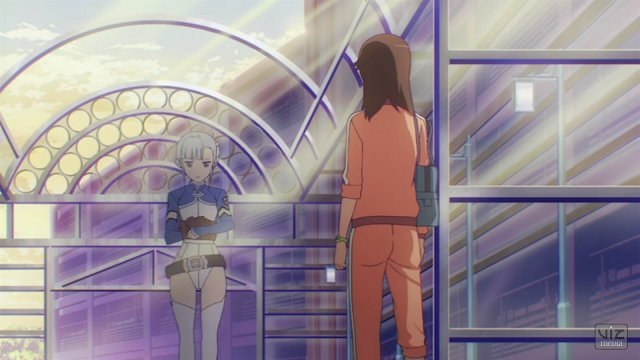
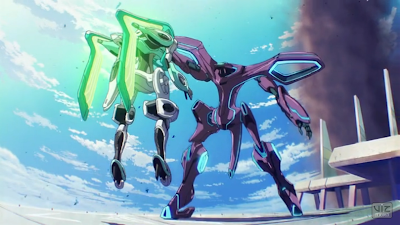
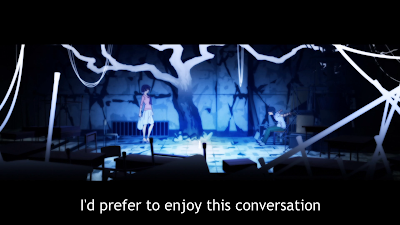
The show is largely dialogue, but what made Bakemonogatari brilliant is that the dialogue is as compelling as the best choreographed action scenes. The banter back and forth between Koyomi and the various characters is wonderful, each character having a different flavor of banter which allows the characters to get fleshed out in an abundance of detail. It’s almost as if the tone of the show shifts depending on whom Koyomi is interacting. In the opening scene with Hitagi the show takes on a dark, desperate aura but the next scene makes the show feel like a romantic drama. Like Bakemonogatari expect these changes in tone to be constant throughout.

The unfortunate thing about Nisemonogatari is that it picks up shortly after the end of Bakemonogatari and viewers without knowledge of the pervious series will be completely lost, especially with the opening scene. I have seen Bakemonogatari but this first episode assumes a level of detail that two years has wiped from my memory. Even so I can that that with this first episode it looks like fans of Bakemonogatari may have finally gotten a worthy sequel.

Nisemonogatari is currently streaming on Crunchyroll.com

Lagrange: The Flower of Rin-ne

Screen%2520Shot%25202012-01-17%2520at%25209.35.09%2520PM.png

Madoka is an energetic young girl dedicated to helping people with her “Jersey club” and is otherwise normal. That is until she is recruited by Lan to pilot “Vox”, a powerful robot and only defense against an invading alien force.

Screen%2520Shot%25202012-01-17%2520at%252010.09.37%2520PM.png

The first episode of this show is simply a paint by numbers Evangelion clone except replacing Shinji with an energetic young girl. Like Shinji, Madoka is brought into a secret location because she is the only person who is capable of piloting a super secret mech that is the only defense earth has against an invading alien force, she is given no instructions prior to combat other than she just needs to “sit in the cockpit,” and she successfully activates the machine and defeats the invaders with seemingly minimal effort.

Honestly, apart from the blatant Evangelion copy and replace, the show wasn’t that bad. It has a fairly good setup with the character Lan arriving from nowhere to find Madoka. Where does Lan come from? Why is Madoka so important? These questions are left up in the air as the battle unfolds. Even the mundane pieces of the narrative have mystery attached to them, such as the reason why Madoka is the only member of her “Jersey Club” despite the fact that she seems incredibly popular. Everyone talks about her club as if it was something that shouldn’t be approached.

While watching this I had an overwhelming sensation that if I had seen this in 2002, I would have instantly fallen in love. I’ve just seen too many similar shows. This doesn’t seem like it’ll cover any new territory or offer anything new to the medium. However, the animation is vibrant and the writing and action aren’t abysmal. This may turn out to be an enjoyable watch, even if it’s a show we’ve seen countless times before.

Lagrange: The Flower of Rin-ne is currently streaming on Hulu.com

Another

Screen%2520Shot%25202012-01-17%2520at%252010.12.23%2520PM.png

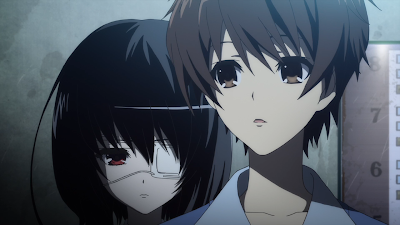
Kouichi Sasakibara transfers to a new school and can immediately feel something frightening lurking within. The feeling seems to come from Mei Misaki, a beautiful girl that no one seems to be aware of except for Kouichi. Why is he the only person able to see her and what secret is the school trying to hide?

Screen%2520Shot%25202012-01-17%2520at%25209.43.30%2520PM.png

I love the vibe that the show gives off. The atmosphere built around the city, around the main character, and around the school is so wonderfully creepy that they put me in the mood for horror. It isn’t even blatant, it’s just a feeling in the back of your mind that something is off, something isn’t quite right about how some of these characters are acting. There is a mystery to the show, to the main character, one that even he seems ignorant of which makes unraveling the mystery all the more exciting.

I’m not that big of a horror fan, but this show has me intrigued. Trying to pin down what it is, I think it has more to do with the mystery of the show rather than any type of fear the show brought me. While the goal of horror is to scare the audience, a tactic that fails on me because my disbelief is never suspended enough for it to be effective, this show relies more on it’s creepy tone and mystery to build a compelling narrative. Japanese horror is based less on the jump scare and is more focused on creeping the audience out slowly over time until a single huge scare happens that brings the creepy feeling to a crescendo. Anyone who has seen the ring can identify with this feeling when first seeing the girl start to crawl out of the television set.

Screen%2520Shot%25202012-01-17%2520at%25209.48.54%2520PM.png

That’s what I expect from Another. Right now the “ghost” is simply creepy, a little weird. As more is revealed about the ghost, about the students in this creepy school, and about the main character the greater the sense of dread will climb.

The one misstep of this first episode was the prologue which described the origin of the ghost and why the school is haunted. This gives the audience knowledge about what is going on before we are even introduced to the main character and it spoils a little of the mystery. I’m hoping the prologue is a clever bit of misdirection, but until that plays out I just feel it’s an information dump in a show that seems to thrive on limiting the information given to the audience.

Another is currently streaming on Crunchyroll.com


Ano Natsu de Matteru

Screen%2520Shot%25202012-01-17%2520at%252010.24.25%2520PM.png

Kaito Kirishima is out testing his 8mm camera at night when something causes a massive explosion at the local dam. He is tossed viciously into the air but he wakes up the next day perfectly fine. That day a red haired transfer student, Ichika Takatsuki, shows up at school and through a series of circumstances ends up living with Kaito. Ichika is an alien and having caused the explosion, feels guilty about harming Kaito and wants nothing more but to nurture him back to health.

Screen%2520Shot%25202012-01-17%2520at%252010.22.00%2520PM.pngAnother show that doesn’t seem to want to bring anything new to the table, with the exception of the cast’s desire to make a film. That single element is compelling in that I’d want to see a well executed play with in a play that might be able to transform a rather generic concept into something interesting. I said this about “Lagrange: The Flower of Rin-ne” as well but it rings just as true for “Ano Natsu de Matteru,” I would have been super excited about this show in 2002. But now, ten years later, I’ve seen more than enough harem shows to satisfy that itch. Better harem shows! I have harem shows I want to re-watch before getting into another attempt to revolutionize the formula.
So Ichika arrives out of the sky in a sudden and impressive showing, by accident injures Kaito so that she has a deep desire to make sure that he heals properly. So what other harem shows start by a girl coming from the sky? Tenchi Muyo; the classic that may have jump started the genre; Please Teacher, Sora no Otoshimono, and Ah! My Goddess to name the ones off the top of my head! Why does anime insist on taking a single popular concept and driving it firmly into the ground?

Screen%2520Shot%25202012-01-17%2520at%252010.24.58%2520PM.png

There is also something weirdly non-confrontational about the show. I don’t like how Kaito offers Ichika to stay with him while daydreaming, he doesn’t realize he is actually speaking with her! It’s as if the show is telling Otaku “This is how easy it is to get a woman to live with you!” It’s a vibe I strongly dislike.

I’m being overly harsh on this show just because I heard good things and was expecting something. What I got was a simple rehash of a show I’ve seen before. Granted, the animation is better and the character designs are OMG ADORABLE so much so that I will be collecting art of Ichika even if I never make it to the second episode. There are just so many of these shows out now that I don’t have the energy to care about this one. I’d rather re-watch Tenchi Muyo or Ah! My Goddess than experience a cheap imitation.

Ano Natsu de Matteru is currently streaming on Crunchyroll.com

Winter Preview 2012, Part 1

In this first part of my Winter Preview are the first impressions for Poyopoyo, Familiar of Zero F, Mouretsu Pirates, and Brave 10.

Poyopoyo

Screen%2520Shot%25202012-01-17%2520at%25208.33.44%2520AM.png

Moe Sato finds a cat and names him Poyo because of his round shape. The episodes are short pieces about Sato’s new life with her pet.

Screen%2520Shot%25202012-01-17%2520at%25208.33.06%2520AM.pngPoyopoyo’s first episode was extremely quick and simply a set up for some of the jokes going forward. The show is about an adorable cat who is round, to the confusion of most of the cast and is really the chief gag of the series. This episode established that the cat does cat like things, and is cute while doing them.
The art is cute and fun, fitting the style of humor and the length of the episodes. The humor of the show doesn’t only come from the cat but from a bunch of quick jokes simply tossed at the audience in mass. The Father quickly became my favorite character as you watched him instantly fall in love with Poyo and suddenly put him in a role reversal as he and his daughter beg his distraught son to allow them to keep Poyo.

If you like cats there is no reason not to check out Poyopoyo. It’s three minutes an episode and streaming for free. You’ll find it cute, at the very least.

Poyopoyo is currently streaming on Crunchyroll.com

Familiar of Zero F

Screen%2520Shot%25202012-01-17%2520at%25208.38.01%2520AM.png

Familiar Zero F is the fourth season of the “The Familiar of Zero.” Based on a series of light novels the series is about Louise who is a magician in training at Tristein Academy who has had no recorded success with magic. During a magic test she must summon a powerful Familiar but instead ends up summoning Hiraga Saito, an ordinary Japanese boy.

Screen%2520Shot%25202012-01-17%2520at%25208.35.36%2520AM.png

I don’t have much to say about this show. I started it now knowing much about it, and definitely not knowing it was the fourth season of a long running show. What I saw didn’t impress me, and I really couldn’t follow what was going on.

It started with some boob-grab humor, which was the shows way of quickly reintroducing the characters to the audience. Again, being the fourth season of a long running show there is a lot of information left out that the audience is just supposed to know. When the characters are summoned before the Pope I really had no idea what was happening or what the importance was that they were Vord mages, which we’re told posses a legendary form of magic that everyone in the main cast just happens to have… and needs to be told about.

The villains of the show appear out of nowhere and use the boring anime joke of having the older brother look really young and the younger brother look older. They attempt to steal some unknown object from the church. A boring battle happens, and nothing much comes of it.

Screen%2520Shot%25202012-01-17%2520at%25208.35.16%2520AM.png

Character development can be seen, barely, in the scene where the Familiar gets angry at his master because she is starstruck by the Pope. So the being that she summoned has some kind of severe inferiority complex? This isn’t character development, this is a weak attempt at humor and it fails. Love interests arguing over silly things seems to be a staple of anime comedies and I’ll never understand the appeal.

dDon’t make the same mistake I did and watch this if you haven’t seen “The Familiar of Zero” before. If you got through the other three seasons I’m sure you’ll know if you want to go forward.

Familiar of Zero F is currently streaming on Crunchyroll.com


Mouretsu Pirates

Screen%2520Shot%25202012-01-17%2520at%25209.30.07%2520PM.png

Marika is a first year high school student living in the galaxy Uminoakeboshi. She suddenly finds out her father was the Captain of the Space Pirates Ship “Bentenmaru” and that she is set to inherit the ship, taking over as Captain.

Screen%2520Shot%25202012-01-17%2520at%25209.28.53%2520PM.pngThere is a lot to like about the first episode of Mouretsu Pirates. The main character is a spirited young girl who has experience piloting ships in her school’s Space Yacht club, which is far more than I expected as a base for the character, on top of her being an intelligent and driven individual. Her mother, a former space pirate, is wrapped in a ton of mystery which sets a level of intrigue to the narrative. Why did she stop being a pirate? Why never tell her daughter about her father? The rest of the cast is just as interesting, although most don’t get an adequate amount of screen time in the first episode to really get a feeling for them, other than to quickly plant a kernel of development. It was enough to realize that I desperately want to see more of them.
The fact that the pirate ship she is set to inherit is a group of Privateers given licenses by the government during the war for independence is far more interesting than just having them be a gang of thugs. Evil pirates who rape and pillage wouldn’t be a good focus for a show that seems to be setting up for a light comedy. Pirates who are good guys and plunger for heroic reasons make for a more compelling narrative without having to corrupt the main character.

Screen%2520Shot%25202012-01-17%2520at%25209.29.34%2520PM.png

With no space combat I can’t pass judgement on the action of the show so far. Having the main character being pursued by a group who doesn’t want the pirates to exist is a good starting point and what little action there was in this episode was certainly compelling.

The one thing that irked me about the episode was the inclusion of a Maid cafe. It seemed tossed in for no other reason than to show the main character in a maid outfit. While it got worked into the narrative for more reasons than fanservice the fact that this young girl living on a distant planet in space would be working at a maid cafe seems like a lazy solution to the problem. It’s as if the creators needed to sneak something in so the show would appeal to Otaku.

Mouretsu Pirates is currently streaming on Cruncyroll.com

Brave 10

Screen%2520Shot%25202012-01-17%2520at%25209.24.53%2520PM.png

Set during the Sengoku Period the ninja Saizou Kirigakure meets the priestess Nami Isa when she is attacked by assassins. For some unknown reason Saizou feels like he must stick with her and protect her on her journey to seek revenge for the destruction of her shrine.

Screen%2520Shot%25202012-01-17%2520at%25209.25.08%2520PM.pngThere are somethings to like about Brave 10. It’s an action show that has no identify crisis, it just wants to be a vehicle to show you action. Saizou is a tough scary guy who has powers that make him almost impossible to beat, he saves the girl who will be his love interest, and that allows him to meet up with a lord who is putting a team together in an epic Nick Fury style twist.
Unfortunately nothing is particularly original. It feels like a rehash of a dozen shows that came before from character designs to the set up. Enemies have shown themselves as generic masked Ninja characters, the settings is Sengoku Period which has served as the backdrop for countless shows, and the action wasn’t particularly compelling unless you enjoy enemies failing to take advantage of the main character after they wrap him in chains!

Screen%2520Shot%25202012-01-17%2520at%25209.26.36%2520PM.pngThe worst element of the show are the anime tropes tossed in that work to undermine the seriousness of the main character and the tone of the series otherwise. Tropes like characters eating an excessive amount and freaking out around women are tossed in as if to remind the audience that they are watching an anime.

The most confusing part of the episode is the character’s motivation for helping the girl. He seems completely determined not to help her and then suddenly he is protecting her. At the end of the episode he agrees to stay with his new lord because of some loyalty for her that doesn’t seem to exist, at least I can’t find it. The character development is more focused on driving the narrative forward rather than building interesting, fully developed characters.

If you’re an action fan or a serious fan of the Sengoku period than you might find something to like in this show. If those elements don’t appeal to you then it is a definite pass.

Brave 10 is currently streaming on Crunchyroll.com